

There is a moment during a kitchen renovation when the number of cabinet choices becomes ridiculous. You start with one simple question: What kind of cabinets do I want?
Then come slab doors, Shaker doors, wood veneer, painted MDF, frameless boxes, full overlay, inset, matte finishes, integrated appliances, hidden pulls, tall pantry units, drawer systems, and enough colors to make choosing white feel complicated.
The good news is that a modern kitchen cabinet does not require a complicated formula. The most successful designs usually rely on a few well-chosen elements: simple cabinet fronts, sensible proportions, useful storage, durable materials, and a finish that works with the actual light in the room.
Current professional kitchen research supports that direction. NKBA’s 2026 trends report identifies flat or slab cabinet doors, panel-faced appliances, minimalism, neutral colors, and natural materials as important trends, while wood grain is gaining ground over painted cabinetry.
But trends are only part of the story. A cabinet can be fashionable and still be a terrible choice for your household. This guide focuses on the decisions that matter after the inspiration photos are closed: how the cabinets should look, how they should function, what materials are worth considering, and where you should be careful before placing an order.
What Makes a Kitchen Look Modern?
Modern cabinetry is less about one particular finish and more about visual control. The cabinet fronts tend to have clean shapes. Lines are consistent. Decorative details are limited. Appliances may blend into the cabinetry rather than standing apart from it. You might see:
- flat-panel doors
- slab fronts
- narrow-profile Shaker doors
- full-overlay doors
- concealed hinges
- streamlined pulls
- integrated appliances
- tall storage
- large drawers
- natural wood
- muted colors
- simple countertops
- layered lighting
None of these features is mandatory. A modern kitchen cabinet can even contain an old wooden stool or a vintage light fixture. In fact, those contrasts can make the room feel more authentic. The goal is not to make every object look new. The goal is to create a kitchen where the major elements feel intentional together.
Modern Doesn’t Have to Mean Minimalist
This is an important distinction. A minimalist kitchen tries to reduce visual information as much as possible. A modern kitchen can be more expressive. You can have modern cabinetry with:
- patterned backsplash tile
- open shelves
- colorful artwork
- natural timber
- decorative lighting
- freestanding furniture
- plants
- vintage accessories
The cabinets provide a calm foundation while other pieces give the room personality. This approach is particularly useful if you want a kitchen that feels like part of your home rather than a separate showroom installation.
Start With How You Use the Kitchen
Before choosing a door color, imagine an ordinary Tuesday. You walk in with groceries. Where do they go? You unload the dishwasher. Where do the plates live? You make coffee. Where are the cups, beans, machine, and cleaning supplies?
You prepare dinner. Where are the knives, chopping boards, pans, spices, and oils? You finish eating. Where do recycling and rubbish go?
Those questions may sound less exciting than choosing cabinet colors, but they determine whether the kitchen will feel good six months after installation. A beautiful layout that forces you to cross the room repeatedly is still poor.
Think in Zones Instead of Individual Cabinets
One useful way to plan a modern kitchen is to think about groups of activities.
Preparation zone
This should hold the things you reach for while chopping and assembling food.
Cooking zone
Keep pots, pans, utensils, oils, and seasonings reasonably close to the cooking surface.
Cleaning zone
Place dishes, cleaning supplies, rubbish, and recycling where they make sense around the sink and dishwasher.
Food-storage zone
Pantry cabinets, refrigerators, and dry-goods storage should work together rather than being scattered randomly.
Beverage zone
If coffee or tea is part of your daily routine, a dedicated area can prevent appliances and supplies from spreading across the countertop. This zone-based approach often leads to a more useful cabinet layout than starting with a collection of cabinet sizes.
Slab Cabinets Create the Cleanest Starting Point
A slab door is almost completely flat. There is no decorative center panel competing with the grain, color, or surrounding architecture. That makes slab cabinetry a natural choice for a modern kitchen. It works especially well when you want:
- uninterrupted cabinet walls
- a minimalist appearance
- natural wood grain
- understated hardware
- integrated appliances
- strong countertop material
- an open-plan kitchen
There is one practical warning. Flat doors make mistakes obvious. If the gaps between drawers vary or one door sits slightly lower than another, your eye notices it immediately. The simpler the design, the more important accurate installation becomes.
Don’t Dismiss a Modern Shaker Door
Shaker cabinetry is often associated with traditional kitchens, but the profile itself does not determine the entire style. A Shaker door with a narrow frame, simple finish, full overlay, and contemporary hardware can look surprisingly fresh. It can also be a smart compromise for older homes.
If your house has traditional architectural details, an ultra-minimal slab kitchen can sometimes feel disconnected from the rest of the property. A restrained Shaker design can bridge that gap. The result is less severe than a completely flat kitchen but still clean enough to feel current.
What Is Full Overlay?
Full overlay describes how much of the cabinet front is covered by the door. The door sits over most of the cabinet face, leaving relatively narrow gaps between neighboring doors and drawers.
This creates the continuous appearance associated with many modern kitchens. It is easy to confuse full overlay with frameless construction, but they are different concepts.
Overlay describes the door position. Frameless describes the cabinet construction.
A cabinet can be framed and full overlay. That distinction becomes important when you compare different cabinet companies because marketing terminology is not always consistent.
Frameless Cabinets: What Are They Good At?
Frameless cabinetry eliminates the traditional face frame at the front of the cabinet box. The result can be a very clean exterior and more direct access to the cabinet interior. It is common in European-style cabinetry and often pairs naturally with slab doors.
But “frameless” should not automatically translate to “better.” The cabinet still needs good materials, hardware, joinery, installation, and design. When comparing options, think about the entire cabinet system rather than one construction label.
Cabinet Materials: Look Beyond the Door
A cabinet has more components than the front you see. Depending on the manufacturer, you may encounter:
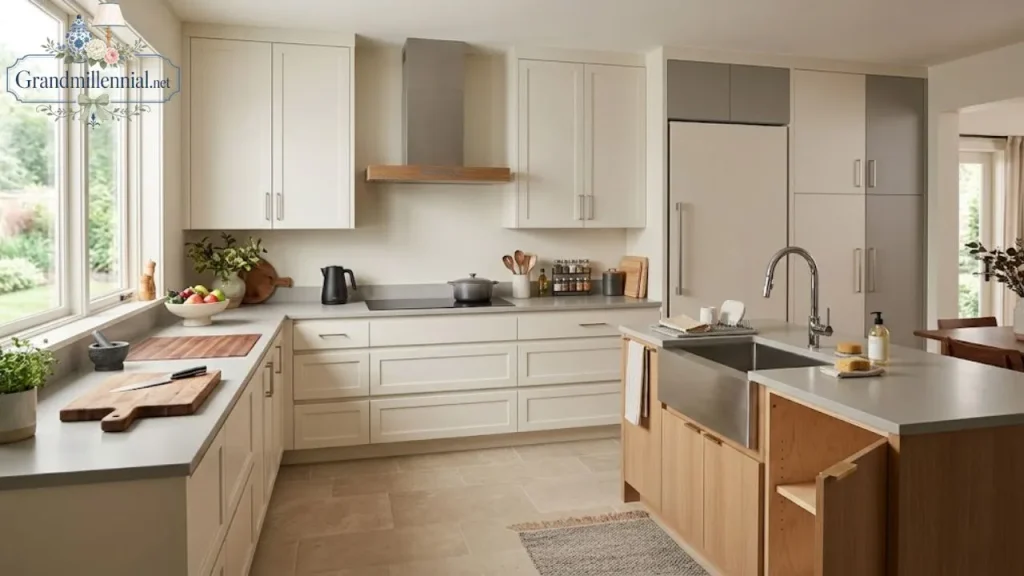
- plywood
- MDF
- particleboard
- melamine
- solid wood
- wood veneer
- laminate
- thermofoil
- acrylic or other specialty finishes
Each has different characteristics. MDF, for example, can provide a smooth substrate for painted doors. Plywood can be a strong choice for cabinet boxes. Laminate can offer consistent color and useful resistance characteristics.
Wood veneer provides a genuine wood appearance without requiring every cabinet component to be solid timber. There is no single material that automatically makes a kitchen high quality. Look at the specification as a whole.
Why Cabinet Boxes Deserve Your Attention
The cabinet box supports the doors, shelves, drawers, and hardware. It also has to tolerate repeated opening, closing, loading, cleaning, and exposure to the everyday conditions of a kitchen. When comparing cabinets, ask:
- What are the side panels made from?
- How thick are they?
- How is the back attached?
- What supports the shelves?
- What are the drawer boxes made from?
- What hardware is included?
- Can the hinges be adjusted?
- Are drawer runners full extension?
- What happens if hardware fails?
- What does the warranty cover?
These questions rarely appear in glamorous kitchen photographs. They should be part of the buying conversation.
Natural Wood Is One of the Strongest Modern Choices Right Now
Wood brings a quality that painted cabinets cannot completely reproduce: variation. The grain gives the eye something to follow. That is particularly useful when the cabinet shape is deliberately simple. White oak has become especially prominent in current professional kitchen design discussions.
NKBA’s 2026 report lists wood grain as growing in popularity, with white oak identified as the leading wood type among respondents. You don’t have to cover every cabinet in timber.
A wood island against painted perimeter cabinets can be enough. Likewise, a tall wood pantry wall can create a strong architectural feature while the remaining cabinetry stays quiet.
Modern Cabinet Colors: What Actually Works?
There is no universal winning color. The right choice depends on:
- natural light
- ceiling height
- floor color
- countertop tone
- backsplash
- room size
- adjacent rooms
- your tolerance for maintenance
- how long you expect to keep the kitchen
Warm white
Warm whites create a softer backdrop than stark blue-white shades. They work particularly well with oak, cream stone, warm metals, and natural flooring.
Beige and mushroom
These colors offer warmth without the visual commitment of stronger cabinet colors. They are useful when you want a kitchen that feels relaxed rather than clinical.
Green
Muted green can be remarkably versatile. Sage, olive, and gray-green shades work well with wood and stone.
Blue
Deep navy can provide contrast while remaining relatively restrained. Lighter dusty blues produce a gentler atmosphere.
Charcoal and black
Dark cabinets create drama and can make pale counters stand out. But the room needs enough light to support them. A dark kitchen isn’t automatically sophisticated. If the lighting is poor, it can simply feel dark.
The Current Trend Is Warmer, Not Just “More Color”
One of the more useful takeaways from 2026 kitchen research is that the industry isn’t simply moving from white to bold colors. Natural materials and warm neutrals are important.
NKBA reports that neutrals remain dominant, while greens and blues are also popular. Its research also places transitional/timeless design ahead of contemporary/modern/minimalist design among expected styles, showing that homeowners are not moving toward one single aesthetic.
That matters. If you’re renovating for the long term, you don’t need to pick the most dramatic trend. A warm neutral cabinet can provide the flexibility to change lighting, hardware, stools, walls, or backsplash later.
Matte or Glossy?
The choice changes both the look and the way the kitchen behaves.
Matte
Matte finishes create a soft, low-reflection appearance. They can make bold colors feel calmer and work especially well with natural materials.
Gloss
Glossy surfaces reflect more light and can help create a sleek, polished appearance. They can also emphasize fingerprints, smudges, scratches, and surface imperfections depending on the product. Neither is automatically better. Think about how much cleaning you’re willing to do and how the finish interacts with your lighting.
How to Make Modern Cabinets Feel Warm
A simple cabinet front doesn’t have to produce a cold room. Warmth can come from the surrounding materials. Try combining clean cabinetry with:
- natural timber
- textured tile
- warm stone
- aged brass
- soft lighting
- woven seating
- natural flooring
- handmade-looking accessories
The trick is to avoid adding warmth through too many unrelated objects. Two or three strong material relationships are usually more convincing than a collection of decorative accents.
Your Countertop and Cabinets Should Talk to Each Other
You don’t need matching materials. You need compatible ones. A strongly veined countertop can become the visual feature of the kitchen, allowing the cabinets to remain quiet. If the cabinets already have prominent wood grain, a calmer countertop may work better.
The opposite can also be effective. For example, plain warm-white cabinets can provide a quiet backdrop for expressive natural stone. Before committing to either material, place physical samples next to one another. Digital images can distort color, grain, and undertones.
Don’t Forget the End Panels
One detail that gets overlooked in cabinet planning is the exposed side. If a cabinet run ends against a wall, the side may barely matter. If it faces the dining area, hallway, or living room, it becomes part of the visible architecture.
The same applies to islands. An island’s back and sides can be more visible than its working surface. Choose the finish and panel treatment accordingly. A kitchen can have beautiful doors and still look unfinished because the exposed ends were treated as an afterthought.
Large Drawers Often Beat Lots of Small Cabinets
Modern kitchens are increasingly designed around drawers because they make storage easier to see and reach. A deep drawer can hold:
- pots
- pans
- mixing bowls
- plates
- food containers
- appliances
You pull it open and see the contents from above. Compare that with reaching into the back of a base cabinet and moving three things to find the fourth. The best drawer arrangement depends on the contents. Don’t install wide drawers everywhere simply because they are fashionable. Use them where their size improves access.
Pantry Design Can Change the Whole Kitchen
A good pantry is one of those features you appreciate more after living with it. Tall pantry cabinets can hold dry food, appliances, and bulk purchases while keeping the main countertop clear.
If you use a pull-out pantry, consider the width and load. A narrow mechanism packed with heavy food can be less pleasant than a wider cabinet with adjustable shelves. Sometimes the simplest storage system is the best one.
Modern Cabinets in Small Kitchens
Small kitchens benefit from reducing visual fragmentation. Instead of filling the walls with many tiny cabinet doors, consider larger, calmer surfaces. Useful strategies include:
- extending cabinets vertically
- choosing larger drawers
- reducing unnecessary open shelving
- using consistent finishes
- integrating appliances where practical
- keeping hardware visually quiet
- improving under-cabinet lighting
A small kitchen doesn’t necessarily need less storage. It needs storage that uses its limited space intelligently.
Is Floor-to-Ceiling Cabinetry Worth It?
It can be. Tall cabinetry gives you more storage and creates a stronger architectural line. It can also eliminate the awkward dust-catching space above shorter cabinets. But think about accessibility. If the upper shelf is so high that you need a ladder every time you use it, don’t store everyday dishes there.
Use the highest areas for seasonal, occasional, or backup items. Also check ceiling conditions before ordering. An older home’s ceiling may not be perfectly level, and that can affect the appearance of tall cabinet runs.
Integrated Appliances Can Reduce Visual Clutter
Panel-ready refrigerators and dishwashers allow appliances to blend into the cabinet wall. This can be particularly useful in open-plan homes where the kitchen is visible from the living room.
NKBA’s 2026 report identifies panel-faced refrigeration and dishwashers as features gaining popularity, alongside slab cabinet doors. But integrated appliances require careful planning. Confirm:
- appliance dimensions
- door swing
- ventilation
- clearances
- service access
- cabinet panel requirements
Do this before the cabinetry is ordered. Not afterward.
Hardware Should Be Chosen With Your Hands, Not Just Your Eyes
A handle can look perfect on a computer screen and feel awkward in person. Visit a showroom if possible. Open drawers. Try different pull lengths. Check how your fingers sit around the handle. Think about what happens when your hands are wet.
Think about children using lower cabinets. Think about whether you want to grip a recessed edge every time you open a drawer. The kitchen is one of the few rooms where you interact with the same small pieces of hardware hundreds of times. Comfort matters.
Should You Go Completely Handleless?
Handleless cabinetry produces an exceptionally clean appearance. There are several ways to achieve it, including integrated profiles and push-to-open systems. But the system should be tested before committing. Some homeowners love the uninterrupted appearance.
Others eventually prefer conventional pulls because they are faster and more intuitive. There is no design award for making a drawer harder to open. Choose what works for your household.
Lighting Can Make or Break the Cabinet Finish
The cabinet color you see during the day may look completely different at night. That is why lighting should be considered alongside cabinetry rather than at the very end. A modern kitchen generally benefits from several layers:
Ambient lighting illuminates the room. Task lighting helps with food preparation. Accent lighting adds atmosphere or highlights architectural details.
Under-cabinet lighting is particularly useful because it puts light where you actually work. The color temperature also matters. Very cool lighting can make warm cabinetry look less inviting.
How Much Cabinet Hardware Quality Matters
Hardware is one of those expenses that can be difficult to appreciate until you use a poorly equipped kitchen. Quality hinges should move smoothly and hold alignment. Drawer runners should feel controlled rather than loose or rough.
Soft-close mechanisms should slow the drawer or door without making you fight the final inch. When comparing cabinet quotes, ask what hardware is included rather than assuming every soft-close system is equivalent.
What Should You Look for in a Quality Cabinet?
For U.S. buyers, third-party testing can provide useful evidence. KCMA’s A161.1 cabinet certification evaluates areas including structural performance, doors, drawers, and finishes. Its program includes repeated operating cycles and load testing rather than relying solely on visual inspection.
EPA’s TSCA Title VI rules also establish formaldehyde-emission requirements for certain composite wood products sold in the United States, including hardwood plywood, MDF, and particleboard. These standards do not replace your own inspection.
Ask for the actual specification. Check the warranty. Look at the sample. Open the drawers. Inspect the edges. And find out who is responsible if something arrives damaged or needs replacement.
Modern Cabinet Shopping Is More Complicated Than It Looks
Retail catalogs can contain hundreds of products under the “modern” label. For example, Home Depot’s current modern-cabinet category contains hundreds of listings and filters for construction, cabinet type, door material, box material, color, and other specifications.
That variety is useful, but it also creates a trap. Two cabinets may both be described as modern while differing substantially in:
- construction
- dimensions
- material
- finish
- hardware
- warranty
- installation requirements
Don’t compare the names. Compare the specifications.
The Five Things I’d Prioritize on a Limited Budget
If the budget becomes tight, protect the decisions that are expensive to correct.
Layout
A bad layout affects every meal and every cleanup.
Cabinet construction
You cannot easily rebuild the cabinet boxes after installation.
Hardware
You interact with drawers and doors constantly.
Installation
Even excellent cabinets can look poor when installed badly.
Storage
Replacing a decorative finish later is possible. Creating additional storage after the kitchen is finished is much harder.
Where You Can Simplify
Not every upgrade deserves a place in the final budget. You can often simplify:
- decorative end details
- excessive internal accessories
- elaborate trim
- multiple cabinet colors
- unnecessary glass doors
- expensive specialty mechanisms
- trend-driven decorative features
Spend where the difference will be felt. A drawer that glides beautifully every morning is a meaningful upgrade. A decorative feature that you barely notice after a month may not be.
Common Mistakes With Modern Cabinet Design
Too many competing materials
Wood, stone, metal, tile, paint, glass, and several accent colors can quickly create visual noise.
Treating every trend as mandatory
You don’t need slab doors, fluting, handleless hardware, dark cabinets, integrated appliances, open shelving, and a dramatic island all at once.
Choosing a cabinet color from a phone
Get a physical sample.
Ignoring the neighboring rooms
An open-plan kitchen should make sense with the living and dining spaces.
Buying cabinets before finalizing appliances
Dimensions and clearances matter.
Forgetting maintenance
A beautiful finish that constantly shows fingerprints may become frustrating.
Making the island too large
More countertop isn’t always better if it restricts movement around the kitchen.
What Makes a Modern Kitchen Feel Expensive?
It isn’t necessarily the price of the cabinets. Proportion is often more powerful. Consistent reveals. Well-aligned doors. Good lighting. A restrained material palette. Thoughtful hardware. Clean transitions. A countertop that relates to the cabinetry.
An island that fits the room rather than overwhelming it. These details create a sense of quality because the eye reads the kitchen as a coherent whole.
Three Modern Cabinet Approaches That Age Well
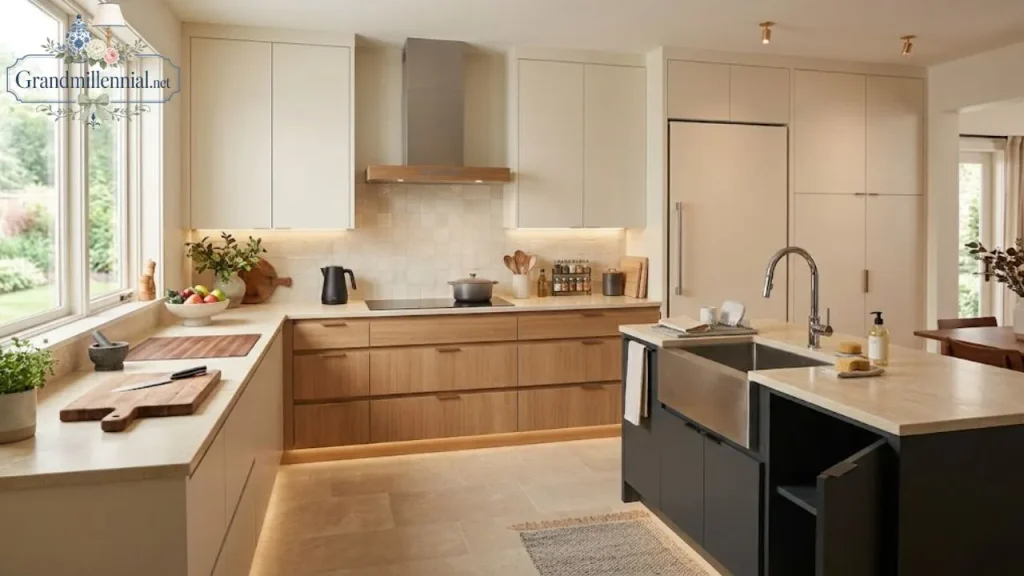
Warm natural
Think light wood, creamy surfaces, simple hardware, and soft lighting. This is a good choice if you want contemporary design without a stark appearance.
Quiet neutral
Use warm white, beige, mushroom, or another soft neutral as the main cabinet finish. Add personality through hardware, lighting, backsplash, and furnishings. This gives you considerable flexibility later.
Architectural contrast
Combine dark cabinetry with pale surfaces and natural timber. The effect can be dramatic without relying on elaborate door detailing. It works best when the room has enough light and sufficient visual space.
A Practical Cabinet-Selection Checklist
Before ordering, make sure you know:
- the cabinet construction
- the door style
- the overlay type
- the box material
- the drawer construction
- the hinge specification
- the drawer-slide specification
- the finish
- the cleaning instructions
- the warranty
- the included accessories
- the installation arrangements
- the appliance dimensions
- the exposed-panel requirements
- the filler requirements
- the expected lead time
If a salesperson cannot clearly explain these things, slow the process down. You are not buying a decorative object. You’re buying a working system that will occupy a large part of your home.
Questions to Ask Before Signing the Order
Take a written list to your cabinet consultation. Ask:
- What exactly is included in this price?
- Which features shown in the showroom cost extra?
- What are the cabinet boxes made from?
- What are the drawer boxes made from?
- Which hinges and runners are included?
- Are soft-close mechanisms standard?
- How are exposed ends finished?
- Are fillers included?
- Are appliance panels included?
- Who verifies the final measurements?
- What happens if the cabinets arrive damaged?
- How are replacement parts handled?
- What does the warranty exclude?
- Who handles installation?
- How should the cabinets be cleaned?
The last question is easy to ignore. Don’t. Different finishes have different care requirements.
The Best Modern Cabinet Is the One That Fits Your Life
There is no perfect cabinet for everyone. A family that cooks every night may prioritize drawers, durable finishes, pantry capacity, and easy-clean surfaces. A couple that entertains frequently may care more about a large island, beverage storage, integrated appliances, and a visually calm kitchen.
Someone renovating a small apartment may prioritize vertical storage and visual simplicity. Someone restoring an older house may prefer modern Shaker cabinetry rather than a completely flat European look.
The design should respond to the household. That is what turns a collection of cabinets into a kitchen.
Final Takeaway
The smartest way to choose modern kitchen cabinets is to stop thinking of them as a style purchase and start thinking of them as part of the architecture and machinery of the room. The door profile matters. The color matters. The material matters.
But so do the cabinet box, drawer hardware, storage layout, appliance coordination, lighting, installation, and maintenance requirements.
Current 2026 design research points toward a kitchen landscape that is less rigid than the old “all-white minimalist” formula: natural wood, warm neutrals, slab fronts, integrated appliances, and comfortable contemporary spaces are all gaining attention.
You don’t have to copy that direction. Use it as context. Choose the cabinet style that suits your home, the storage arrangement that suits your routines, and the construction quality that suits your budget. Then add the personality. That’s how a modern kitchen stays modern without becoming a hostage to the next trend.
Frequently Asked Questions
What cabinet style makes a kitchen look modern?
Flat-panel and slab doors are among the clearest choices for a modern kitchen, but slim Shaker doors can also work. The overall effect depends on proportions, hardware, color, and surrounding materials.
Are modern kitchen cabinets worth the investment?
They can be, particularly when the design improves storage and everyday workflow. Focus your budget on durable cabinet construction, reliable hardware, accurate installation, and a layout that works for your household.
What cabinet color will make a modern kitchen feel warmer?
Warm white, beige, mushroom, muted green, and natural wood tones can soften a contemporary kitchen. Pairing cabinetry with timber, warm lighting, or textured surfaces can make the room feel more inviting.
Which is better for a modern kitchen: slab or Shaker cabinets?
Slab doors create a cleaner, more streamlined appearance, while modern Shaker doors add subtle architectural detail. The better choice depends on the style of your home and how minimal you want the kitchen to feel.
Are wood cabinets considered modern?
Yes. Natural wood and wood veneer can look distinctly contemporary when combined with simple door profiles, restrained hardware, and clean-lined countertops.
How do you make modern cabinets look less plain?
Introduce contrast through materials rather than adding lots of decoration. Natural wood, textured backsplash tile, distinctive lighting, stone countertops, or carefully selected hardware can give simple cabinetry more character.
What should I prioritize when buying kitchen cabinets?
Start with the layout and storage requirements, then evaluate construction, drawer and hinge hardware, finish quality, installation, warranty, and price. A beautiful door style cannot compensate for poor functionality.
Do dark modern cabinets work in a small kitchen?
They can, but lighting becomes especially important. Using dark cabinets selectively, such as on a lower run or island, can provide contrast without making the entire room feel visually heavy.