

Black windows can completely change the character of a house. Against white siding, they create crisp architectural lines. Against brick, they can feel historic and substantial. Inside, a dark frame can make an ordinary window look more like a deliberate design feature, especially when there is a beautiful view beyond the glass.
That visual impact is exactly why they are so appealing. It is also why they deserve more thought than simply asking whether they are “in style.” A window is a long-term purchase. The frame material, glass package, finish, orientation, interior color, exterior palette, and installation quality all matter.
Black is only one part of that decision. So the better question is not whether black windows look good. They clearly can. The better question is whether they make sense for your particular house.
Why Black Windows Have Such Strong Visual Impact
White window frames tend to disappear into light walls. Black frames do the opposite. They create an outline around the glass, which gives the openings more visual weight. On a simple facade, that outline can add definition without requiring elaborate trim or decorative details.
There is also something psychologically useful about a dark frame: it tells your eye exactly where to look. A large window becomes a picture frame. A row of windows becomes a repeated architectural pattern. A sliding glass door can look more integrated with black exterior lighting, a dark roof, or a black front door.
This is why black frames are especially effective on homes with strong geometry. Modern houses, contemporary farmhouses, renovated brick homes, Craftsman-inspired exteriors, and transitional houses can all use the contrast successfully.
They can also work in more traditional houses when the proportions and window divisions are appropriate. The trick is not to make every element black. Usually, the stronger approach is to repeat the color selectively.
Black windows might connect visually with a front door, exterior sconces, gutters, roof accents, or a small amount of dark hardware. That creates rhythm rather than a theme.
The Best Reasons to Choose Black Windows
The most obvious benefit is appearance, but there are several layers to it.
They create architectural definition.
A black frame gives a window a clear edge. This is particularly effective against white, cream, pale gray, light wood, stone, and many brick colors. On a house with very little exterior ornament, that contrast can do a surprising amount of visual work.
They make views feel intentional.
Inside the house, dark frames can visually separate the landscape from the wall. Instead of seeing a window as a hole in the wall, you begin to see it as a framed view. This works especially well with large picture windows, corner windows, and expansive glass doors.
They coordinate easily with other dark details.
You do not need a completely black exterior. A dark roof, lanterns, door hardware, a front door, metal railings, or charcoal-colored accents can be enough to make the windows feel connected to the rest of the architecture.
They work across more styles than people sometimes assume
Black frames are strongly associated with modern farmhouse and contemporary homes, but that is not their only territory. Traditional houses can use them successfully when the grille pattern, trim, and proportions respect the architecture.
A traditional six-over-six window in black will communicate something very different from a thin, oversized contemporary picture window. The color matters, but the window design matters too.
The Downsides You Should Know Before Ordering
A good buying guide should make the disadvantages just as clear as the advantages.
Black frames attract visual attention.
That sounds like a benefit until you have a facade with awkwardly placed windows. A white frame can recede. Black cannot.
If one window is too small, one opening sits slightly off axis, or a facade lacks symmetry, a dark frame can make the problem more noticeable. Before choosing black, look at the entire elevation rather than judging one beautiful window in isolation.
The color can become a commitment indoors.
Black interiors are dramatic. They are also much harder to make disappear later. If your interior is mostly warm white walls, natural oak and soft textiles, a black frame can provide beautiful contrast.
But if you eventually move toward a very soft, traditional or monochromatic look, the frame will remain visually prominent. That is one reason a black exterior with a lighter interior can be such a useful compromise.
Some finishes and materials need more careful evaluation
“Black window” is not a material specification. A black vinyl window, black fiberglass window, painted wood window, and dark aluminum-clad window are different products with different construction and finish characteristics. The finish technology matters too.
Pella, for example, describes black fiberglass frames using powder-coat finishes designed to resist fading, chalking, and scratching, while its vinyl products use different finish and color-retention approaches. The lesson is simple: do not compare window colors without comparing the products underneath those colors.
Black Windows vs. White Windows: Which Is Better?
Neither color wins universally. White is the safer choice if you want the window to disappear into the architecture. Black is usually the stronger choice if you want the window to contribute to the architecture. Think about the difference this way:
| Black frames | White frames |
|---|---|
| Strong visual contrast | Softer visual presence |
| Become an architectural feature | Tend to blend into walls and trim |
| Excellent with modern, farmhouse and transitional designs | Extremely adaptable |
| Emphasize views | Let walls and furnishings dominate |
| Need more deliberate coordination | Easier to change surrounding decor |
| Can look dramatic from the street | Usually feels familiar and restrained |
There is no rule saying that the whole house must use one approach. A particularly practical solution is black outside and white inside. Manufacturers such as Andersen and Pella offer configurations that allow exterior and interior colors to differ, depending on the product line and material.
That arrangement gives the exterior the crisp outline many homeowners want while allowing the interior to remain light and flexible.
What About Heat?
This is one of the questions that deserves a more careful answer than “black gets hot.” Yes, dark surfaces absorb more solar energy than light surfaces. But that does not automatically mean a properly designed black window will make the room dramatically hotter or perform poorly.
Window performance depends on the entire assembly: glass, frame material, glazing configuration, orientation, shading, seals, and installation.
Energy performance is typically evaluated using measurements such as U-factor and solar heat gain coefficient rather than simply the visible color of the frame. The more useful question is therefore:
Where will the window be installed, and what product is being specified?
A heavily sun-exposed south- or west-facing elevation deserves more attention than a shaded north-facing opening. This is especially relevant in hot climates or where dark frames receive intense direct sun for long periods.
Some manufacturers specifically discuss climate suitability and the effects of solar exposure when explaining black finishes. Do not reject black automatically because you have heard that it absorbs heat. But do not ignore solar exposure either. Ask for the actual product specifications.
Which Material Is Best for Black Windows?
Black vinyl windows
Vinyl is attractive when keeping maintenance and initial cost under control matters. Modern vinyl products are available in black, including exterior-only configurations on some product lines. Pella, for example, offers black as an exterior option on certain vinyl windows while allowing a white interior.
The important question is not simply whether the vinyl is black. Ask how the color is produced, what the manufacturer says about weathering, and what the warranty covers.
Black fiberglass windows
Fiberglass is worth considering when durability and dimensional stability are high priorities. It also provides more design flexibility than many homeowners realize. Pella currently offers solid-color black fiberglass as well as dual-color configurations with white interiors and black exteriors.
For homeowners who want a strong black frame without committing to black everywhere inside, fiberglass can be an appealing middle ground.
Black wood windows
Wood brings a completely different character. The interior can feel warmer and more architectural, especially with oak floors, natural cabinetry, plaster walls, or other organic materials.
The exterior may use a protective cladding or factory-applied finish depending on the product. Wood is usually the choice for someone who cares as much about the interior experience as the exterior appearance.
Aluminum and steel-look windows
These can create a very distinctive architectural appearance. They are particularly effective in contemporary, industrial, and historic-inspired designs.
But do not choose them solely because the profile looks slim in a photograph. Compare thermal performance, condensation considerations, finish quality, and the complete window system.
Black Outside, White Inside: The Smart Compromise
For many homeowners, this is the option that solves the biggest design problem. You get the exterior contrast without making every interior room visually dependent on black. This can be particularly useful when:
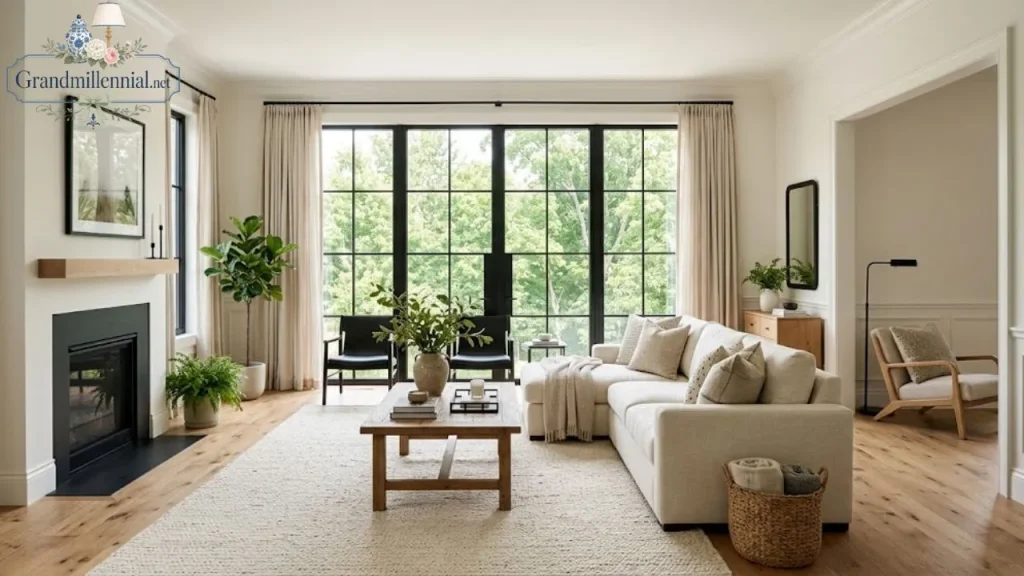
- the exterior is white or light gray;
- the house has brick or stone;
- the interior is traditional;
- you want flexibility with future furnishings;
- the windows are large and visually dominant;
- the home receives limited natural light.
Andersen specifically shows black-exterior/white-interior combinations as an available configuration on certain product lines. It is worth asking about this option before assuming that “black windows” means black on both sides.
How to Pair Black Windows With Exterior Colors
White or warm-white siding
This is probably the most recognizable combination. The black creates maximum contrast, but the temperature of the white matters. A creamy warm white can feel softer and more residential. A crisp cool white produces a sharper, more contemporary effect.
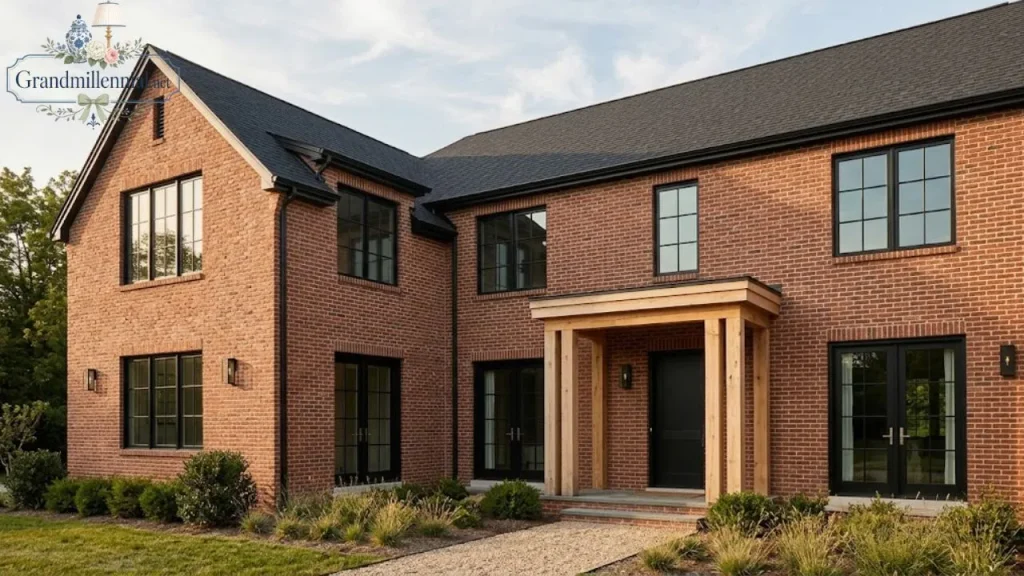
Brick
Black windows can be excellent with brick because they introduce a strong architectural line without requiring you to change the brick itself. With red brick, consider whether you want the house to feel traditional, modernized, or industrial. With painted brick, black windows can create an especially graphic exterior.
Gray
Gray siding gives you less contrast than white, but often a more restrained appearance. A charcoal gray exterior with black windows can look sophisticated, although you should check that the windows remain visually distinct enough from the wall.
Natural wood
Black and wood are an especially useful pairing because the dark frame provides structure while the wood supplies warmth. The combination avoids the coldness that an all-black-and-white palette can sometimes create.
Green and muted colors
Sage, olive, and muted blue-green siding can work beautifully with black windows. The dark frame gives these quieter colors enough definition without overwhelming them. The best result usually comes from repeating black in only a few other places rather than adding black everywhere.
Should You Use Black Trim Around Black Windows?
Not automatically. This is one of the easiest places to overdo the look. Black windows already provide a strong outline. Adding thick black casing around every opening can make the room feel heavier than expected. White or warm-white trim can create a more layered look.
Black trim can work when you intentionally want a graphic, contemporary interior. No-trim drywall returns can produce another effect entirely, particularly in minimalist homes.
Pella’s current styling guidance highlights white trim, black trim, and drywall returns as distinct approaches, which is useful because the same black window can look surprisingly different depending on what surrounds it.
Do Black Windows Make a Room Look Darker?
They can, visually. That is different from saying they reduce the amount of daylight entering the room. A dark frame occupies visual space and creates stronger contrast around the glass. In a small room with limited daylight, that contrast may make the window feel more substantial.
Whether that is good depends on the room. In a bright kitchen overlooking trees, the effect can be beautiful. In a small north-facing bedroom with already-limited daylight, you may prefer a lighter interior frame. This is another reason to evaluate the interior and exterior separately rather than treating window color as a single decision.
Are Black Windows Timeless or Just a Trend?
They are neither completely trend-proof nor merely a fad. Dark window frames have a much longer architectural history than the current modern-farmhouse wave. Black and dark metal windows have appeared in industrial, commercial, and residential architecture for generations.
What is more likely to date is a specific combination. For example, black windows paired with every possible modern farmhouse feature can become tied to a particular decorating era. Black windows paired with good proportions, appropriate architecture, and natural materials.
Restrained detailing has a better chance of aging gracefully. The distinction matters. A timeless choice usually has less to do with whether a color is fashionable today and more to do with whether it makes sense with the building itself.
Common Mistakes People Make With Black Windows
Choosing them from a rendering
Digital renderings are useful for direction, not final approval. A black frame can look different in bright afternoon light, cloudy weather, and warm interior lighting.
Ignoring the grille pattern
A black window with a traditional grille pattern communicates something completely different from a large uninterrupted pane. Look at the entire window design.
Matching every exterior element
Black windows do not require a black door, black roof, black siding, black gutters, and black garage door. Too much repetition can flatten the facade.
Forgetting screens
Screens can change the appearance of a window considerably. Ask to see the actual window with the screen installed.
Assuming every black finish is equivalent
It isn’t. Compare material, finish, warranty, color-retention claims, and product specifications.
Painting existing vinyl without understanding the risks
Painting an existing frame is not the same as buying a factory-finished black window. If you are considering painting existing windows, confirm whether the frame material, manufacturer, and warranty allow it, and whether the coating system is appropriate.
How Much Do Black Windows Cost?
There is no reliable universal “black window premium.” Some manufacturers offer black as a standard color on particular materials and product lines. Pella, for example, states that certain black fiberglass and exterior-color options do not necessarily add cost compared with white within the same offering.
Other configurations, materials, or interior finishes can cost more. That is why blanket claims such as “black windows always cost 20% more” are not useful enough for a real purchasing decision. Get a quote for the same:
- window size;
- frame material;
- glass package;
- operation;
- grille configuration;
- interior finish;
- exterior finish;
- hardware;
- installation method.
Then change only the frame color. That gives you an actual color premium rather than an internet average.
What to Ask Before You Order
Take this list to your window supplier or builder.
Ask about the frame
- What material is it?
- Is the black color integral, painted, coated, or clad?
- Is the finish factory applied?
- What does the warranty cover?
- Is the same finish available on the interior?
Ask about performance
- What is the U-factor?
- What is the SHGC?
- What glazing package is included?
- Is Low-E glass available?
- Does the recommendation change for my climate or orientation?
Ask about appearance
- Can I see a physical black sample?
- Can I see the interior and exterior separately?
- What does the screen look like?
- What grille colors are available?
- What hardware options coordinate with the frame?
Ask about installation
- Does the installation method change for this product?
- Are there special requirements for dark frames?
- What does the manufacturer require for warranty coverage?
Those questions are considerably more valuable than simply asking, “Are black windows good?”
A Better Way to Decide
Before placing an order, evaluate the house in three layers.
Layer one: Architecture
Look at the roof, siding, masonry, proportions, and existing trim. If the architecture is simple and geometric, black frames may strengthen it. If the house relies heavily on delicate traditional trim, you may need a more carefully selected window style.
Layer two: Interior
Stand inside the room. Look at the flooring, cabinetry, wall color, and furniture. Ask whether you want the window to disappear or become part of the room’s architecture.
Layer three: Performance
Only after the design direction is clear should you compare the actual window products. Consider material, glass, climate, orientation, finish, warranty, and installation.
That prevents a common mistake: choosing a beautiful frame color first and discovering later that the selected product does not fit the project’s performance or budget requirements.
When Black Windows Are Probably a Great Choice
Choose them with confidence when:
- you like strong architectural contrast;
- your house has clean or balanced proportions;
- you have a light exterior that needs definition;
- you want windows to act as design features;
- black already appears naturally elsewhere in the architecture;
- you have attractive outdoor views;
- you are comfortable making a long-term style decision.
When You Might Prefer Something Else
Pause before choosing black if:
- the house already has a very busy exterior;
- the windows are irregularly positioned;
- you have limited natural light indoors;
- your interior style depends on very soft, low-contrast finishes;
- your climate and solar exposure require additional product scrutiny;
- the black upgrade consumes money you would rather spend on better glazing or installation;
- you are choosing them solely because they are fashionable.
That final point may be the most important. A high-quality window with appropriate glass and installation is generally a better investment than paying for a dramatic color while compromising the things that actually affect comfort and performance.
The Bottom Line
Black windows can be one of the most effective architectural choices you make, but they work best when they are treated as part of the house rather than as a trend layered onto it. They can sharpen a white exterior, modernize brick, frame a landscape, and give an ordinary room a stronger sense of structure.
They can also expose awkward proportions, dominate a small room, and become expensive to change if you choose the wrong product or commit to an interior color you later dislike. The smartest approach is not to ask whether black is better than white. Ask what you want the windows to do.
If you want them to disappear, white may be the better answer. If you want them to frame the architecture and the view, black may be exactly right. And if you love the exterior look but are unsure about the interior, black outside with a lighter interior may give you the balance you were looking for all along.
Frequently Asked Questions
Are black windows still popular in 2026?
Yes. Current manufacturer and design content continues to feature black frames prominently, but the conversation has shifted from simple trend coverage toward questions about materials, styling, durability, and long-term suitability.
Do black windows get hotter than white windows?
Dark surfaces absorb more solar radiation, so frame temperatures can be higher in direct sunlight. The effect on overall window performance depends on the complete window system, glass, orientation, material, climate, and installation.
Are black windows more expensive?
Not necessarily. Pricing depends heavily on material and product line. Some manufacturers offer black as a standard option, while particular finishes or interior configurations can cost more.
Do black vinyl windows fade?
Quality varies by product and finish. Look for the manufacturer’s specific information about color retention, weathering, and warranty coverage rather than assuming all black vinyl behaves identically.
Should window trim be black or white with black frames?
Both can work. White trim creates contrast and keeps the room lighter visually, while black trim produces a stronger, more graphic appearance. No-trim drywall returns are another contemporary option.
Do black windows work with traditional houses?
Yes, provided the window proportions, grille pattern, and surrounding trim respect the architecture. Black does not automatically make a traditional house look modern.
Are black windows a good choice for a hot climate?
They can be, but solar exposure deserves careful consideration. Compare actual window specifications, glass options, frame materials and manufacturer recommendations for your climate rather than making the decision based solely on color.
Is black outside and white inside a good idea?
For many homes, yes. It provides exterior contrast while keeping the interior more flexible and visually lighter. Several manufacturers offer dual-color configurations depending on product line and material.