

The backsplash is a surprisingly small part of a kitchen, but it sits in one of the most noticeable places: directly at eye level between the countertop and cabinetry. A backsplash can make simple cabinets look deliberate, add personality to a plain kitchen, or make an expensive renovation feel visually disjointed.
The wrong one can do the opposite. A busy countertop paired with busy tile, for example, can leave the entire room looking restless. The best kitchen backsplash ideas modern designers are using in 2026 aren’t necessarily the loudest ones.
They’re designs that understand proportion, material, light, and how the kitchen is actually used. That shift is reflected in current industry research. The National Kitchen & Bath Association’s 2026 kitchen trends report identifies slab/solid-surface backsplashes as an increasingly popular direction.
Ceramic and porcelain tile, engineered quartz, and quartzite remain leading backsplash materials. So where should you start? Not at the tile store. Start with the kitchen you already have.
What Makes a Kitchen Backsplash Look Modern?
“Modern” doesn’t mean that every surface has to be white, glossy, and completely plain. Modern backsplash design is more about intentionality.
Clean proportions, controlled pattern, larger visual planes, restrained grout lines, and materials that complement the rest of the kitchen backsplash ideas tend to create a more current appearance. That could mean:
- a quiet porcelain slab behind warm wood cabinets
- handmade zellige with subtle variation
- vertically stacked rectangular tile
- a dramatic stone backsplash carried from the countertop
- a muted geometric tile
- a monochromatic backsplash that blends with the cabinets
- a simple ceramic tile installed in an unexpected direction
The important question is not whether a particular material is “modern.” Ask whether the scale, color, texture, and installation make sense together. That’s a much more useful test.
15 Modern Kitchen Backsplash Ideas Worth Considering
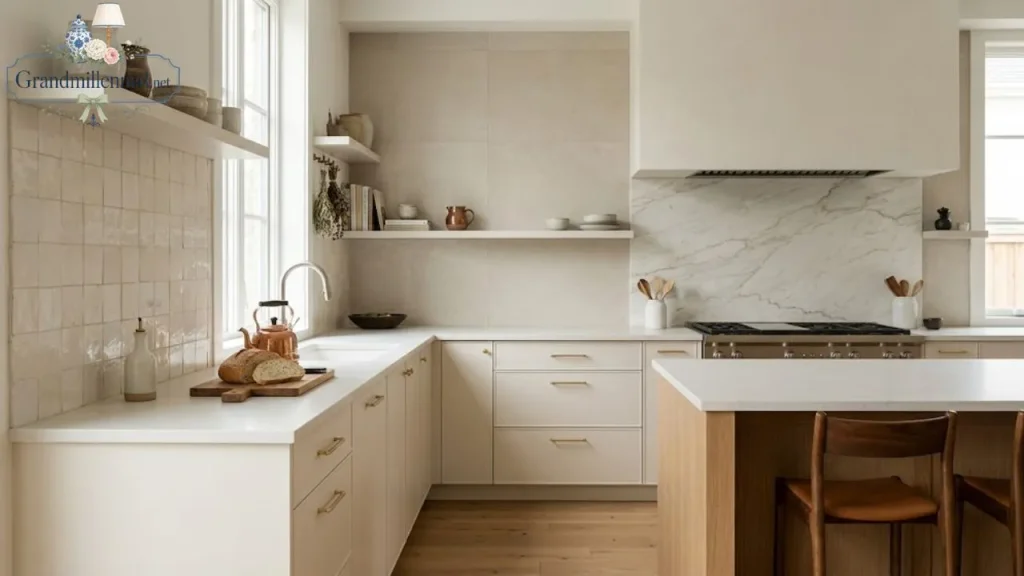
Carry the Countertop Material Up the Wall
One of the cleanest modern approaches is to continue the countertop material vertically. This creates a countersplash or slab-style backsplash and eliminates many grout lines. It works particularly well when the countertop has attractive but controlled veining.
The continuous surface gives the kitchen a calm architectural quality instead of dividing the wall into lots of small pieces. The approach is especially effective behind a range or beneath open shelving, where a large uninterrupted surface becomes part of the architecture.
Current 2026 trend reporting shows strong interest in solid-surface and slab backsplash applications. Best for: minimalist, contemporary, and organic-modern kitchens. Watch out for: highly dramatic stone patterns. If the countertop already has powerful movement, extending it across an entire wall can become visually dominant.
Try Warm White Zellige
Zellige remains popular because it does something perfectly flat manufactured tile can’t: it changes subtly as light moves across the wall. Each handmade tile can have slight differences in color, surface, and edge. That variation creates warmth.
But zellige isn’t automatically the right choice for every kitchen. Its irregular surface and grout joints can demand more attention than a smooth large-format porcelain surface. House Beautiful makes a similar practical point when discussing high-gloss zellige in kitchens where splatters and cleaning are everyday realities.
Best for: warm modern, Mediterranean-modern, and organic kitchens. Choose it when: you want texture without a complicated pattern.
Use Large-Format Porcelain
If your idea of modern is clean, quiet, and easy to maintain, large-format porcelain deserves serious consideration. Large tiles reduce the number of grout joints and create a more continuous appearance.
Porcelain is also available in versions that imitate stone, concrete, and other materials, making it possible to achieve a high end appearance without automatically choosing natural stone.
The NKBA’s 2026 report places ceramic and porcelain tile at the top of predicted backsplash material choices. Best for: busy kitchens, minimalist kitchens, and homeowners who dislike grout.
Install Slim Tile Vertically
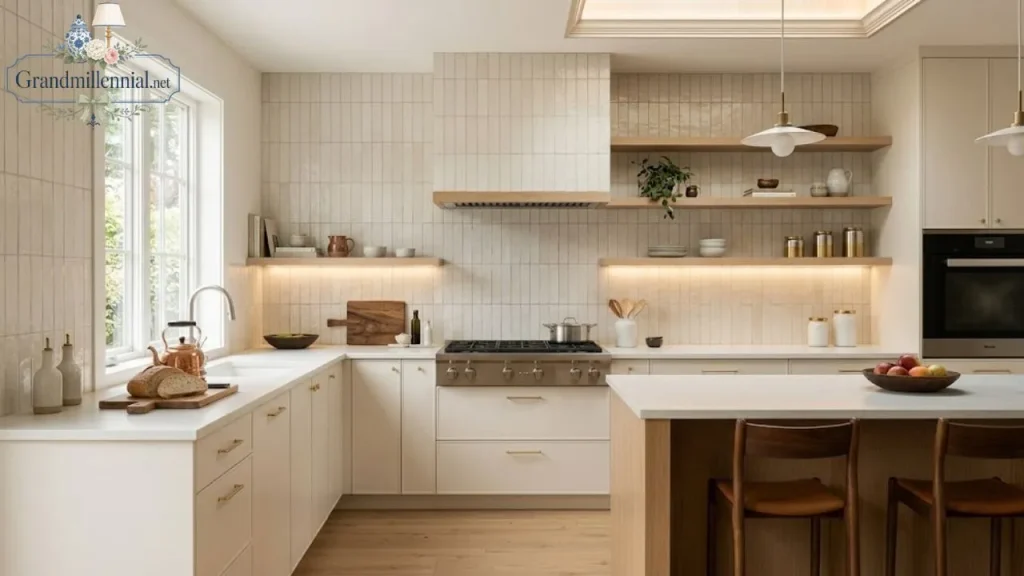
Take a narrow rectangular tile and turn it upright. That simple change can make a familiar material feel much more current. Vertical installation draws the eye upward and works particularly well when the backsplash extends toward the ceiling or meets tall cabinetry.
It also gives you a way to use relatively inexpensive tile without producing an ordinary-looking installation. Best for: compact kitchens, narrow walls, and kitchens with tall ceilings.
Match the Backsplash to the Cabinets
Instead of contrasting the cabinets, repeat their color in the backsplash. This creates a quieter, more enveloping effect. Imagine muted green cabinets with a slightly different green handmade tile. Or warm cream cabinetry paired with a softly textured ivory backsplash.
The backsplash doesn’t disappear completely. Instead, the color relationship makes the room feel intentionally layered. House Beautiful shows this technique with sage cabinetry and a coordinated backsplash. Best for: kitchens where the cabinets are the primary feature.
Choose a Soft Green
Green has become an important kitchen color rather than a short-lived accent. The 2026 NKBA research lists green among the leading kitchen colors, alongside neutrals and blue. For a modern backsplash, consider:
- sage
- olive
- eucalyptus
- muted moss
- gray-green
The trick is restraint. A dusty green backsplash can feel sophisticated beside natural wood and warm white cabinets. A highly saturated green may become the first thing you notice every time you enter the kitchen.
Use Blue as a Controlled Accent
Blue can give a neutral kitchen depth without turning it into a themed room. Deep navy works particularly well with white cabinetry and metallic fixtures. Softer blue-gray tiles can create a calmer effect. The current NKBA report also identifies blue as one of the stronger kitchen color directions.
If you want the color to feel intentional rather than decorative, repeat a small amount of it elsewhere in the kitchen through textiles, artwork, or accessories.
Give Subway Tile a Modern Layout
Subway tile isn’t automatically dated. The problem is usually not the tile itself. It’s the predictable combination of white rectangular tile, standard running bond, high-contrast grout, and a design that looks exactly like hundreds of kitchens before it. Change the installation. Try:
- vertical stack
- horizontal stack
- herringbone
- offset with unusual proportions
- oversized rectangular tile
- handmade versions with subtle variation
Architectural Digest’s current expert coverage similarly notes that white subway tile remains a valid material, even as designers increasingly explore more distinctive options.
Use a Dramatic Stone Slab Behind the Range
If you want one focal point, the range wall is often the logical place to put it. A strongly veined marble, quartzite, or porcelain slab can turn a practical wall into the visual anchor of the kitchen. The rest of the room should then become quieter.
Think of it like editing a photograph: one area gets the attention; everything around it supports the composition. Homes & Gardens identifies strongly veined stone slabs as one of the notable backsplash directions for 2026.
Try Handmade Square Tile
Modern doesn’t always mean rectangular. Small square handmade tiles in warm neutrals can look surprisingly contemporary when the rest of the kitchen is simple. The irregularity gives the wall personality while the simple shape keeps it from becoming overly decorative. This is especially effective with:
- oak cabinets
- stone countertops
- simple hardware
- warm lighting
Create a Quiet Monochromatic Backsplash
If your kitchen already contains several materials, don’t add another competing color. Instead, stay within the same color family. For example: cream cabinets + ivory countertop + warm white tile or oak cabinets + beige stone + sand-colored tile. This is one of the safest ways to make a kitchen feel modern without relying on a trend.
Use a Full-Height Backsplash
Stopping the backsplash underneath upper cabinets is not the only option. Taking the material higher can make a kitchen feel more architectural, especially behind:
- the range
- a range hood
- open shelving
- a sink wall
- a wall without upper cabinets
A full-height backsplash can also make a small kitchen feel taller because the eye reads the wall as one continuous surface. The trade off is cost. More coverage means more material, more installation, and potentially more complicated cuts around outlets and cabinetry.
Introduce a Subtle Geometric Pattern
Geometric tile can add interest without turning the backsplash into the entire personality of the kitchen. Look for patterns with:
- low contrast
- restrained colors
- simple geometry
- enough visual breathing room
A quiet geometric tile can be particularly useful when the cabinets and countertops are plain.
Mix Materials in One Kitchen
Using two backsplash materials can work beautifully when each has a job. For example:
- neutral tile across the main wall
- slab stone behind the range
Or:
- stone countertop backsplash
- decorative tile inside a niche
House Beautiful features examples where different backsplash materials are used to create zones and visual emphasis. The danger is making every section different. Two materials can look intentional. Four can look indecisive.
Try Patchwork Carefully
One of the more expressive 2026 directions is the patchwork-style backsplash, where different tiles, finishes, shapes, or colors are combined into a deliberately collected composition.
BHG reports that the 2026 NKBA data points toward increasingly bold statement backsplashes, while designers recommend maintaining a cohesive palette so the result doesn’t become visually chaotic. This is not a “grab six random tiles and hope” project. Pick a color family first. Then vary the pattern or finish.
How to Match the Backsplash to Your Cabinets
The cabinets should usually be the first permanent element you consider.
White cabinets
Almost anything can work, but don’t automatically choose bright white tile. Warm white, beige, pale green, blue-gray, and natural stone can make white cabinetry feel more sophisticated.
Wood cabinets
Warm wood generally benefits from materials with natural variation:
- creamy ceramic
- zellige
- limestone-look porcelain
- warm stone
- muted green
- soft gray
Avoid stacking too many competing wood tones and patterns.
Dark cabinets
Dark cabinetry can support:
- pale stone
- warm white tile
- dramatic marble
- reflective glass
- tonal dark tile
The amount of natural light matters enormously here.
Colored cabinets
You have two broad options: Repeat the color for a calm, enveloping room. Contrast the color for a more graphic result. Neither is automatically better.
How to Match a Backsplash to the Countertop
This is where many beautiful kitchens go wrong. If your countertop has strong movement, the backsplash usually benefits from restraint. If your countertop is visually quiet, the backsplash has more room to carry pattern. For example:
Busy marble countertop + handmade patterned tile: potentially chaotic. Quiet cream quartz + expressive green tile: easier to balance. Plain wood countertop + dramatic stone backsplash: potentially striking. The backsplash and countertop don’t have to match. They need to belong together.
Choose the Material According to How You Cook
This may be the most useful decision in the entire project. If you cook frequently with oil, sauces, and frying, don’t choose a backsplash solely because it looks beautiful in a magazine photograph. Consider:
- surface texture
- grout amount
- stain resistance
- cleaning method
- sealing requirements
- heat exposure
- manufacturer’s care instructions
Smooth surfaces are generally easier to wipe than heavily textured ones. More grout means more joints to clean. Very light surfaces show splashes. Highly reflective surfaces can make fingerprints, water marks, and grease haze more noticeable. The “best” backsplash is therefore partly a lifestyle decision.
Full Height or Standard Height?
A traditional backsplash usually fills the space between countertop and upper cabinets. A modern kitchen may extend the backsplash:
- all the way to the ceiling
- behind the range hood
- around open shelves
- across an entire feature wall
Choose full height when:
- upper cabinets don’t cover the wall
- the material is visually attractive
- you want a focal wall
- you want to emphasize ceiling height
- you are using a slab
Keep it contained when:
- the countertop is already dramatic
- the kitchen has several competing materials
- you’re working with a tight budget
- the backsplash material is expensive
- there is little visual reason to extend it
More isn’t automatically better.
What Grout Color Makes a Backsplash Look Modern?
Grout can completely change the appearance of tile.
Matching grout
Creates a quieter, more continuous appearance.
Contrasting grout
Makes every tile shape and joint more obvious.
Warm neutral grout
Often works beautifully with:
- cream tile
- zellige
- beige stone
- warm white cabinets
- natural wood
If your goal is a calm modern kitchen, extremely high-contrast grout can sometimes make the backsplash look busier than expected. Always view grout samples beside the actual tile rather than judging colors from a screen.
Modern Backsplash Ideas for Small Kitchens
Small kitchens don’t necessarily need tiny tiles. In fact, larger-format tile or slab material can sometimes make the wall feel calmer because there are fewer visual breaks. For a small kitchen:
- Keep the palette restrained.
- Consider larger tile.
- Avoid excessive pattern.
- Use reflective surfaces strategically.
- Extend the backsplash upward if the wall allows it.
- Coordinate the grout closely with the tile.
- Let one feature dominate.
A small room can handle personality. It simply has less room for competing personalities.
What Looks Dated?
There is no universal list of “bad” backsplash materials because design depends on context. But some combinations can make a kitchen feel less current:
- overly busy mosaic paired with busy granite
- too many unrelated accent tiles
- extremely high-contrast grout used everywhere
- decorative borders that don’t relate to the rest of the kitchen
- several competing backsplash materials
- trendy color with no connection to the room
- tiny tile covering a large wall without a deliberate reason
The issue isn’t always the material. It’s usually a lack of visual hierarchy.
How Much Should You Spend?
The smartest place to spend money isn’t necessarily on the most expensive tile. Spend more where it changes the finished appearance or solves a difficult installation problem. That might mean:
- better tile quality
- better layout planning
- experienced installation
- carefully fabricated slab
- precise edge finishing
- appropriate grout
- difficult outlet or corner work
And save money where the finished result won’t suffer. A simple ceramic tile installed beautifully can look better than expensive stone installed without attention to layout.
Common Backsplash Mistakes
Choosing tile before looking at the countertop
Bring the countertop sample, cabinet sample, and hardware finish together.
Ignoring lighting
A tile that looks creamy in daylight may appear yellow under warm artificial lighting.
Picking a trend without considering the room
A beautiful trend can still be wrong for your architecture.
Using too much pattern
If everything is a focal point, nothing is.
Forgetting outlet placement
Electrical outlets, switches, and appliance connections affect the visual rhythm of a backsplash.
Buying before checking dye lots
Natural and handmade materials can vary. Order enough material from the same production batch when applicable.
Forgetting maintenance
A backsplash isn’t wall art. You’ll be cleaning it.
A Simple Way to Choose Your Backsplash
If you’re overwhelmed by hundreds of samples, use this five-step filter.
Identify the loudest element.
Is it the countertop? The cabinets? The flooring? The backsplash should usually not compete with the strongest existing feature.
Choose your visual role.
Decide whether the backsplash should be:
- background
- texture
- color
- pattern
- focal point
Choose the material
Now compare porcelain, ceramic, stone, glass, quartzite, slab, and other options.
Test the lighting
Look at the sample during the day and at night.
Test the maintenance
Ask yourself one uncomfortable but useful question: “Will I still want to clean this surface after cooking dinner on a Tuesday?” If the answer is no, keep looking.
The Best Modern Backsplash Is the One That Makes the Whole Kitchen Make Sense
The strongest kitchen backsplash ideas modern homeowners can use aren’t necessarily the trendiest. They are the ones that connect the countertop, cabinets, lighting, hardware, and architecture without making the room feel over-designed.
If your cabinets are the star, let the backsplash support them. If the kitchen is visually quiet, let the backsplash provide texture or pattern. If the countertop is dramatic, give it room to breathe. And if you’re renovating for the long term, don’t confuse “current” with “temporary.”
The most successful modern kitchens usually have something else in common: they look considered rather than decorated. That is a subtle difference. And it’s often what separates a kitchen that looks good in a photograph from one that still feels right years later.
Frequently Asked Questions
What is the most modern backsplash for a kitchen?
Large format porcelain, slab surfaces, natural stone, refined ceramic tile, handmade zellige, and carefully installed stacked tile are all strong modern directions in 2026. The best choice depends on the rest of the kitchen.
Is subway tile still modern?
Yes. Subway tile isn’t inherently dated. A contemporary color, proportion, finish, or installation pattern can make it feel fresh.
What backsplash looks best with white cabinets?
White cabinets work with warm white, stone, green, blue-gray, marble, and many neutral tiles. Choose based on your countertop and lighting rather than the cabinet color alone.
What backsplash is easiest to clean?
Smooth, low-porosity surfaces with fewer grout joints are generally easier to maintain. Large-format porcelain and slab materials can reduce the amount of grout that needs regular cleaning.
Is zellige good for a kitchen backsplash?
Zellige can be beautiful and highly textured, but its irregular surface and grout joints may require more cleaning attention than a smooth, large-format material.
Should the backsplash match the countertop?
It can, but it doesn’t have to. Matching creates continuity, while complementary materials create contrast. The key is controlling the overall visual weight.
What backsplash makes a small kitchen look bigger?
Large format tile, slab surfaces, and light, coordinated colors can create a less fragmented appearance. Reflective finishes can also help bounce light.
What grout color is best for modern kitchens?
A grout close to the tile color usually creates a quieter appearance. Contrasting grout emphasizes the tile pattern and creates a more graphic effect.