

A fireplace changes how a room feels. It becomes the place people gather, the thing the furniture faces, and the part of the house everyone remembers.
It is also one of the few features of a home that can burn the house down if it is planned or maintained badly. That is why the details matter more here than for almost any other design choice.
An isokern fireplace is a modular masonry system built from lightweight volcanic pumice. This guide explains what that means, where the brand comes from, what the independent code report says about installation, and how to design the room around it.
It names its sources and says plainly what could not be verified. It quotes no prices, because none could be confirmed, and it recommends no sellers.
What this modular system is
Isokern is a brand of fireplace and chimney components. Instead of laying brick and mortar on site, a builder stacks factory-made pumice parts that form the firebox, the smoke chamber and the chimney.
Trade press describes the idea simply. A JLC Online snippet says Isokern fireplaces were first manufactured in Denmark, using raw volcanic pumice quarried in Iceland.
The finished unit is designed to look like a traditional masonry fireplace. A manual for the Magnum series says the units are conventional indoor or outdoor fireplaces designed to appear like traditional masonry fireplaces.
Once built, the visible part is whatever you choose to put around it: brick, stone, plaster, or tile. The system sits behind that finish and does the work of containing fire and carrying smoke.
For a homeowner, the practical point is that an isokern fireplace is a system, not a single object. The firebox, the chimney, the foundation,n and the finishes must all be planned together.
Why pumice, and what it does
Pumice is volcanic rock full of tiny air pockets. That makes it light and a good insulator, which is the property the whole system is built around.
The UK maker Schiedel states it directly: pumice is a natural insulator. Its page adds that the insulation helps flue gases reach their working temperature quickly after lighting.
The same page says pumice keeps the chimney warmer as the appliance’s heat output falls, which can reduce condensation and soot build-up. It also notes that pumice expands and contracts very little with temperature, which lowers the risk of cracking.
Weight is the other benefit. Schiedel says the material is lightweight enough that one person can lift and build the chimney units.
A retailer snippet makes a related claim, saying the components are lightweight while keeping their UL 127 and UL 103HT listings, and that systems are therefore less expensive to install than traditional masonry fireplaces. That is a seller’s statement,nt and I could not confirm it independently.
Treat the cost point as something to test with written quotes, not as a fact.
Isokern in the UK and in North America
The same name covers different products in different places, and this is where many online pages go wrong.
In the UK and Europe, Schiedel sells pumice liners and chimney modules. Its page states the liners are CE certified to EN1857 and that they suit all fuels, but are not suitable for condensing appliances, including pellet or biomass.
In North America, the fireplace units are made by Earthcore Industries and are listed and evaluated against US standards. The independent evaluation report used below covers the 2006 through 2021 editions of the IBC, IRC and IMC.
That means clearances and rules quoted for a UK liner do not carry across to a US firebox. A UK snippet gives a distance to combustibles of 200 mm from the inner surface of a liner, which is a British figure under British regulations.
Check which market your product belongs to, and read the manual for the exact model you buy.
Local rules also differ within each country. Always confirm with your building office, because the manual itself tells installers to consult the local authority about permits.
Series and sizes
The US range is organised into series. A trade snippet says the Standard series was the first Isokern modular fireplace introduced in the United States, and that it lets you choose wood or gas, indoor or outdoor.
The Magnum series is the larger family. A design-site snippet says it offers the largest openings in the market, with finished openings of 28, 36, 42 and 48 inches wide.
The independent report lists Magnum models 28, 36, 42, 48, 60 and 72. Retailer pages also show very wide units up to 108 inches, described as statement pieces for great rooms and lodges.
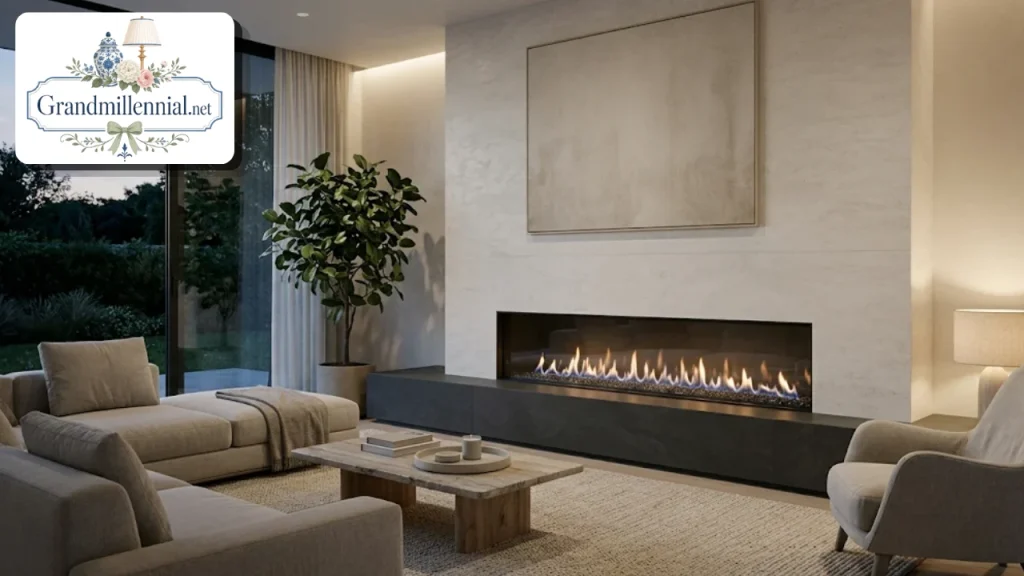
There are also linear gas models and vent-free units, as well as outdoor-rated systems. The ICC-ES gas report names Isokern linear series models such as 82L48 and 82L96.
Choose the width from the room, not from the catalogue. A very wide opening in a small living room will dominate it and may not draw well.
Ask your supplier for the exact opening, firebox depth, and chimney size for each model, because those numbers drive the structure and the cost.
Wood or gas, indoor or outdoor
The first decision is the fuel. A wood fire gives the traditional crackle and needs a full chimney, regular cleaning, and a supply of dry hardwood. Gas is cleaner to run but changes the flue and appliance requirements.
A manufacturer FAQ snippet says vented gas logs can be used in the IBV, Standard and Magnum series, with logs ranging from 50,000 BTU to 100,000 BTU maximum. That page would not open in full, so check the figure in the current manual.
Larger Magnum models have extra air requirements. A manual snippet says the 84, 96, 108, and 120-inch models need two 4-inch outside air kits, and that the Magnum requires a standard refractory firebrick liner in the firebox.
Outdoor use is a separate product line. A retailer page describes outdoor-rated systems built with the same pumice as the indoor collection, aimed at patios.
Do not move an indoor model outside, or the reverse. Use the unit that is listed for the location, and follow its installation manual.
The Isokern name also appears on vent-free gas enclosures. Vent-free products release combustion gases into the room, and rules for them vary by region, so check your local code before choosing one.
How it goes together
The build sequence is simple to describe and exacting to carry out. The foundation and support slab come first, then the hearth, then the firebox, smoke chamber, and chimney sections.
The Magnum manual lists the areas of concern as construction of a proper load-bearing foundation and concrete support slab, code-required hearth extension substrates and supports, proper assembly of components, and clearance to combustibles.
It also says all work near the fireplace must meet or exceed the manual and local code. In other words, the manufacturer is not responsible for other trades’ work around the unit.
An Earthcore chimney instruction snippet describes the chimney sections as slip-fit parts held with button-lock tabs, with a 2-inch clearance to combustibles maintained. It warns not to fill the clearance space with insulation or other materials.
That last point is easy to miss. A well-meaning installer who stuffs insulation into a clearance gap can defeat the safety design.
Plan the sequence so that framing, finishes, and the fireplace trade know the exact dimensions before anyone starts.
Foundation, floors,s and hearth
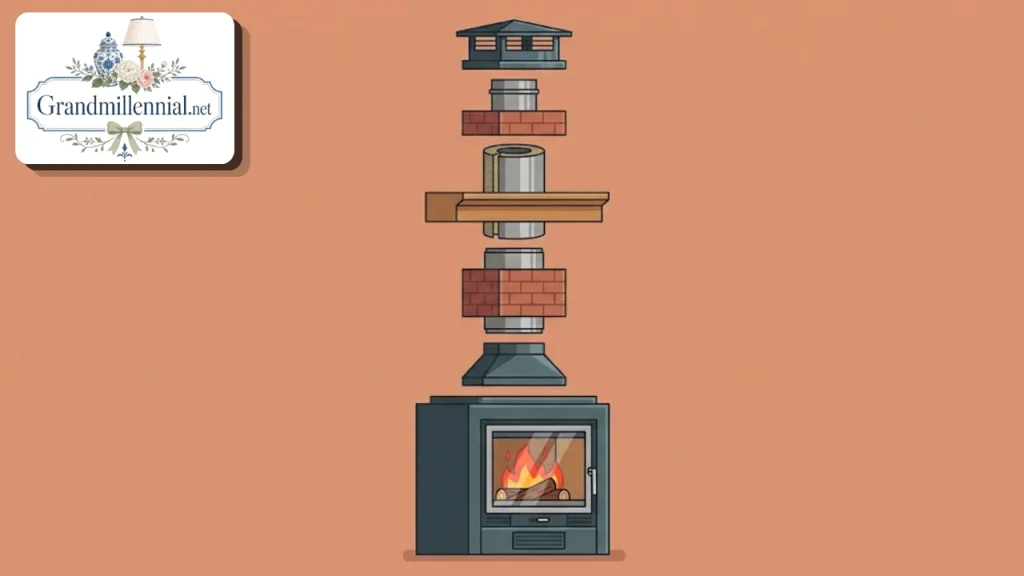
The independent report is the most useful source for structure. It is the ICC-ES evaluation of the Isokern Magnum series, report ESR-2316, and I opened it for this guide.
It says a noncombustible foundation adequate for all required loads is necessary and must be approved by the building inspector. Structural plans from a licensed design professional set the foundation and anchorage.
A fireplace on a wood floor is possible but not casual. The report says a licensed design professional must determine support and anchorage for gravity and seismic loads, and that the long-term deflection of the supporting wood members must stay within the code limits.
It also notes that an engineered design is required under IRC Section R301.1.3 for that case. For combustible supporting systems, a 3-inch Earthcore base plate is required before placing the firebox hearth components.
Retailer snippets mention a Fire-Lite stand that allows installation on combustible materials. Treat that as a product feature to confirm in the manual for your model.
For the hearth, the report gives dimensions for Models 60 and 72. It requires a noncombustible hearth extension reaching at least 30 inches in front of the opening and 12 inches beyond each side.
Seismic rules matter in some regions. The report limits seismic installation to Seismic Design Categories A and B, except as allowed in its tables for categories C through F, and says anchorage must then be designed per its Section 4.2.
Clearances and mantels
Clearances are the numbers that keep a fireplace from igniting the house. They are also where model differences matter most.
For vertical chimneys, the report allows zero clearance to combustibles, except that Magnum units need at least 1½ inches on the sides and back of the firebox and smoke chamber. Offset chimneys use the same 1½ inches there, with zero clearance on top.
For Models 60 and 72, the report gives larger spacing. Sheathing and trim must be at least 9 inches from the opening, and combustible mantels must be at least 24 inches above it.
Here the sources disagree. The same report text shown in search results for other models lists 26 inches to side walls and 8 inches for sheathing and trim, while the model 60 and 72 line gives 48 inches and 9 inches.
The side wall figure for models 60 and 72 also looks inconsistent inside the report, because 48 inches does not match the metric value printed beside it. I flagged it as a probable typo, so verify it in the original document.
The safe approach is to use the numbers in the installation manual for your exact model, and to ask your building inspector to confirm them.
Mantels deserve special care. A wooden mantel that looks fine on paper can scorch if it sits too close to the opening.
Chimney, liner and draft
A fireplace is only as good as its chimney. Smoke must rise steadily, and that depends on height, shape,e and temperature.
Pumice helps with temperature. Schiedel says its insulating properties let flue gases reach working temperature quickly, which supports a good draft.
Draft is still not guaranteed. A retailer warranty snippet states that the warranty does not cover drafting, smoking,ng or puffing of the fireplace system, because factors beyond the manufacturer’s control affect them.
Those factors include a tight house that starves the fire of air, chimney height relative to the roof, nearby trees, and wind. A well-sealed house may need an outside air supply.
If you are lining an existing chimney, Schiedel’s UK installation instructions note that steel brushes must not be used to sweep pumice flues. Use the brush type the maker names.
Whatever the system, a chimney needs a cap to keep rain out and a sound crown. Ask your builder who is responsible for each.
Safety, inspection and upkeep
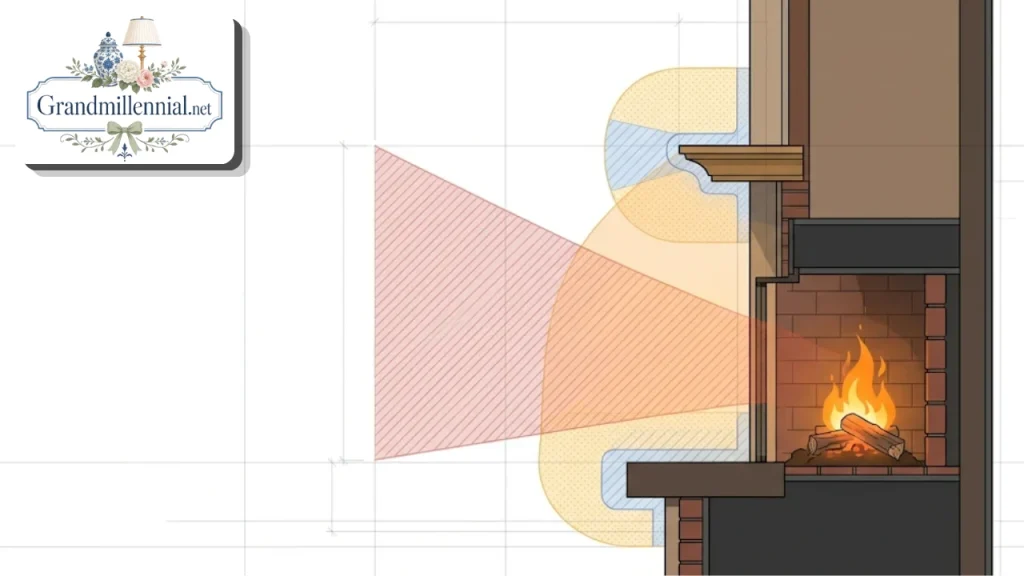
The Chimney Safety Institute of America puts the main rule in four words: clean chimneys don’t catch fire.
CSIA recommends that a qualified professional inspect the chimney every year, and that the sweep cleans or repairs it as needed. That advice applies even if you rarely light the fire.
Creosote is the main culprit. The same page says it forms when smoke and gases cool and condense on the inner chimney walls, and that it can be black or brown, and crusty, tar-like, or shiny and hardened.
It is highly combustible. The page lists restricted air supply, unseasoned wood, and cooler-than-normal chimney temperatures among the factors that speed buildup.
Burn dry, seasoned wood and give the fire enough air. Avoid smouldering overnight fires, which cool the flue and leave residue.
Know the signs of a chimney fire. CSIA lists loud cracking or popping, dense smoke, an intense hot smell, and a low rumbling sound. Most are slow-burning and go unnoticed until an inspection.
After a suspected chimney fire, call a CSIA-certified sweep for an evaluation. For a masonry chimney fire where flames could reach the house frame, CSIA says to call 911 immediately.
Install smoke and carbon monoxide detectors, and test them. Cracks or blockages in a flue can let carbon monoxide into the home, according to inspection sources, whether the fire is gas or wood.
A simple upkeep routine through the year
Good habits are easier than repairs. Build a small routine around the seasons and the fireplace will stay safe and pleasant to use.
Before the first fire of the season, look inside the firebox with a torch. Check for cracks, loose parts or debris, and make sure the damper moves freely.
Book the annual inspection before the busy season. Sweeps and inspectors fill their diaries once the weather turns cold.
During the season, keep a metal container for ash and store it outside, away from anything that can burn. Hot ash can stay live for a long time.
Keep the hearth clear. Rugs, baskets, and logs do not belong inside the hearth extension distance the manual requires.
After the season, clean out ash, close the damper if your system has one, and note any smoke, smells, or draft changes for your next inspection.
Keep every manual, report,t and receipt together in one folder. They help at inspection and at resale.
Isokern compared with other fireplaces
There are three broad ways to get a fireplace: a traditional masonry unit built on site, a factory-built metal firebox with a metal chimney, and a modular masonry system such as Isokern.
Traditional masonry is heavy and slow to build, and it depends on a skilled mason. Modular pumice parts aim to keep the masonry look while cutting weight and site labour, according to seller claims I could not verify.
Factory-built metal systems are lighter again and often quicker to install. CSIA notes that these chimneys are tested to withstand flue temperatures up to 2,100°F, but that a chimney fire can still damage them, and a damaged metal chimney must be replaced.
Masonry chimney fires can reach about 2,000°F, according to the same page. That is why the quality of the liner and the chimney matters for any type.
Ask each supplier for the listing or evaluation report, the installation manual, and the warranty terms. Compare them side by side rather than relying on brochure claims.
Cost depends on region, size, finish,h and labour. Because no verified prices are available here, get at least two written quotes that list the same scope.
Designing the room around it
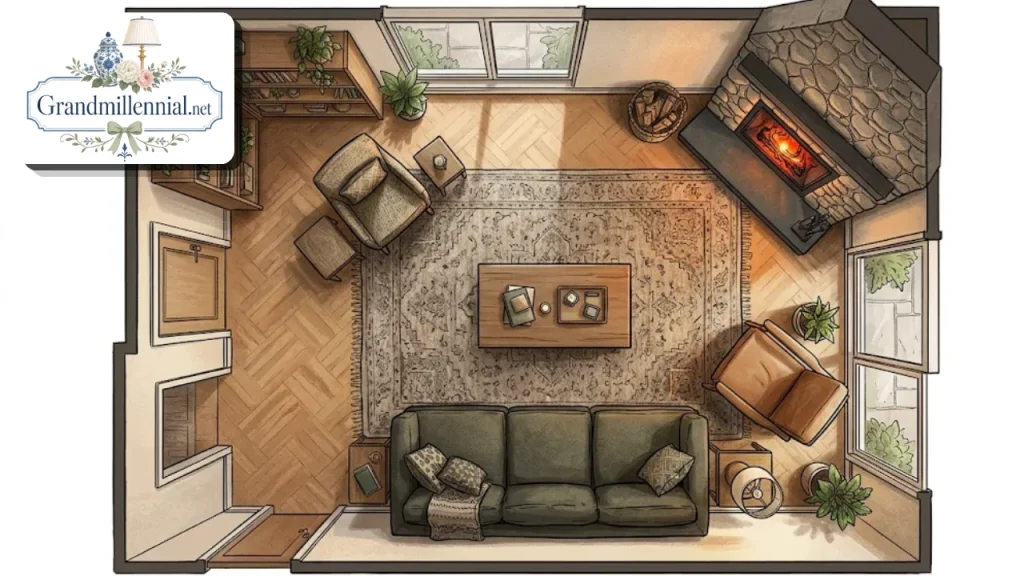
A fireplace is the natural focal point of a living room, so the layout of any isokern fireplace room should respect it.
Grandmillennial’s cozy living room guide suggests that in a large living room, you can place the sofa facing the fireplace, add two chairs on either side,de and use a coffee table to connect everything.
It also recommends building the layout around a conversation area instead of pushing all seating to the walls. If the room has a television, balance it carefully with the fireplace.
For the wall above and around the unit, see the wall decorating guide. It treats a fireplace as a possible anchor for the wall, and suggests living room pieces be at least two-thirds the width of the furniture below.
That guide gives no mantel-specific advice, and combustible decorations near a fireplace must respect the clearances above. Do not hang flammable items inside the mantel clearance.
Measure the room before you buy furniture. The best home furnishings guide lists fireplace dimensions among the items to measure, along with heating vents and walking routes.
If your house already has a masonry feature wall, the ranch style home guide lists fireplaces and masonry feature walls among the typical elements of that style.
If you are adding a new room, the home additions guide says heating, ventilation,ion and plumbing should shape the layout from the beginning, which applies to a fireplace and chimney too.
Questions for your builder
Ask which exact model and series they plan to use, and which manual applies. Ask whether the unit is evaluated for your region and seismic category.
Ask who designs the foundation, and whether an engineer must sign off for a wood floor. Ask who provides the hearth extension and what it is made of.
Ask what clearances the manual requires for the mantel, trim, and walls, and whether your design respects them. Ask who is responsible for the outside air supply and the chimney cap.
Before you commit to an Isokern fireplace, ask for the inspection plan. Your building office may inspect the foundation, the firebox, and the chimney at separate stages.
Ask how the warranty treats drafting problems, and what is covered if the fireplace smokes. Get the answers in writing.
Mistakes to avoid
The biggest mistake is treating the fireplace as decoration and the chimney as an afterthought. The chimney is the safety system.
Others follow. Choosing an opening that is too wide for the room, ignoring the clearances for a wooden mantel, stuffing insulation into clearance gaps, and installing on a wood floor without an engineer all appear in the sources above.
Skipping the annual inspection is another, and it undermines even the best Isokern fireplace system. Even a rarely used fireplace needs a look every year, according to CSIA.
Burning unseasoned wood, closing the damper on a smouldering fire, and using the wrong brush on a pumice flue also cause damage.
Finally, do not take brand claims at face value. A smart isokern fireplace purchase compares evaluation reports and manuals, not slogans.
Conclusion
A well-planned isokern fireplace gives you a masonry look from lightweight pumice parts, with a system designed to be built in stages and inspected at each one.
The key facts are simple. Pumice insulates and weighs little. The US and UK products differ. The independent report sets the structure, hearth,h and clearance rules. An annual inspection keeps the chimney safe.
Use the manual for your exact model as the final word, ask your building office to confirm the details, and get written quotes for the same scope.
Then design the room around the fire, and enjoy it safely.
FAQs:
What is Isokern made of?
Isokern parts are made from lightweight volcanic pumice, a natural insulator. Early production used pumice quarried in Iceland, according to a trade snippet.
Is Isokern a UK or US product?
Both. Schiedel sells pumice liners and chimneys in the UK and Europe, and Earthcore Industries makes the fireplace units for North America. Rules and models differ.
Can an Isokern be installed on a wood floor?
The independent report says a licensed design professional must determine support and anchorage, and an engineered design is required under IRC Section R301.1.3.
How far must a mantel be from the opening?
For Magnum models 60 and 72, the report gives at least 24 inches above the opening for combustible mantels. Check your model’s manual for its own figure.
Does it need a hearth extension?
For models 60 and 72, the report requires a noncombustible hearth extension at least 30 inches in front and 12 inches on each side. Other models differ.
How often should the chimney be inspected?
Once a year, by a qualified professional, according to the Chimney Safety Institute of America, even if the fireplace is rarely used.
Can it burn gas?
Yes, vented gas logs are listed for several series, with limits in the manual. A manufacturer snippet cites 50,000 to 100,000 BTU, so confirm the current figure.
Does the warranty cover smoking?
One retailer’s warranty text excludes drafting, smoking and puffing. Read the warranty for your product before you buy.