

There is something magical about flowers on a table, shelf, entryway console, or wedding aisle, but fresh flowers do not always fit the budget, season, or schedule. That is why DIY artificial flower arrangements have become such a smart, beautiful choice for modern homes, events, weddings, memorials, and everyday decorating.
The best part is that faux flowers are no longer the stiff, shiny, obviously fake stems many people remember. Today’s artificial flower arrangements can look soft, realistic, elegant, and expensive when you know how to choose, bend, trim, layer, and style them properly.
Whether you want a simple flower arrangement, a dramatic dining table piece, a faux floral centerpiece, or DIY wedding flower arrangements, this guide walks you through everything in a practical, beginner-friendly way.
Why DIY Artificial Flower Arrangements Are Worth Making
DIY artificial flower arrangements give you creative control without the pressure of keeping flowers alive. You can build a design once and enjoy it for months or even years. That makes them ideal for busy homes, rental spaces, offices, weddings, parties, church décor, and seasonal displays.
Another big benefit is flexibility. You can reuse the same stems in different ways, turning a fake flower arrangement into a table centerpiece, then later using the same blooms for flower decor, wreaths, bouquets, or fake flower crafts.
Compared with fresh flowers, faux flower arrangements are also easier to prepare ahead of time. This is especially useful for brides planning diy wedding floral arrangements, families creating simple funeral centerpieces, or homeowners who want polished décor without weekly maintenance.
What Are DIY Artificial Flower Arrangements?
DIY artificial flower arrangements are handmade floral displays created with fake, faux, silk, synthetic, or preserved-looking flowers instead of fresh blooms. These designs can be placed in vases, baskets, bowls, urns, compotes, foam bases, table runners, or wedding centerpiece containers.
They include everything from small faux floral arrangements for shelves to large artificial flower arrangements for entryways, altars, dining rooms, and events.
You may also hear them called artificial floral arrangements, silk flower arrangements, fake floral arrangements, or faux floral arrangements. The goal is simple: create decorative flower arrangements that look balanced, natural, and appropriate for the space.
Supplies You Need Before You Start
Before learning how to make artificial flower arrangements, gather the right materials. Good supplies make the process easier and help your finished arrangement look more professional. Basic supplies include:
- Artificial flowers, silk flowers, or faux flowers
- Greenery stems such as eucalyptus, fern, olive branch, or ruscus
- A vase, bowl, basket, urn, or compote
- Floral foam or chicken wire
- Wire cutters
- Floral tape
- Hot glue, if needed
- Moss, stones, ribbon, or vase filler
- Measuring tape
- Optional: floral picks for short stems
For how to make a floral arrangement using foam, choose dry floral foam made for artificial flowers, not wet foam for fresh flowers. Dry foam grips fake stems better and keeps your artificial flower arrangement secure.
How to Choose Realistic Faux Flowers
The secret to beautiful diy faux flower arrangements begins before arranging. Your flowers need to look believable on their own. Look for petals with soft texture, color variation, and natural edges. Avoid overly shiny plastic flowers unless they are being used in outdoor displays.
Good silk flower centerpiece options often include roses, peonies, hydrangeas, ranunculus, tulips, orchids, magnolia, and cherry blossoms. For greenery, mix leaf shapes.
Pair broad leaves with thinner stems to create movement. This simple trick helps with how to make fake flowers look real because fresh arrangements rarely use one flat texture throughout.
How to Make Fake Flowers Look Real
If you want to master how to make faux flowers look real, focus on shape, spacing, and imperfection. Real flowers do not stand perfectly straight or face the same direction. Try these practical tips:
- Bend stems slightly instead of leaving them rigid.
- Trim stems to different heights.
- Open petals gently with your fingers.
- Mix fully open flowers with buds.
- Use greenery to hide plastic stems.
- Add water illusion gel in clear vases.
- Choose matte leaves instead of glossy plastic.
- Dust flowers regularly so they stay fresh-looking.
A good fake flower arrangement should feel relaxed, not overly symmetrical. Natural movement is what makes decorating with faux flowers look elegant rather than artificial.
Step by Step Artificial Flower Arranging for Beginners
Learning step by step artificial flower arranging for beginners is easier when you follow a simple formula: container, base, greenery, focal flowers, filler flowers, and finishing details.
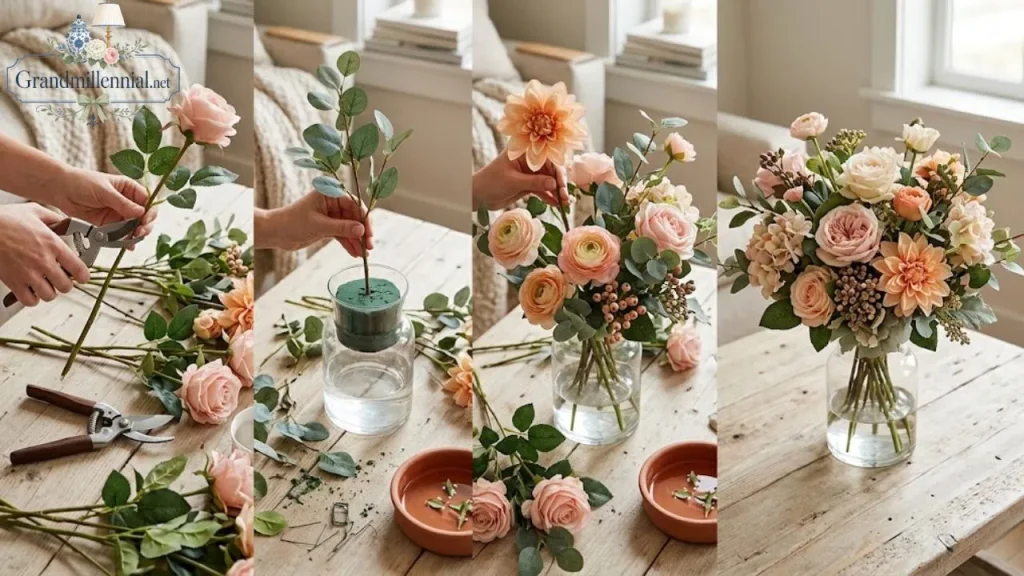
Choose the Right Container
Your container sets the mood. A glass vase feels clean and classic. A ceramic vase feels modern. A wooden box works well for rustic fake flower centerpieces diy. A gold compote looks elegant for artificial wedding centerpieces.
For how to make artificial flower arrangements in a vase, choose a vase with a narrower opening if you are a beginner. Wide-mouth vases need more structure and more stems.
Add Foam or Support
For tall or structured designs, use dry floral foam. For loose designs, chicken wire works well inside opaque vases. If using a clear vase, hide support materials with stones, moss, faux water, or tightly packed greenery.
This is especially helpful when making large artificial flower centerpieces, altar flower arrangement designs, or a flower arrangement for an altar table.
Start With Greenery
Greenery creates the outline of the arrangement. Add the longest greenery first to define height and width. Angle some stems outward so the design looks open and graceful.
This works for artificial flower displays, dining room flower arrangements, floral table arrangements, and simple flower arrangements for tables.
Add Focal Flowers
Focal flowers are the stars. Roses, hydrangeas, peonies, lilies, orchids, and magnolias are common choices. Place the largest blooms first, usually in odd numbers such as three, five, or seven.
For a hydrangea and rose centerpiece, use hydrangeas as the base and roses as the focal detail. This creates a full, romantic style without needing too many stems.
Add Filler Flowers
Filler flowers soften empty spaces. Baby’s breath, lavender, wax flowers, berries, small daisies, and mini blossoms are great choices. This step helps with simple floral arrangements, easy floral centerpieces, diy small flower arrangements, and small artificial floral arrangements.
Finish and Adjust
Turn the arrangement as you work. Check it from the front, sides, and top. Bend stems, fluff petals, and fill gaps with greenery. A finished artificial flower arrangement should have depth, balance, and a natural shape.
DIY Artificial Flower Arrangements for the Home
Home diy artificial flower arrangements should feel connected to your existing décor. A farmhouse kitchen might look best with white roses, eucalyptus, and lavender. A modern living room may suit orchids, calla lilies, or minimal greenery.
For artificial flower decoration at home, think about where the arrangement will sit. A coffee table needs a low display. A console table can handle height. A dining table needs something that does not block conversation. Good artificial flower decoration ideas for home include:
- White roses in a ceramic vase for a calm bedroom
- Tulips in a glass vase for a kitchen counter
- Hydrangeas in a low bowl for a coffee table
- Olive branches in a tall vase for an entryway
- Orchids for a bathroom vanity
- Seasonal flowers for a mantel
DIY Faux Flower Arrangements for Tables
Table flowers should be beautiful but practical. For flower arrangements for tables, keep height in mind. If people are sitting across from each other, choose low table flower centerpieces or narrow tall stems that do not block the view. For simple flower arrangements for tables, use one flower type and one greenery type.
For example, white roses with eucalyptus, tulips with ruscus, or hydrangeas with fern. For a more formal centerpiece flower arrangement, use three layers: greenery, large blooms, and small filler flowers. This creates a fuller floral centerpiece without making it look crowded.
How to Make a Centerpiece With Fake Flowers
Learning how to make a centerpiece with fake flowers is useful for weddings, dinners, holidays, birthdays, and everyday décor. Start with a low bowl, compote, or rectangular box. Add foam inside the container. Cover the foam with moss. Place greenery around the edges, then add your largest flowers in the center.
Fill gaps with smaller blooms. This method works for diy fake flower centerpieces, fake flower centerpieces, faux flower centerpieces, artificial flower centerpieces, and simple flower centerpieces.
For a wedding look, use roses, peonies, ranunculus, and eucalyptus. For a modern look, use orchids, anthuriums, and minimal greenery. For rustic décor, use wildflowers, lavender, and soft grasses.
DIY Wedding Flower Arrangements
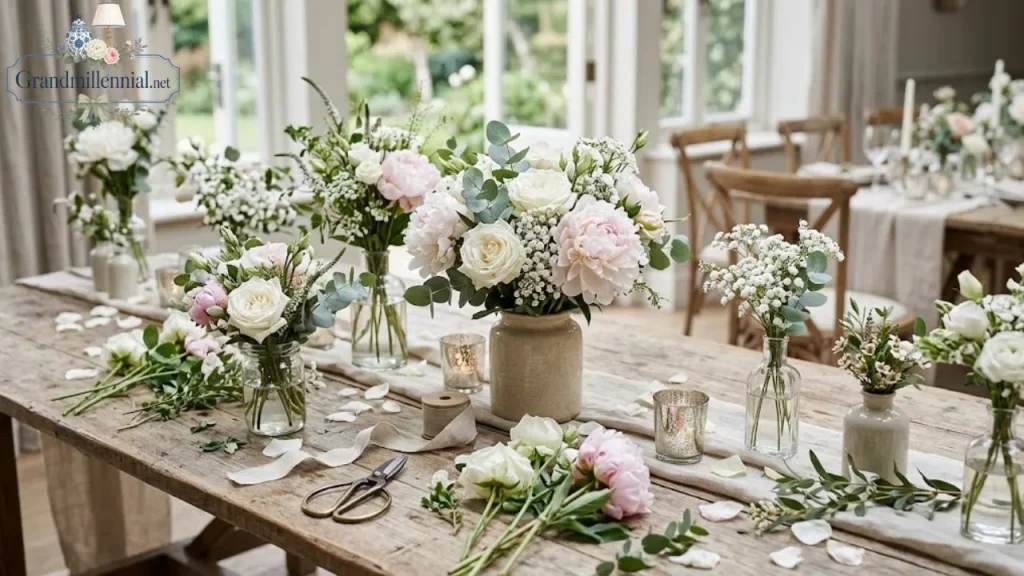
Weddings are one of the best reasons to use diy artificial flower arrangements. You can prepare everything weeks in advance, avoid wilting, and keep costs more predictable. Popular wedding flower arrangements diy projects include:
- Bridal bouquets
- Bridesmaid bouquets
- Boutonnieres
- Corsages
- Pew flowers
- Aisle flowers
- Arch flowers
- DIY flower centerpieces for wedding
- Cake table flowers
- Welcome sign flowers
If you are learning how to make wedding centerpieces with artificial flowers, choose a consistent color palette first. White, blush, champagne, sage green, and dusty blue are popular because they photograph beautifully.
For fake flower centerpieces wedding or faux flower centerpieces wedding, avoid using too many different flower types. Three flower varieties and two greenery types are usually enough.
How to Make a Tall Artificial Flower Arrangement
For how to make a tall artificial flower arrangement, proportion matters. A tall design should usually be one-and-a-half to two times the height of the container.
Use strong stems such as cherry blossoms, gladiolus, delphinium, orchids, pampas grass, or tall roses. Add weighted stones inside the vase so it does not tip over. Tall artificial floral arrangements work beautifully in entryways, hotel-style living rooms, church spaces, wedding aisles, and corners that need height.
Simple Funeral Centerpieces and Memorial Flowers
For diy funeral centerpieces or simple funeral centerpieces, choose soft, respectful colors. White, cream, pale blue, lavender, and soft greenery are common choices. Good flowers include lilies, roses, orchids, hydrangeas, carnations, and chrysanthemums.
A low flower centerpiece can be used for a memory table, while a taller altar flower arrangement may suit a service setting. Keep the design peaceful and uncluttered. The goal is comfort, not decoration overload.
White Silk Flower Arrangements
White silk flower arrangements are timeless because they work with nearly every interior style. They are also popular for weddings, memorials, dining rooms, bedrooms, and formal events.
For white rose centerpiece ideas, combine white roses with cream hydrangeas, eucalyptus, and small pearl-like berries. For a modern look, use white orchids in a tall glass cylinder. White flowers also work well for flower arrangements, white, simple fresh flower centerpieces inspiration, and elegant silk floral arrangement ideas.
What to Do With Fake Flowers
Many people buy faux stems and then wonder what to do with fake flowers beyond putting them in a vase. The possibilities are endless.
You can use them for wreaths, garlands, wall décor, gift wrapping, napkin rings, wedding arches, shadow boxes, candle rings, hair accessories, and fake flower crafts. Other things to make with fake flowers include:
- Floral letters
- Hanging flower balls
- Flower crowns
- Door swags
- Table runners
- Basket arrangements
- Faux bouquets
- Seasonal mantel décor
These fake flower decor ideas are great when you have leftover stems from larger projects.
Large Artificial Flower Arrangements
Large artificial flower arrangements need structure. Use a heavy vase, tall stems, and strong greenery. Start with branches or greenery to create the shape, then add large flowers like hydrangeas, magnolias, roses, or lilies. For large artificial flower centerpieces, avoid placing every flower at the same height.
Staggering blooms makes the arrangement look more expensive and natural. Large designs are best for entryways, church altars, hotel-style foyers, wedding stages, dining buffets, and empty corners.
Small Faux Floral Arrangements
Small arrangements are perfect for bathrooms, nightstands, bookshelves, trays, office desks, and kitchen counters. For small faux flower arrangements, use a tiny vase, teacup, jar, or ceramic pot.
Choose one focal flower and a little greenery. Mini roses, tulips, lavender, and baby’s breath work well. These diy small flower arrangements are beginner-friendly and budget-friendly.
Common Mistakes to Avoid
Even beautiful faux flowers can look cheap if they are arranged poorly. Avoid these common mistakes:
- Using stems straight from the package without bending them
- Choosing flowers that are too shiny
- Overcrowding the vase
- Making every stem the same height
- Forgetting greenery
- Using the wrong vase size
- Leaving visible foam exposed
- Ignoring scale
Good artificial flower arranging tips for beginners always come back to balance, texture, and natural movement.
Conclusion
Beautiful diy artificial flower arrangements are not about using the most expensive stems or copying a florist perfectly. They are about choosing realistic flowers, building a strong shape, adding natural movement, and styling each piece for the space where it will live.
Once you understand the basics of how to arrange artificial flowers, you can create everything from simple fake flower arrangements to elegant wedding centerpieces, memorial flowers, dining table displays, and seasonal home décor.
With a little patience and creativity, faux flowers can become one of the easiest ways to bring lasting beauty into your home, event, or special celebration.
Frequently Asked Questions
How do you clean artificial flower arrangements?
Dust them with a soft cloth, feather duster, or cool air. For washable stems, lightly wipe petals and leaves with a damp cloth.
Can artificial flowers be used for funeral arrangements?
Yes. DIY flower arrangements for funeral settings can be tasteful and long-lasting. Choose soft colors, simple shapes, and respectful flowers like lilies, roses, orchids, or hydrangeas.
What is the easiest flower arrangement for beginners?
The easiest option is a simple flower arrangement in a narrow vase using one main flower and one greenery type, such as roses with eucalyptus or tulips with ruscus.
How do you make a flower centerpiece?
For how to make a flower centerpiece, choose a low container, add foam or support, place greenery around the edges, add focal blooms, and finish with filler flowers.
What flowers look most realistic when fake?
Roses, peonies, hydrangeas, orchids, tulips, ranunculus, and eucalyptus often look realistic when made with high-quality silk or real-touch materials.
Can I make wedding centerpieces with artificial flowers?
Yes. DIY wedding flower arrangements are popular because they can be made ahead of time and reused. Use quality silk flowers, a consistent color palette, and sturdy containers.
How do you arrange fake flowers in a vase?
For how to arrange fake flowers, start with greenery, add large focal flowers, then fill gaps with smaller flowers. Trim stems to different lengths so the arrangement looks natural.
How do you make artificial flower arrangements look professional?
Use realistic flowers, bend the stems, vary the heights, add greenery, hide foam, and avoid perfect symmetry. Professional-looking diy artificial flower arrangements usually have depth and movement.