

Quick answer: If you are researching Vision Custom Build & Remodel, start by confirming exactly which business that name points to, because several firms use similar names.
Then verify the license, insurance, references, and written contract before you pay anyone. This guide also explains what custom building and remodeling cost, based on published figures from HomeAdvisor, SoF,i, and Pods.
Hiring a builder is one of the biggest decisions a homeowner makes. The work is expensive, it takes months, and a bad match can cost far more than the project itself.
That is why people search a company’s name before they call. They want to know who they are dealing with, what the firm actually does,es and whether past clients were happy.
This article is independent. I am not connected to any company called Vision Custom Build & Remodel, and nothing here is a review, endorsement, or claim about its work.
What I can do is help you research any builder with that name, or any other. Along the way, you will see what custom homes, additions,s and remodels typically cost, and how the process works from first call to final walk-through.
Which Vision Custom Build & Remodel are you looking at?
Names in the building trade overlap constantly. Words like vision, custom, design, and remodel are popular, so many small firms end up with near-identical names.
A quick search shows the problem. One directory listing for Vision Custom Build and Remodel gives a Fairfax, Virginia address and says the firm focuses mainly on home additions and also remodels kitchens, bathrooms, and basements.
That same listing shows a 4.9 rating from 329 online ratings, and it calls the firm top-rated for over 15 years. I could not verify those claims, and directory pages often repeat what a business tells them.
A separate GuildQuality page covers a North Carolina company that was formerly named Vision Design Build Remodel and now operates under the Alair Homes name. Its most recent dated reviews there come from 2017.
These are different businesses with different histories. The lesson is not about any one of them, but about checking details before you assume.
To make sure you have the right company, match these four items:
- The legal business name on the contract
- The license number and state
- The street address and phone number
- The website domain and the email domain
If any of those do not match across the listing, the site, and the contract, ask why. A legitimate contractor will answer without hesitation.
What a name search can and cannot tell you
Searching for Vision Custom Build & Remodel will usually return a company site, a few directory pages, and some review listings. Each one tells you something different, and none tells you everything.
A company website shows how the firm wants to be seen. It is the best place to learn what services it offers and where it works, but it is marketing by design.
A directory listing shows that a business exists at an address. It may repeat the firm’s own claims, so treat any ranking or years-in-business statement as unverified until you can check it.
Review sites show what past clients chose to share. They are useful for patterns, such as repeated comments on communication or schedule, and less useful for a single glowing or angry post.
Official records show whether the business is licensed and insured. Those are the sources to trust most, and they are free or cheap to check.
Put the four together,r and you get a fair picture. If they all tell the same story, that is a good sign, and if they conflict, you have found a question to ask.
Custom build, remodel, or addition?
Before you contact any builder, decide what kind of project you really have. The three main options differ in cost, timeline, and risk.
A custom build means designing and constructing a new home, usually on a lot you own or buy. You control the layout and finishes, and you also make the most decisions.
A remodel changes an existing space. It can be as small as a bathroom or as large as a whole-house renovation.
An addition adds square footage to what you have, either outward, upward, or into unused space like a basement or attic. Our overview of home additions compares the options in more depth.
A simple way to choose is to ask whether your current house can ever work. If the location, lot, and structure are good, a remodel or addition usually costs less than starting over.
If the layout is fundamentally wrong, or the house has deep structural problems, a new build can make more sense. That is a decision to make with a builder and an engineer, not alone.
What design-build means
Many firms describe themselves as design-build. That means one company handles both design and construction under a single contract.
The appeal is simplicity. You deal with one team; the designers and builders talk to each other early,y and costs are considered while the plans are drawn.
The tradeoff is that you rely on one firm’s judgment about both price and design. In the traditional route, you hire an architect first and then bid the plans to several builders.
Neither approach is always better. Design-build tends to suit people who value speed and coordination, while the architect-first route suits people who want competitive bids on a finished design.
Pods suggests choosing a builder early in the process so they can work with your architect and designer. That advice fits either route.
What custom building and remodeling cost
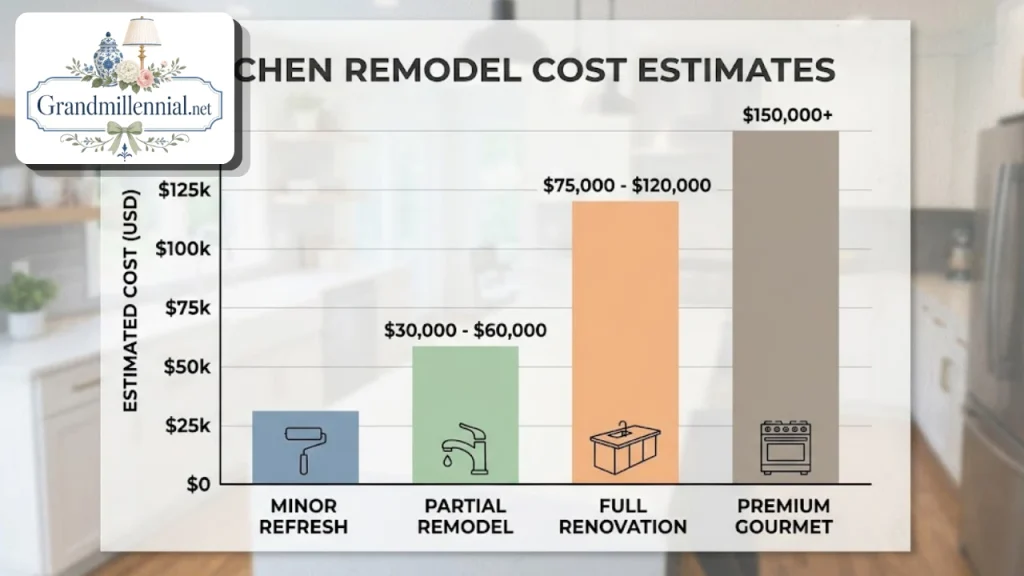
Now for the numbers. I want to be clear that these are published national figures, not quotes, and they vary a lot by region and by finish level.
For new construction, Pods puts a typical custom home at 100 to 200 dollars per square foot and a luxury home at 200 to 500. It notes those figures do not include the lot, permits, or design fees, so the total can run higher.
Pods also cites the National Association of Home Builders figure that the median price of building a new home is almost 290,000 dollars. Many experts advise treating custom prices as a range rather than a single number.
For existing homes, HomeAdvisor gives these national averages.
| Project | Average cost |
|---|---|
| Bathroom remodel | $10,600 |
| Kitchen remodel | $25,300 |
| Whole-house remodel | $46,700 |
| Basement remodel | $20,200 |
| Garage remodel | $27,900 |
| Loft conversion | $20,200 |
| Home addition (national average) | $46,000 |
SoFi gives a whole-house remodel range of 19,000 to 88,000 dollars, or 15 to 60 dollars per square foot. It puts kitchen and bathroom work at roughly 75 to 250 dollars per square foot.
The two sources do not match exactly, and that is normal. Each one uses different data, different project definitions, and different time periods.
HomeAdvisor also shows how much structure changes the bill. A second-story addition runs about 100 to 300 dollars per square foot, and up to 500 for complex work.
A bump-out, which pushes a wall out a few feet, costs about 17,000 dollars for a ten-foot wall extended two feet. That works out to about 850 dollars per square foot, far above a typical remodel rate.
The process, step by step
Whether you build or remodel, the path looks similar. Knowing the steps helps you spot a builder who skips one.
Pods lays out ten steps for a custom home, and I have adapted them for any major project.
Set a total budget and list every expense
Arrange financing, such as a construction loan or home equity
Decide your must-haves and what can wait
Choose your team, starting with the builder
Confirm the lot or the existing structure’s condition
Settle the design and floor plan
Plan the timeline, including permits and inspections
Stay involved during construction
Arrange storage and a place to live if needed
Walk the finished project and write a punch list
Skipping the budget step is the most common mistake. If you do not know your ceiling, every decision after it is guesswork.
For help ordering a remodel so you do not pay for the same work twice, our renovation tips guide walks through sequencing.
How long does it take?
Pods cites the U.S. Census Bureau as putting the average new-home build at about eight months, including permits, inspections,s and delays. More custom designs often take longer.
A Post and Courier article on questions for contractors says a build typically takes six to 12 months depending on size. A roughly 1,000-square-foot slab home might take four to five months, while a 4,500-square-foot home will not finish in four.
Remodels vary even more. A bathroom can be done in weeks, while a whole-house project may run many months.
The same article says to choose selections such as light fixtures, flooring, countertops and appliances early. Back-ordered materials can hold up work like plumbing.
That one habit prevents more delays than almost anything else. Decide early, order early, and keep records of lead times.
How to vet a builder
This is the part most people skip, and it is the part that matters most. A thorough check takes a few hours and can save months of trouble.
Follow these steps for any firm, including one named Vision Custom Build & Remodel.
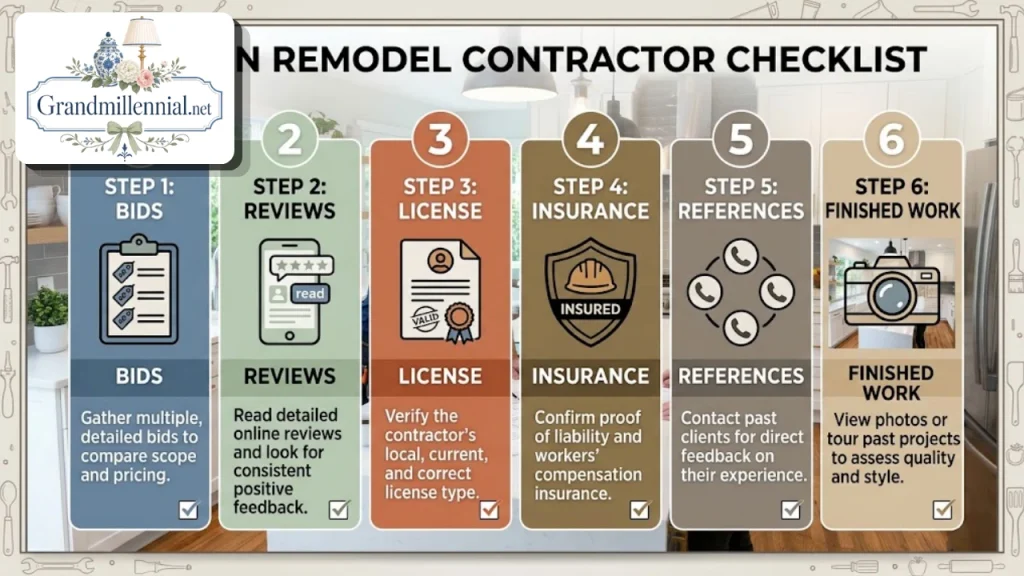
Confirm the license. Look the contractor up with your state or local licensing board. Check that the name and number match the contract and that the license is active.
Ask for proof of insurance. Request a certificate of insurance and call the insurer to confirm the policy is current.
Check references. Ask for recent clients, not just the best ones, and call at least three.
Visit finished work. The Post and Courier article suggests touring completed projects and asking clients about communication, responsiveness, and staying on budget and schedule.
Read reviews carefully. Look at several sources, check the dates, and notice how the firm replies to complaints.
Compare written bids. Get at least three, broken into lines you can compare.
The article I am citing does not cover licensing or insurance, so verify those directly with your licensing authority and your insurer. Rules differ by state.
Be careful with rating numbers. A high score with a few reviews tells you little, and an old review page, like one that stops in 2017, tells you nothing about today.
Self-descriptions such as top-rated or best in town are marketing, not proof. Look for something you can check yourself.
Questions to ask in the first meeting
A good first meeting is a conversation, not a sales pitch. These questions help you see how a firm works.
The Post and Courier piece offers several that I would keep.
- Can I see recent work and talk to current and past clients?
- What will it cost, or what is the cost per square foot for a project like mine?
- How long will the build take?
- What can I do to keep the project on schedule?
- Do you use subcontractors, and how do you choose them?
On the last one, the article notes that subcontracting is common and that builders often use long-term subcontractors rather than picking only the lowest bid. That is a good sign if the builder can name them.
Add a few questions of your own. Who will be on site every day? How often will I get updates? How do you handle problems that appear after walls are opened?
Listen for specific answers. Vague reassurance is a warning, while clear process descriptions are a good sign.
Reading the contract
A good contract protects both sides. It should say exactly what is being built, for how much, and by when.
Look for these items before you sign:
- A detailed scope of work, with materials and models named
- A total price and a payment schedule tied to completed work
- Allowances for items not yet chosen, with the amounts listed
- A process for change orders, including written approval and pricing
- Start and completion dates
- Warranty terms for materials and workmanship
- Who pulls permits, and who handles inspections
An allowance is a placeholder amount for something you have not selected yet, such as tile or lighting. If your actual choice costs more, you pay the difference.
A change order is a written change to the original scope. Never agree to extra work by phone alone, because a dispute is hard to settle without a record.
Be wary of large upfront payments. Rules on deposits vary by state, so check what is allowed where you live.
I am not a lawyer, and this is not legal advice. For a big project, an hour with a local attorney reading the contract is inexpensive protection.
Budget and contingency
The number that surprises people most is the one they did not plan for. Remodels and builds hide surprises, and some of them are expensive.
SoFi advises padding estimates by 10 to 20 percent for unexpected costs, and it notes that only 3 percent of homeowners finish remodels under budget. That is a sobering figure, even if you treat it as a rough guide.
It also says labor is typically about two-thirds of a remodel budget and materials about one-third. Pods puts materials and labor together at about 75 percent of total spending on a new home.
The rest goes to the lot, fees, taxes, furnishings,s and landscaping. Do not forget those lines.
HomeAdvisor lists building permits at 400 to 2,200 dollars for additions and a home inspection at 280 to 400. Those are small next to the build, but they are real.
If you can, keep your contingency in a separate account. Money that is easy to spend on upgrades tends to disappear before it is needed.
Where remodel money goes: kitchens and baths
Kitchens and bathrooms get the most attention because they carry the highest cost per square foot. They also add the most day-to-day value.
SoFi cites Angi in giving an average kitchen remodel of about 26,900 dollars, with budget tiers from 10,000 to 20,000 at the low end up to 65,000 to 130,000 or more at the high end. It notes cabinets can take up to 30 percent of a bathroom budget.
HomeAdvisor says bathroom costs depend more on moving plumbing than on adding size. If you keep fixtures where they are, you can often save real money.
Small design choices matter too. If you are planning a kitchen refresh, our guide to modern backsplash ideas shows how a single surface can change a room.
For a bathroom, size and layout drive the vanity choice. Our guide to the small bathroom vanity helps you pick one that fits.
What to expect during construction
Once the contract is signed, the pace changes. For a few weeks, little seems to happen on site, because permits, orders, and scheduling come first.
Then work moves quickly. Demolition, framing or foundation work, rough plumbing and electrical, and inspections follow in a set order, and each depends on the one before.
Expect noise, dust, and disruption if you are living in the house during a remodel. Ask the crew how they will protect floors, contain dust,t and set up a temporary kitchen or bathroom if needed.
Plan one point of contact. A single weekly call or message from the project manager keeps small issues from becoming big ones.
Keep your own folder with the contract, change orders, receipts, selections, and photos of work before walls are closed. If a question comes up later, that folder settles it fast.
Pods advises staying involved and tracking spending against the plans. You do not need to supervise every nail, but you should know where the project stands.
At the end, walk the job with the builder and write a punch list of every item that needs fixing. Do not make the final payment until the list is done or properly held back under your contract.
A good builder expects this step and welcomes it. A firm that rushes you past it is telling you something worth hearing.
Common mistakes
The first is choosing on price alone. The lowest bid is sometimes low because it leaves things out, and those things show up later as change orders.
The second is skipping the check. A license, insurance and references take a few hours to verify, and they are the cheapest protection you will buy.
The third is vague scope. If the contract says kitchen remodel and little else, you are leaving every detail open to dispute.
The fourth is late decisions. Selections made after work starts cause delays and cost money.
The fifth is no cushion. A project with no contingency has no room for the unexpected, and something unexpected always happens.
The sixth is assuming a name means a reputation. As the Vision name examples show, a familiar phrase may belong to several unrelated businesses.
Once the structure is finished, the fun part begins. Our home decor ideas that actually work can help you furnish the space.
FAQs:
What is Vision Custom Build & Remodel?
I cannot say what Vision Custom Build & Remodel does, because this guide is independent and several businesses use similar names. One online directory lists a Fairfax, Virginia firm focused on additions and remodels, but that is the listing’s own description. Verify any company’s license, address,ss and contract details yourself.
How much does it cost to build a custom home?
Pods puts a typical custom home at 100 to 200 dollars per square foot and a luxury home at 200 to 500, not counting the lot, permits and design fees. Costs vary widely by region.
How much does a remodel cost?
HomeAdvisor lists national averages of about 10,600 dollars for a bathroom, 25,300 for a kitchen, and 46,700 for a whole house. SoFi gives a whole-house range of 19,000 to 88,000.
How long does a custom build take?
Pods cites about eight months on average, and a Post and Courier article says six to 12 months depending on size. Permits, weather, and back-ordered materials can add time.
How do I check a contractor before hiring?
Confirm the license with your state or local board, request proof of insurance, call several references, visit finished projects, compare written bids and read the contract carefully before you sign.
What is design-build?
Design-build means one company handles both design and construction under one contract. It can simplify communication, but you rely on one firm for both, so compare it with an architect-first approach.
How much extra should I budget?
SoFi advises adding 10 to 20 percent for unexpected costs. Keep that cushion separate from your main budget.
What is a change order?
It is a written change to the agreed scope of work, with its price and any schedule effect. Always get it in writing before the extra work starts.