

The first scratch always feels like a disaster. You slide a cast-iron pan across your beautiful new soapstone, and there it is: a pale line across the dark grey stone.
Here’s the good news. Soapstone is one of the most forgiving countertops you can own. It doesn’t etch like marble, it rarely stains, and most scratches disappear with a little oil or a few minutes with fine sandpaper.
Learning how to clean soapstone countertops takes about five minutes. This guide covers the daily routine, the oiling question, which cleaners are truly safe, and exactly how to fix the marks that make new owners nervous.
Quick answer: Clean soapstone daily with warm water, a few drops of dish soap, and a soft cloth, then rinse and dry. Oiling with food-safe mineral oil or soapstone wax is optional; it darkens the stone evenly. Light scratches usually vanish with oil, and deeper ones sand out with fine sandpaper.
Why soapstone is different
Soapstone is a natural metamorphic stone made mostly of talc, along with minerals such as magnesite and chlorite. The talc is what gives it that smooth, almost silky feel.
Countertop soapstone is a denser, harder “architectural” grade than the soft carving stone used by sculptors. Even so, it’s much softer than granite or quartz, so it scratches more easily, but it also repairs more easily.
It’s also dense and largely non-porous, which is why most fabricators say it doesn’t need sealing and why true stains are rare. Spills sit on the surface rather than soaking in.
Crucially, soapstone doesn’t react with acids the way marble does. Marble is mostly calcite, which acids such as lemon juice and vinegar dissolve, leaving dull etch marks. Soapstone’s minerals don’t respond that way, which is why it has long been used for laboratory benches.
That explains the contradictory advice you’ll see online. Some cleaning guides warn against vinegar on all natural stone, which is sound advice for marble and limestone. On soapstone, Slabwise notes that acids won’t etch the stone, though they can strip oil, so you may need to re-oil afterwards.
What you’ll need
You don’t need a special soapstone spray. Most of this is already under your sink.
- Mild dish soap
- Warm water in a spray bottle or bowl
- Two soft microfiber cloths or a non-scratch sponge
- A dry towel for buffing
- Food-safe mineral oil or soapstone wax (optional)
- Fine-grit sanding sponge or sandpaper for scratches (around 120 to 400 grit)
Keep scouring pads, steel wool, and gritty cleaning powders away from the stone. Anything that would scratch a wooden cutting board will scratch soapstone.
Daily cleaning, step by step
Here’s how to clean soapstone countertops after everyday cooking. Chemist Alexis Rochester told Tasting Table that a gentle mix of dish soap and water is the best daily approach, and it’s what most stone fabricators recommend too.
Clear and sweep
Move appliances and jars aside and brush crumbs into your hand or a dustpan. Grit dragged under a cloth is a common cause of fine scratches.
Wash with warm, soapy water.
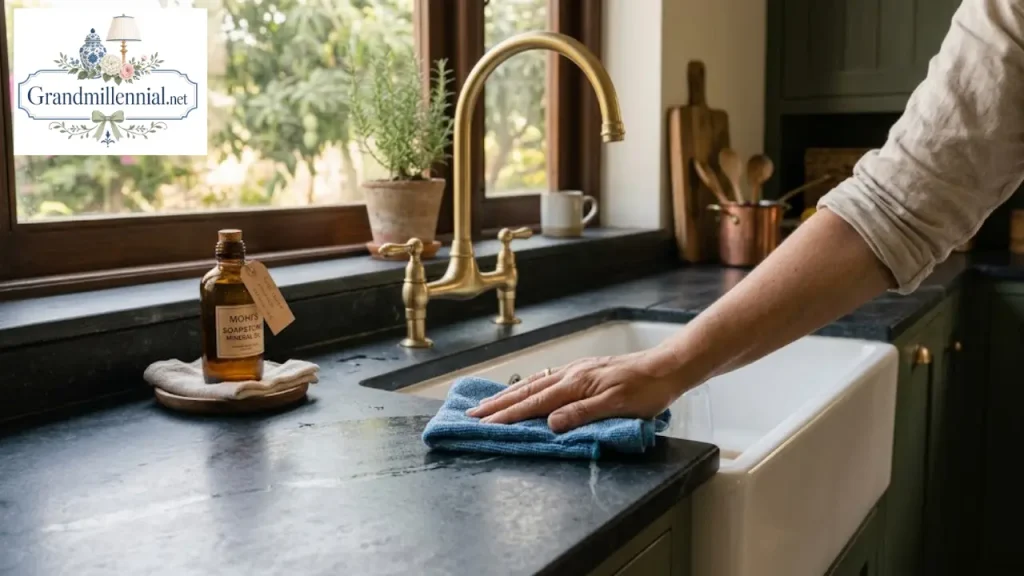
Mix a few drops of dish soap into warm water. Wipe the counter with a damp cloth in long strokes, paying extra attention to prep areas and around the sink.
Rinse
Wipe again with a second cloth dampened in plain water to lift soap residue. Leftover soap can leave a faint film that dulls the stone over time.
Dry and buff
Dry the surface with a clean towel. AspenClean’s Alicia Sokolowski, quoted by Martha Stewart, advises wiping up spills and excess water rather than leaving them to stand.
That’s the whole routine. It takes a couple of minutes and can be done every day without harming the stone.
Deep cleaning and disinfecting
Once a week, or after handling raw meat, give the counter a more thorough wash.
Clear everything off, wash with warm, soapy water, then use a soft brush along seams, the backsplash joint, and around the sink edge, where grime collects. Rinse well and dry.
To disinfect, a mix of roughly equal parts 70 percent isopropyl alcohol and water works well on soapstone, and common household disinfectant wipes won’t harm the stone itself. The trade-off is that they remove oil, so oiled counters may look lighter in patches afterwards.
If that happens, simply re-oil once the surface is dry. Soapstone doesn’t need the careful pH-neutral products that marble and limestone demand.
Cleaners: safe vs. avoid
Knowing how to clean soapstone countertops safely mostly means knowing what to keep away from them.
| Product | Safe on soapstone? | Notes |
|---|---|---|
| Dish soap and warm water | Yes | Best daily choice |
| Diluted isopropyl alcohol | Yes | Good disinfectant; removes oil |
| Household disinfectant wipes | Yes, occasionally | Won’t damage stone; strips oil; rinse food areas |
| Vinegar or lemon juice | Won’t etch | Strips oil; rinse and re-oil if counters are oiled |
| Bleach | Use sparingly | Won’t etch the stone; rinse thoroughly; can lighten oiled finish |
| Abrasive powders, scouring pads | No | Scratch the surface |
| Steel wool or wire brushes | No | Scratch and can leave metal marks |
| Penetrating stone sealers | Not needed | Most fabricators say soapstone doesn’t require sealing |
When in doubt, check with your fabricator. Some slabs differ slightly in hardness and finish, and installers know their stone.
Oiling and waxing
Soapstone darkens naturally over time, especially where hands, oils, and water touch it most. Left alone, that can look uneven: dark around the sink and stove, lighter in quieter corners.
Oiling speeds up and evens out that darkening. According to Tasting Table, standard grey soapstone can take on a deep charcoal finish after a few months of regular oiling.
| Finish | What it does | How often | Best for |
|---|---|---|---|
| Food-safe mineral oil | Darkens quickly and evenly; evaporates over time | Weekly at first, then every few weeks to months | Classic deep charcoal look |
| Soapstone wax (beeswax/carnauba blends) | Darkens and lasts longer; slight sheen | Less often than oil | Busy kitchens; fewer reapplications |
| Nothing (natural patina) | Darkens slowly and unevenly with use | Never | Owners who love an aged, lived-in look |
How to oil soapstone
Clean and dry the counter completely.
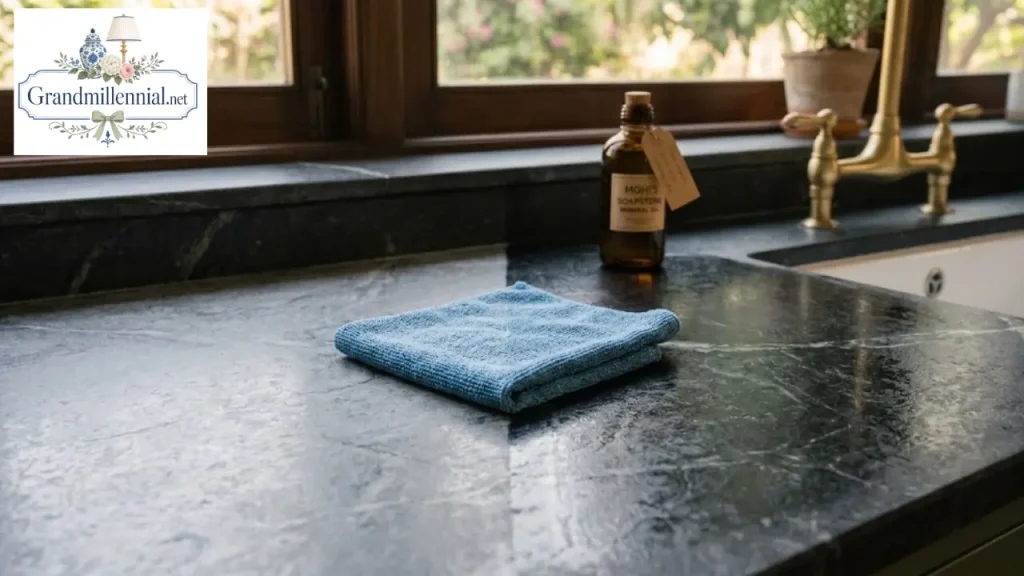
Pour a little mineral oil onto a soft cloth and wipe it over the whole surface in an even, thin coat.
Leave it for about 20 to 30 minutes.
Buff off the excess with a clean, dry cloth so the surface isn’t greasy.
For brand-new counters, Rochester recommends oiling about once a week for the first one to three months. After that, re-oil whenever the stone starts to look lighter or patchy, which might be monthly in a busy kitchen and far less often in a guest bathroom.
Fixing scratches, chips, and rings
This is where soapstone shines, and where guides on how to clean soapstone countertops usually stop too soon. Most damage that would mean calling a professional on granite or quartz can be fixed at home.
Light scratches
Rub a little mineral oil over the mark. Many surface scratches darken and blend in immediately. Your hand’s natural oils will often do the same over time.
Deeper scratches and gouges
Lightly dampen the area and sand with a sanding sponge or sandpaper, moving in the direction of the scratch. Start with a medium-fine grit (around 120 to 150) for a deep mark, then switch to a fine grit (220 or higher) to smooth it.
Feather the sanding outward so you don’t leave a dip. Wipe away the dust with a damp cloth, let the area dry, then oil it so it blends with the rest of the counter.
Sanding leaves a lighter patch at first. After oiling, and a little time, it usually becomes invisible.
Chipped edges
Soapstone edges can chip if a heavy pot catches them. For a small chip, sand the sharp edge smooth and oil it. For a larger piece, keep the fragment and ask your fabricator about bonding it back with a colour-matched epoxy.
Rounded or eased edges chip much less than sharp square ones, which is worth considering if you’re still choosing a profile.
Water rings and light spots
On oiled counters, a glass or wet sponge left sitting can leave a lighter ring where water displaced the oil. Dry the area and re-oil it; the ring usually disappears within minutes.
Troubleshooting at a glance
| Problem | Likely cause | Fix |
|---|---|---|
| Patchy, uneven colour | Uneven natural darkening or oil wearing off | Oil the whole counter evenly |
| Lighter rings or spots | Water or cleaner displaced the oil | Dry and re-oil the area |
| Greasy, sticky feel | Too much oil left on the surface | Wash with soapy water, dry, buff |
| Fine scratches | Grit, pans, ceramic bases | Oil; sand lightly if they remain |
| Deep scratch or gouge | Knife or heavy impact | Sand with medium then fine grit, then oil |
| Dull film | Soap residue | Rinse with clean water and buff dry |
| Dark oily spot from food | Cooking oil on unoiled stone | Wash with dish soap; oil the whole area to blend |
Care calendar
| When | Task |
|---|---|
| Daily | Wipe with warm soapy water; rinse and dry |
| Weekly | Deep clean seams and sink edges; disinfect prep areas |
| Every few weeks to months | Re-oil or re-wax when colour looks lighter or uneven |
| As needed | Sand out scratches, then oil |
| Yearly | Check edges and seams; ask your fabricator to look at any separating seams |
Soapstone vs. marble and granite care
If you’ve owned other stone counters, how to clean soapstone countertops will feel refreshingly relaxed by comparison.
| Soapstone | Marble | Granite | |
|---|---|---|---|
| Reacts to acids | No etching | Etches easily | Generally resistant |
| Sealing | Usually not needed | Needed | Usually needed |
| Scratch resistance | Low | Moderate | High |
| DIY scratch repair | Easy with sandpaper | Professional polishing | Difficult |
| Daily cleaner | Dish soap and water | pH-neutral stone cleaner | pH-neutral stone cleaner |
The trade-off is clear: soapstone scratches more easily, but you can fix it yourself. Marble resists scratches better, but etches with every splash of lemon juice.
Living with soapstone in your kitchen
Understanding how to clean soapstone countertops is only half the story; a few habits prevent most marks in the first place.
Use a cutting board, and set trivets or folded cloths under heavy cast iron and ceramic dishes with rough bases. Soapstone handles heat well, but dragging pans across it causes scratches.
Put felt pads under appliances that move, such as mixers and coffee machines, and lift rather than slide them.
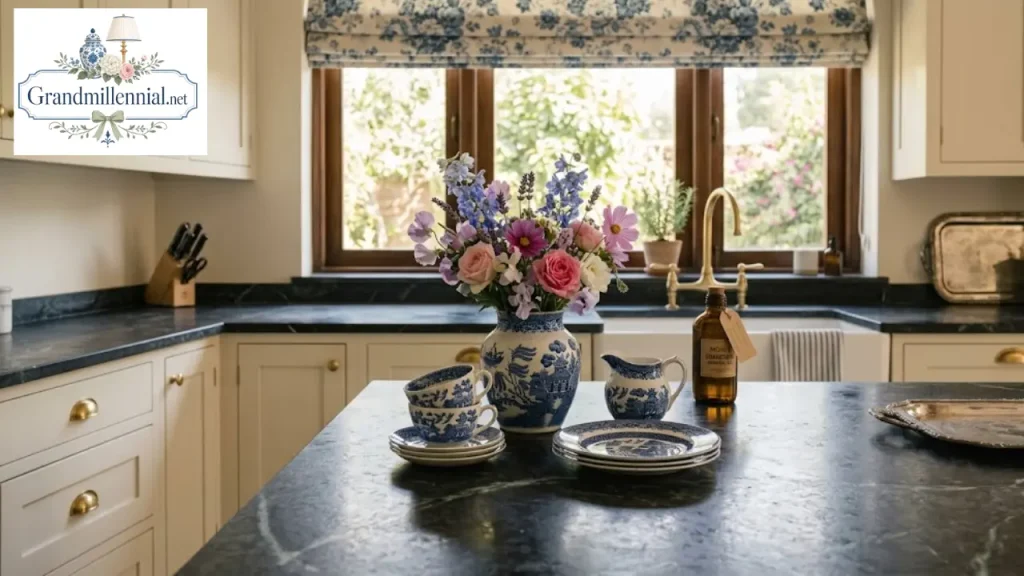
Soapstone suits farmhouse, traditional, and grandmillennial kitchens beautifully, especially with white or cream cabinets and brass hardware. If you’re planning that look, these coastal kitchen ideas and modern backsplash ideas pair well with dark stone.
It also makes an elegant bathroom vanity top. For sizing a new vanity, see these small bathroom vanity ideas and this guide to bathroom vanity depth.
If you’re building a whole-home cleaning routine, this guide to cleaning hardwood floors safely follows the same gentle-first approach.
FAQs:
Can you use vinegar on soapstone?
Vinegar won’t etch soapstone the way it etches marble, but it strips oil. If your counters are oiled, rinse and re-oil after using it. For daily cleaning, dish soap and water are better.
Do soapstone countertops need to be sealed?
Usually not. Soapstone is dense and largely non-porous, so most fabricators don’t recommend sealing. Oil or wax is for colour, not protection.
How often should you oil soapstone?
New counters benefit from oiling about weekly for the first one to three months. After that, re-oil when the stone looks lighter or patchy.
How do you get scratches out of soapstone?
Rub light scratches with mineral oil. Sand deeper ones with fine-grit sandpaper, wipe clean, and re-oil.
Can I use Clorox or disinfectant wipes on soapstone?
Occasionally, yes. They won’t damage the stone, but they remove oil, so you may need to re-oil afterwards.
Is soapstone heat resistant?
Yes. It handles hot pans well, but trivets help prevent scratches from rough pan bottoms.
What happens if I never oil soapstone?
Nothing harmful. It will darken gradually and unevenly where it’s used most, developing a natural patina.