

The safest way to clean hardwood floors is to remove dry grit first, then use a barely damp microfiber mop with a residue-free cleaner approved for the floor’s finish. Work in small sections, keep liquid out of seams, and dry any area that remains visibly wet.
That sounds straightforward. The complication is that not every wood floor has the same finish. A modern polyurethane-coated floor may tolerate controlled damp cleaning, while an old waxed, oiled or partially unfinished floor may be damaged by the same method.
The floor’s finish—not simply the wood species—should determine what cleaner and moisture level you use.
The Safest Method in Six Steps
For most sealed hardwood floors:
- Remove loose dirt with a microfiber dust mop, soft broom or vacuum set for hard floors.
- Check the floor for worn areas, open seams and standing liquid.
- Use a manufacturer-approved or pH-neutral hardwood-floor cleaner.
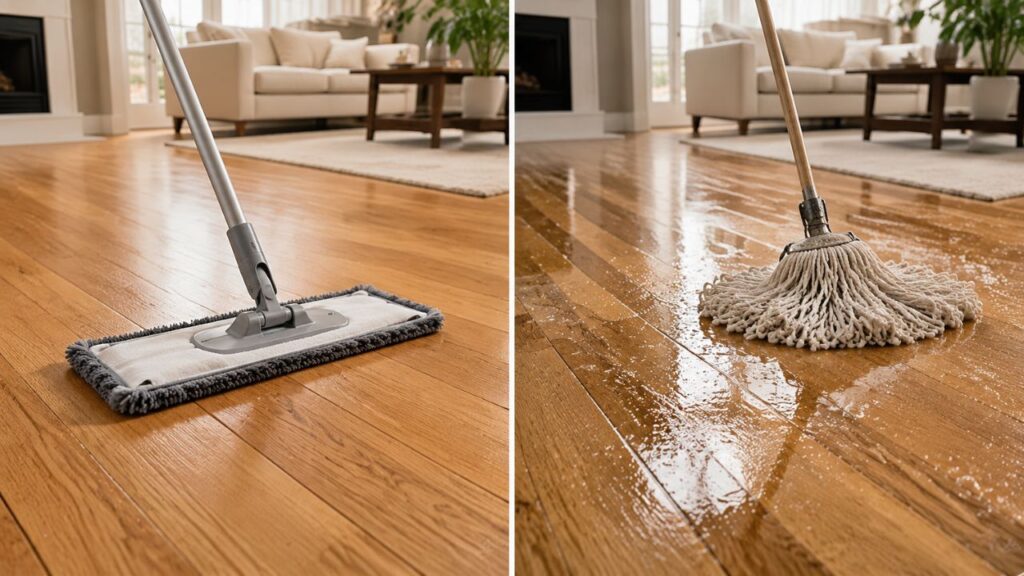
- Lightly dampen a clean microfiber pad; do not soak it.
- Clean with the grain in small sections.
- Dry visible moisture immediately with a fresh microfiber cloth or pad.
The National Wood Flooring Association recommends routine sweeping, dust mopping or vacuuming with the bare-floor setting. It also advises against wet mops and steam mops because repeated moisture exposure can harm both the finish and the wood.
Before You Mop, Identify the Floor’s Finish
A bottle that says “safe for wood” is not automatically safe for every wood finish.
Start with the least risky source of information: installation records, leftover flooring boxes, the installer’s invoice or the manufacturer’s care guide. Product-specific instructions should take priority over a general cleaning article, particularly while the flooring is under warranty.
Surface-sealed hardwood
Most newer hardwood floors are protected by a surface finish such as polyurethane or a factory-applied coating. The finish creates a barrier over the wood, so everyday dirt usually remains on the surface.
These floors generally tolerate controlled cleaning with a lightly damp microfiber mop and a compatible cleaner. They should still never be flooded. Standing liquid can enter joints, beveled edges or worn areas even when most of the surface is sealed.
Oil-finished or hardwax-oiled hardwood
An oiled floor usually has a softer, more natural or matte appearance. Its care system may include a special soap or maintenance oil supplied by the flooring manufacturer.
Do not assume that a cleaner intended for polyurethane is suitable for an oiled floor. Bruce, for example, warns that some commercial hardwood cleaners can remove oils from an oil-finished surface.
Waxed hardwood
Waxed floors require conservative cleaning. Water and many conventional cleaners can discolor the surface or interfere with the wax layer. Routine care is normally based on dry soil removal and finish-specific maintenance rather than ordinary damp mopping.
A waxed floor may develop a smudge when rubbed with a finger, but that is only a clue—not definitive identification. Old floors may contain several layers of products applied over many years.
Unfinished or partly worn hardwood
If water darkens the wood quickly, the grain feels exposed, or the finish has worn through in traffic lanes, treat the floor as moisture-sensitive. Do not perform a full wet-cleaning experiment.
Use dry methods, spot-clean very cautiously and ask a flooring professional to identify the finish. A floor with exposed wood may need recoating or refinishing, not stronger cleaning.
When the finish is unknown
Use the low-risk protocol:
- Vacuum or dust mop thoroughly.
- Wipe spills immediately with a nearly dry cloth.
- Avoid steam, vinegar, polish and oil-based “shine” products.
- Test any proposed cleaner in a hidden area.
- Stop if the surface becomes tacky, cloudy, darker or more matte.
What You Need
A practical hardwood-floor cleaning kit is small:
- Microfiber dust mop
- Vacuum with a hard-floor setting or soft floor head
- Flat microfiber mop
- Two or more clean mop pads
- Soft white cloths
- Finish-compatible, residue-free cleaner
- Dry towels for immediate moisture removal
A bucket is not always necessary. A spray bottle or spray mop gives better liquid control on many sealed floors. Follow the product label: some cleaners are intended to be sprayed lightly on the floor, while others can be applied to the pad.
Avoid using one dirty pad across the entire house. Once the pad turns gray or starts leaving tracks, replace it. Continuing with a loaded pad redistributes soil and cleaner residue.
How to Clean Hardwood Floors Step by Step
Clear the cleaning path
Move lightweight chairs, baskets and floor accessories. Lift furniture rather than dragging it. Check felt pads for embedded grit before moving a table or sofa; a dirty protective pad can scratch the floor it is meant to protect.
Plan a route that allows you to finish near a doorway instead of walking back across the damp floor.
Remove loose soil before adding moisture
Dust, sand, crumbs and tracked-in grit can act like abrasive particles under shoes or a mop pad. Vacuuming or dry mopping first prevents the wet pad from grinding those particles against the finish.
Use the vacuum’s hard-floor setting. Turn off a stiff rotating brush or beater bar unless the manufacturer specifically identifies it as safe for hardwood. Home Depot and Bruce both recommend avoiding an active beater bar because it may scratch the surface.
Pay particular attention to:
- Entryways
- Kitchen work zones
- Dining tables
- Floor vents
- Baseboards
- Gaps between boards
- The edges of rugs
- Pet feeding areas
Inspect before mopping
Look across the floor under side lighting. This makes residue, worn traffic lanes and water marks easier to see.
Spot-test the cleaner in an inconspicuous area. Let the test section dry completely before judging it. A cleaner may look fine while wet but leave haze, tackiness or a sheen difference after drying.
Do not continue if the test area:
- Darkens
- Feels sticky
- Loses sheen
- Transfers finish color to the cloth
- Develops a milky appearance
- Feels rougher after cleaning
Use the correct amount of cleaner
More cleaner does not produce a cleaner floor. Excess product is one of the most common causes of streaks and sticky film.
Use the dilution stated on the label. Do not add an extra splash “for heavily soiled floors.” For a ready-to-use spray, apply only enough to lightly dampen the working area or mop pad.
A pH-neutral product labeled for the installed finish is the conservative choice. Consumer Reports’ 2026 testing also recommends a pH-neutral floor cleaner with a damp—not wet—mop for deeper cleaning.
Mop in small sections
Use a flat microfiber pad and work with the direction of the boards. The pad should feel damp but should not release droplets when pressed.
Clean a manageable section, then inspect it before moving on. Do not leave puddles sitting while you complete the entire room.
Give extra attention to grime along plank edges, but do not scrub aggressively into seams. If a spot needs more work, place a lightly damp cloth over it briefly, then wipe by hand. This controls moisture better than repeatedly soaking the entire area.
Dry lingering moisture
A properly controlled floor should dry quickly. Wipe any visibly wet seams, bevels or low spots with a clean dry cloth.
Drying is especially important around:
- Door thresholds
- Refrigerator and dishwasher edges
- Pet bowls
- Exterior doors
- Floor vents
- Boards with open gaps
- Areas where the finish is visibly worn
Martha Stewart and The Spruce both recommend following damp cleaning with a dry mop or cloth to reduce streaking and moisture exposure.
How Often Should You Clean Hardwood Floors?
There is no universal schedule. Cleaning frequency should follow traffic and soil, not the calendar alone.
A realistic routine is:
- Immediately: Wipe spills, pet accidents and tracked-in moisture.
- Daily or as needed: Dry mop high-traffic areas, kitchens and entries.
- Weekly: Vacuum the main living areas with a hardwood-safe setting.
- Every few weeks: Damp-clean visibly soiled, sealed hardwood.
- Periodically: Perform a more detailed edge-to-edge cleaning and inspect the finish.
Homes with pets, children, outdoor shoes or sandy soil may need more dry cleaning. That does not necessarily mean they need more wet cleaning.
Reducing tracked-in grit is often more effective than repeatedly mopping. Use breathable entry mats, remove outdoor shoes and keep pet paws reasonably clean.
How to Deep Clean Hardwood Floors
Deep cleaning should be more thorough, not more aggressive.
Start by vacuuming under movable furniture and along baseboards. Use a crevice tool at plank edges without scraping the floor. Remove stuck-on material by hand before mopping.
Next:
- Prepare several clean microfiber pads.
- Test the cleaner in a hidden spot.
- Work in smaller sections than usual.
- Change pads whenever they become visibly dirty.
- Use a separate cloth for corners and edges.
- Dry each section before moving on.
- Inspect the dry floor for residue.
A floor that still looks dark after controlled cleaning may not be dirty. The finish may be worn, or the discoloration may be inside the wood.
Do not respond by increasing the cleaner concentration or scrubbing with an abrasive pad. That can convert a cosmetic problem into finish damage.
How to Remove Common Marks and Stains
The safest treatment depends on whether the mark is sitting on the finish or has penetrated through it.
Sticky food or drink residue
Place a microfiber cloth lightly dampened with the approved cleaner over the spot for a short period. Wipe gently, then dry.
Avoid scraping with a knife, razor blade or abrasive sponge.
Cooking grease
Use a finish-compatible cleaner capable of removing light oily soil. Apply it to a cloth rather than flooding the area. Repeat with a fresh cloth if needed.
If the area remains slick, product residue—not grease—may be the real issue.
Shoe scuffs
Begin with a dry microfiber cloth. If that does not work, lightly dampen the cloth with hardwood cleaner and rub gently.
Do not use a melamine foam pad without manufacturer approval. Its mild abrasive action can alter the sheen.
Candle wax or chewing gum
Let the material harden. A sealed ice pack placed over a protective cloth may help firm it without wetting the floor. Lift the material carefully with a plastic card held nearly flat.
Avoid metal blades.
Fresh pet urine
Blot immediately. Do not rub the liquid across board joints. Clean the surface with the floor manufacturer’s approved product and dry it completely.
If odor or discoloration remains, urine may have entered seams or unfinished wood. Surface cleaning cannot reliably remove contamination that has penetrated beneath the finish.
White water marks
A pale or cloudy mark may be moisture trapped in or beneath the finish. Do not immediately attack it with baking soda, heat, oil or abrasive polishing.
Allow the area to dry, avoid further moisture and consult the finish manufacturer. A persistent white mark may require finish repair.
Dark brown or black stains
Dark stains often indicate that moisture, metal or pet urine has reacted inside the wood. They are not ordinary dirt.
Stop repeated wet cleaning. Depending on the depth, a professional may need to sand, bleach, repair or replace the affected board.
Paint, ink or adhesive
Do not guess with acetone, alcohol or solvent. These may dissolve the finish along with the stain.
Identify the finish and obtain product-specific guidance. A small professional repair is usually cheaper than refinishing a large area damaged by solvent.
Why Hardwood Floors Look Dull, Cloudy or Streaky
A dull floor does not automatically need polish.
Cleaner buildup
Symptoms include:
- Mop-shaped streaks
- A slightly sticky feel
- Footprints appearing soon after cleaning
- More shine near walls than in traffic lanes
- Gray residue on a clean damp cloth
The likely causes are excess product, incorrect dilution, a dirty pad or repeated use of a product that leaves film.
Use the flooring manufacturer’s residue-removal instructions. Do not combine multiple cleaners in an attempt to cancel each other out.
Too much liquid
Water or cleaner may dry unevenly, particularly when applied directly in large amounts. Reduce the spray volume, work in smaller sections and dry the floor promptly.
Dirty mop pads
A pad can look usable while already saturated with fine soil. Replace or rinse it as soon as it begins leaving gray tracks.
Hard-water residue
Minerals in tap water can contribute to spotting when a cleaner requires dilution. Use the water type recommended by the product manufacturer. Do not add vinegar automatically; its acidity may be incompatible with the finish.
Worn finish
If the traffic lane remains dull after careful cleaning but protected areas under furniture retain their sheen, the finish may be worn.
No cleaner can restore a missing protective layer. The floor may need professional screening and recoating or full refinishing.
Architectural Digest’s experts similarly warn against products marketed to “polish,” “rejuvenate” or “revitalize” wood because they can deposit a temporary surface layer rather than repair the finish.
What Not to Use on Hardwood Floors
Steam mops
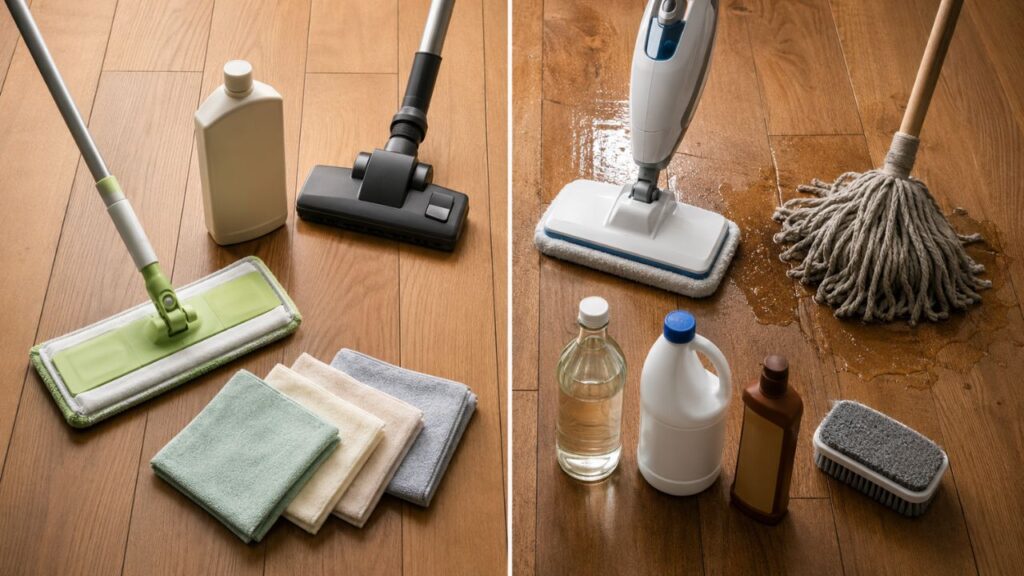
Steam combines heat and moisture and can drive vapor into seams and small openings. The NWFA advises against steam mops, and flooring experts quoted by Architectural Digest give the same warning.
Wet string mops
A heavily saturated mop releases too much water and gives poor control around joints and worn areas.
Vinegar as a universal cleaner
Vinegar is acidic. Although diluted vinegar is recommended by some cleaning publishers, major flooring guidance increasingly favors finish-specific, pH-neutral cleaners.
Because finish chemistry varies, vinegar should not be treated as a universally safe hardwood-floor cleaner. Home Depot explicitly advises against DIY vinegar cleaner because of its potential to dull or damage the finish.
Bleach and ammonia
These products may discolor wood, degrade finishes or create hazardous fumes when mishandled. Never mix cleaning chemicals.
Abrasive powders and pads
Baking soda, scouring powder, steel wool and rough scrubbers may scratch the finish or produce a permanent difference in sheen.
Furniture polish and oily shine products
These can leave a slippery film, attract soil and complicate future recoating.
Excess dish soap
A few drops of mild soap may be permitted by some manufacturers and editorial guides, but concentrated dish soap can leave residue. Manufacturer-approved cleaner remains the safer first choice.
Routine disinfectant use
Ordinary household floor maintenance usually focuses on soil removal rather than keeping the wood visibly wet for disinfection.
When disinfection is genuinely necessary, use only a product whose EPA-approved label specifically permits use on the installed finished floor. Some disinfectant labels expressly exclude unfinished, oiled or waxed wood.
Special Hardwood-Floor Situations
Engineered hardwood
Engineered hardwood has a real-wood wear layer over a layered core. The visible surface may be cared for similarly to solid wood, but excessive moisture can still enter joints and affect the core.
Follow the exact manufacturer’s instructions, especially before using a wet-dry vacuum, powered mop or robotic mopping system.
Old or historic hardwood
Older floors may contain wax, shellac, oil, partial polyurethane repairs or bare areas. Do not assume that one method is suitable across the entire room.
Begin with dry cleaning. Test by hand in a hidden area. When the surface history is unknown, professional identification is safer than a full-room DIY treatment.
Textured, wire-brushed or hand-scraped floors
Dirt can collect in the texture. Use strong suction with a floor-safe attachment before introducing moisture.
Do not compensate by soaking the grooves. Use a lightly damp cloth for localized detail cleaning.
Homes with babies or pets
Frequent dry cleaning is often more useful than frequent wet mopping. Remove outdoor grit, wash reusable pads thoroughly and wipe pet accidents immediately.
Avoid assuming that a strongly scented or “natural” product is automatically safer. Check the label for floor compatibility and household precautions.
When Cleaning Is No Longer the Solution
Contact a qualified hardwood-floor professional when you see:
- Black stains inside the wood
- Cupped, crowned or swollen boards
- Finish peeling or flaking
- Large areas of exposed wood
- Persistent pet odor from seams
- White haze that does not clear after drying
- Widespread wax or polish buildup
- Deep scratches through the finish
- Boards that move or squeak after a spill
- A finish that transfers to a cleaning cloth
Cleaning removes soil. Recoating restores a worn protective layer. Refinishing removes damaged finish and a small amount of wood before rebuilding the surface.
Knowing which problem you have prevents wasted effort—and protects the floor from repeated treatments it never needed.
Frequently Asked Questions about clean hardwood floors
What is the best thing to use to clean hardwood floors?
For most sealed floors, use a microfiber mop and a residue-free, pH-neutral cleaner approved by the flooring manufacturer. Remove dry grit first and keep the mop barely damp.
Can I mop hardwood floors with water?
Sealed hardwood can usually be cleaned with a minimally damp mop, but it should never be saturated. Waxed, unfinished, damaged or unknown finishes require more conservative care.
Can I use vinegar on hardwood floors?
Vinegar is not a universally safe choice. Its acidity can dull or degrade some finishes over repeated use. A manufacturer-approved or pH-neutral wood cleaner is safer.
Can I use dish soap on hardwood floors?
Some manufacturers and cleaning guides allow a very small amount of mild dish soap on certain sealed floors. It may leave residue when overused, so check the floor-care instructions first.
Can I steam-clean hardwood floors?
Steam mops are not recommended by the National Wood Flooring Association. Heat and moisture can enter seams and damage the finish or wood over time.
How often should hardwood floors be mopped?
Damp-clean only when the floor is visibly soiled. High-traffic sealed areas may need it every few weeks, while low-traffic rooms may need it less often. Dry cleaning should be more frequent.
How do I clean hardwood floors without streaks?
Use less cleaner, use a clean microfiber pad, follow the label dilution, clean in small sections and dry lingering moisture. Replace the pad when it becomes dirty.
Why are my hardwood floors sticky after mopping?
The likely causes are too much cleaner, incorrect dilution, a dirty mop pad or a film-forming product. Stop adding cleaner and follow the manufacturer’s residue-removal guidance.
How do I make dull hardwood floors shine again?
First determine why they look dull. Residue may be removable, but a worn finish requires recoating or refinishing. Avoid temporary shine products that leave a film.
How do I clean hardwood floors when I do not know the finish?
Use dry methods first. Avoid steam, vinegar, polish and wet mopping. Test a finish-compatible cleaner in a hidden area or ask a flooring professional to identify the finish.