

An awning window is hinged at the top and swings outward from the bottom, forming a small shelter over the opening essentially a miniature awning built into the glass itself.
That shape isn’t just visual. It’s the reason this window style keeps showing up in bathrooms, kitchens, and basements where other window types struggle to do their job.
This guide covers what an awning window actually is, how it stacks up against casement, hopper, and sliding styles, and exactly where it earns its keep and where it doesn’t.
If you’re picturing one for a specific room right now, the placement guidance below will get you there faster than a generic pros-and-cons list ever could.
What Is an Awning Window, Exactly?
Picture a window hinged along its top edge. Turn a crank, and the bottom edge swings outward, away from the house, while the top stays fixed.
That outward tilt is what makes an awning window genuinely different from a standard single- or double-hung window, which slides vertically instead of pivoting outward.
The mechanism matters more than it looks like it should. Because the sash presses outward against the frame, wind pressure from outside actually pushes the seal tighter rather than looser.
That’s the opposite of how many other window styles behave, and it’s the real, mechanical reason awning windows have a reputation for a tight, draft-resistant seal.
Most operate on a simple crank handle, though some manufacturers offer a sliding-handle mechanism instead. Either way, the moving parts sit at the bottom or sides of the sash, not buried in a track like a slider.
Awning Windows vs. Casement, Hopper, and Sliding Windows
The style people most often compare awning windows against is the casement window, and the two do share a family resemblance.
Casement windows hinge on the side and swing outward like a door, offering a fuller, more panoramic opening than an awning window’s bottom-hinged tilt.
That fuller opening means better airflow and an unobstructed view when open, but it also means casements can’t be left open safely in the rain the way awning windows can.
Hopper windows are essentially an awning window turned upside down: hinged at the bottom, tilting inward from the top. They’re common in basements but let in far less controlled airflow and offer no rain protection at all.
Sliding windows split the difference on ease of cleaning with no outward swing to worry about, but they typically underperform awning windows on seal tightness and can’t match the same rain-friendly ventilation.
If rain-resistant airflow and a tucked-away, low-profile look matter most, an awning window usually wins. If a full, unobstructed opening and maximum airflow matter more, casement is the better call.
The Real Pros of Awning Windows
Ventilation, even during rain. Because the sash tilts outward and up, it physically blocks rain from entering while still allowing air to circulate underneath a genuine functional advantage over almost every other operable window style.
A tighter seal when closed. That same outward-pressing mechanism means wind pushes the sash into the frame rather than away from it, which translates into fewer air leaks and, over time, a real (if modest) energy savings.
Better security than you’d expect. The size limits that read as a downside elsewhere become an advantage here a smaller opening is simply harder for a person to climb through, even with the window fully open.
Placement flexibility for privacy. Because they’re often installed higher on a wall, awning windows let in light and air without putting a direct sightline into the room genuinely useful in bathrooms and street-facing rooms alike.
A distinct, modern-leaning look. Whether used alone or stacked with a picture window, the horizontal proportions of an awning window read as clean and intentional rather than incidental.
The Real Limitations (And When They Matter)
A real-size ceiling. Most awning windows top out around 3 feet wide and 2 feet tall go bigger, and the sash becomes heavy enough to stress the hinges and hardware over time.
That ceiling isn’t a flaw so much as a trade-off: the same compact size that makes awning windows secure also makes them a poor fit for a room that needs a large, view-oriented opening.
Exterior cleaning is genuinely harder. Because the sash swings outward, reaching the exterior glass especially above the first floor often requires specialty tools or a professional cleaning service.
Egress code conflicts. In many jurisdictions, a bedroom requires an egress-rated window opening of a specific minimum size, and a standard awning window frequently doesn’t meet that threshold on its own.
Before specifying an awning window for any room that legally requires an emergency exit, check your local building code the International Residential Code sets the baseline that most local codes are built from, but it’s the local version that governs. The same room-by-room safety thinking applies to designing safely for aging in place, where window and door clearances matter just as much as furniture layout.
They can get in the way when open. An open awning window projects outward from the house, which becomes a real, physical obstruction if it’s installed low on a wall near a walkway, deck, or patio.
Storm exposure has limits. Awning windows handle light-to-moderate rain well, but manufacturers generally recommend closing them during high winds or severe storms, since sustained pressure on an open sash stresses the hinge mechanism.
Best Rooms and Situations for Awning Windows
The strongest case for an awning window almost always comes down to one of three things: privacy, weather-resistant ventilation, or placement above something you can’t put a full window in front of.
Bathrooms and Powder Rooms
Bathrooms are the single most common home for awning windows, and it’s not an accident this is a room that genuinely needs airflow and light without giving up privacy.
Placed high on the wall, an awning window vents steam and humidity effectively while keeping the opening well above eye level from outside.
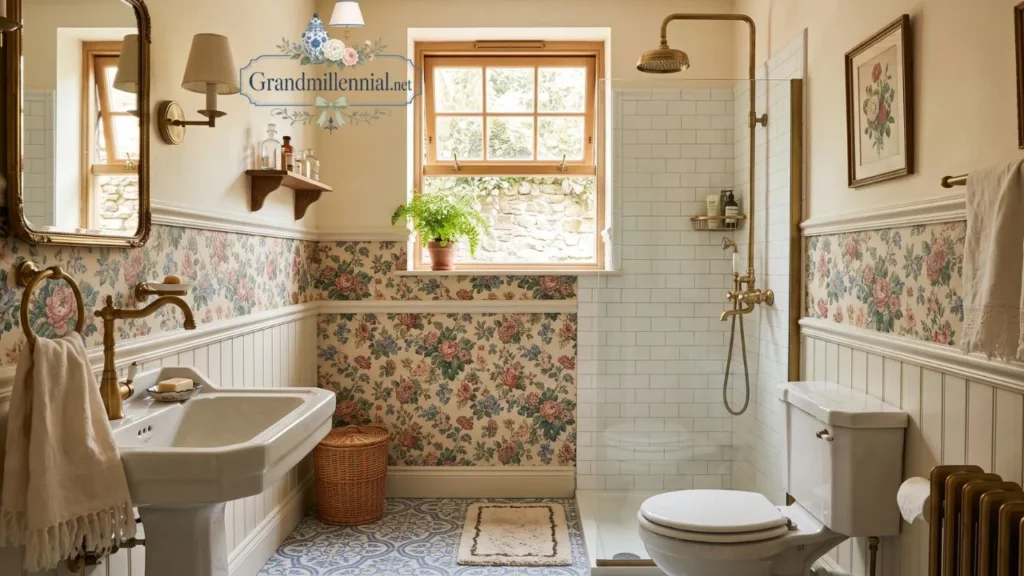
It’s also one of the few window styles that can stay cracked open during a shower without letting rain in if a storm rolls through mid-use. Once the window’s placed, pairing it with the right bathroom wallpaper is what really pulls the room together.
Kitchens and Above-Sink Placements
The classic “window over the kitchen sink” is often an awning window for a simple reason: a crank handle out of the way of faucets and dish racks beats a sash you’d have to reach across wet counters to slide.
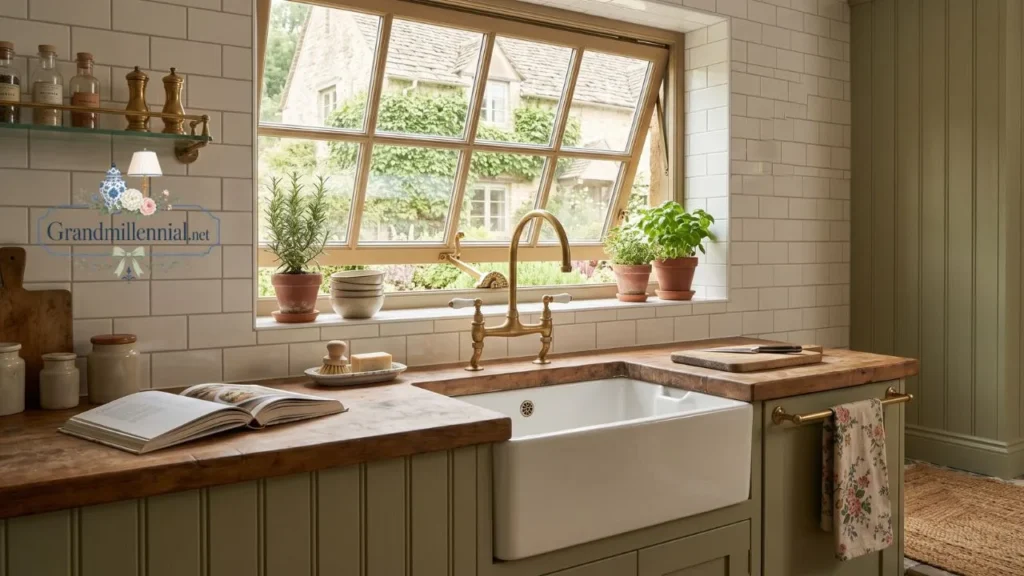
Because the sash doesn’t swing into usable counter space when open, it also avoids the collision risk a casement window would create in the same spot.
Basements and Below-Grade Rooms
In below-grade spaces, awning windows offer real natural light without the security concerns of a large, easily accessible opening at ground level.
That said, if the basement room is used as a bedroom, the egress code almost always requires a larger, code-compliant window elsewhere in the room an awning window can supplement that but rarely satisfies it alone.
Materials, Style Pairing, and What Looks Right Where
Awning windows come in the same core material choices as most residential windows, and the right one depends more on climate and budget than on the window style itself.
Vinyl is the most budget-friendly option and holds up well against moisture, which makes it a natural fit for the bathrooms and kitchens where awning windows are most common.
Wood brings warmth and a traditional look, particularly well-suited to cottage, farmhouse, and other character-driven architectural styles but it demands more upkeep in humid rooms.
Aluminum is lightweight and slim-profiled, a common choice in modern and contemporary builds where a minimal sightline matters more than insulation performance.
Fiberglass splits the difference: strong, low-maintenance, and dimensionally stable across temperature swings, at a higher price point than vinyl.
Steel-frame windows sit at the premium end, chosen mainly for their slender, architectural profile in high-end modern or industrial-style homes.
Awning windows also pair especially well with a fixed picture window directly above or below the picture window handles the view and the light, while the awning window underneath handles the actual ventilation.
That combination shows up often in modern farmhouse and transitional homes, where the horizontal line of the awning sash reads as an intentional design detail rather than an afterthought. The same durability logic applies to choosing cabinet materials that hold up the same way in a moisture-prone room.
Maintenance, Screens, and What to Ask Your Installer
One detail that trips up first-time buyers: because the sash swings outward, the screen on an awning window mounts on the interior side of the frame, not the exterior like most other window styles.
That’s a small thing, but it changes how the window looks from outside (cleaner, since there’s no visible screen mesh) and how you’ll clean and replace the screen over time.
Ask any installer directly about crank hardware warranty length this is the moving part most likely to need service over the life of the window, and warranty terms vary meaningfully between manufacturers.
It’s also worth asking specifically how the installer plans to handle exterior cleaning access if the window sits above the first floor, since this is the maintenance point competitors’ articles almost never mention.
Finally, confirm the actual U-factor and Energy Star rating for the specific model you’re considering rather than relying on a general “energy efficient” claim. Ratings vary meaningfully between entry-level and premium lines within the same window style.
What Awning Windows Typically Cost
Price is one of the most inconsistently reported details across existing guides, so it’s worth grounding expectations before you start requesting quotes.
Vinyl awning windows generally sit at the lower end of the price range, largely because the material itself is less expensive to manufacture and requires no ongoing finishing.
Wood and steel-frame options land at the higher end, driven by material cost and, in wood’s case, the labor involved in proper sealing and finishing during installation.
Fiberglass and aluminum typically fall in between, with fiberglass trending closer to the premium end due to its durability and dimensional stability.
Beyond material, size is the other major cost driver even within the compact range awning windows occupy, a window near the 3-by-2-foot ceiling costs noticeably more than a small, high-mounted bathroom unit.
Installation complexity adds another variable. A straight replacement into an existing opening costs meaningfully less than a new opening cut into an exterior wall, which involves framing, siding, and interior finish work beyond the window itself.
Get at least two or three quotes before deciding, and make sure each one specifies the exact model, material, and glass package. “Awning window” alone isn’t a specific enough line item to compare quotes accurately. It’s worth planning this alongside a smarter renovation budget rather than pricing the window in isolation.
A Real Scenario: Choosing Between Awning and Casement for a Kitchen Remodel
Consider a kitchen remodel where the sink sits against an exterior wall, with roughly 30 inches of wall space above the counter before the upper cabinets start.
A casement window in that spot would need a fully clear swing path outward awkwardly directly above a sink, where reaching across wet countertops to latch or crank the window becomes a daily annoyance.
An awning window solves that specific problem. The crank handle sits at the bottom of the sash, well within easy reach, and the window doesn’t project into anyone’s line of motion at the sink.
There’s a second, less obvious benefit here too: because the sash tilts up and out rather than swinging sideways, it doesn’t interfere with anything mounted nearby, like a soap dispenser or a small shelf above the counter.
This is the kind of decision that a flat pros-and-cons list won’t surface, because it has nothing to do with energy ratings or security it’s purely about how the window behaves in daily use, in one specific spot.
The same logic applies to a laundry room sink, a mudroom utility sink, or any tight wall space where reach and clearance matter more than maximum airflow.
Quick Reference: Awning Windows by Room and Climate
| Situation | Good Fit? | Key Reason |
|---|---|---|
| Bathroom, any climate | Strong fit | Privacy at height plus rain-safe ventilation |
| Kitchen above a sink | Strong fit | Crank clears counter space; no swing interference |
| Basement, non-bedroom use | Good fit | Natural light and security without a large opening |
| Basement bedroom | Needs a second window | Egress code usually requires a larger compliant opening |
| Coastal or high-wind region | Situational | Fine in normal conditions; close during storms |
| Room needing a panoramic view | Weak fit | Casement or picture window will outperform here |
| Walkway, patio, or low deck-adjacent wall | Weak fit | Open sash can physically obstruct the path |
This table isn’t a replacement for a site visit from a qualified installer, but it’s a fast way to rule a location in or out before you start comparing specific products.
FAQs
What is an awning window?
An awning window is a style hinged at the top that swings outward from the bottom, forming a small overhang that lets air in while blocking rain.
How is an awning window different from a casement window?
Casement windows hinge on the side and swing fully outward like a door; awning windows hinge at the top and tilt out from the bottom, which allows rain-safe ventilation. Casement windows can’t match.
Are awning windows good for bathrooms?
Yes, their typical high-wall placement provides privacy and steam ventilation without a direct sightline into the room from outside.
Can you leave an awning window open in the rain?
Generally yes, since the sash’s outward tilt sheds light rain away from the opening, though manufacturers recommend closing them during heavy storms or high winds.
Are awning windows secure?
Their compact size limits typically no more than about 3 feet wide and 2 feet tall make them genuinely difficult to climb through, even fully open.
What is the maximum size for an awning window?
Most manufacturers cap awning windows around 3 feet wide by 2 feet tall; going larger stresses the hinge and hardware over time.
A Direct Takeaway
An awning window earns its place in a home through function first rain safe ventilation, a tight seal, and genuine privacy at height with the compact, modern-leaning look as a real but secondary benefit.
Match the room to the window’s actual strengths bathrooms, kitchens, basements, and tight above-counter spots and the size limitations that read as a downside on paper barely register in daily use.
Do Awning Windows Fit a Traditional or Grandmillennial-Style Home?
Awning windows read as distinctly modern in most marketing photography, which understandably makes traditional-leaning homeowners hesitate before considering one.
The style itself isn’t the obstacle the hardware and trim details usually are. A slim aluminum frame with a visible modern crank reads contemporary; the same window in painted wood with a traditional grille pattern reads entirely differently.
In older homes and cottage-style renovations, awning windows most often show up as a secondary window tucked above a kitchen sink, set high in a mudroom, or paired beneath a period-appropriate picture window rather than as the star of a front-facing elevation.
Wood-framed awning windows with true divided-light grilles blend into a traditional facade far more convincingly than an unadorned vinyl or aluminum unit, and they’re worth the added cost specifically for that reason in a character-driven home.
If the goal is a grandmillennial-style bathroom, think vintage-inspired wallpaper, brass hardware, and a furniture-style vanity. An awning window set high on the wall with a simple painted wood frame and a small decorative latch cover keeps the practical benefits without breaking the room’s aesthetic. Pair it with warm hardware finishes and a traditional trim profile, and it disappears into the room’s overall character rather than announcing itself as a modern add-on. For more on grandmillennial-style bathroom details, the vanity and window choices tend to go hand in hand.