

If you have ever bought a tiny purple cutting for a few dollars and watched it fill a shelf within a season, you already know why this plant is everywhere. It roots in a glass of tap water. It forgives a missed week of watering. It looks expensive when it is trailing from a high shelf.
It also has a name that makes plenty of people wince, and a habit of escaping into the wild in warm countries. Both deserve a straight explanation, so this guide covers the care and the context.
What the wandering jew plant actually is
The wandering jew plant is not one species. It is a common name used for several trailing members of the genus Tradescantia, plus a couple of look-alikes from related genera. They share a spreading, vine-like habit, jointed stems, and leaves that clasp each node.
Most of them came from Central and South America and Mexico. Over a couple of centuries,s they spread into gardens, hanging baskets,ts and windowsills around the world. That long history in cultivation is why you will see so many leaf colors under one name.
What they have in common is speed. Stems grow, touch a damp surface, and root at the joints. A plant that was a single pot in March can be three pots by autumn if you let it.
The name: why many growers now say “inch plant”
The common name is old, and the origin is uncomfortable. It echoes a medieval European legend about a Jewish man condemned to wander the earth, and the plant picked up the label because of its trailing, roaming growth. The phrase is widely regarded as an ethnic slur or at the very least as outdated.
That is why many nurseries, botanical gardens, and growers have moved to friendlier names. “Inch plant” is the most common, thanks to how fast a stem seems to gain an inch. “Wandering dude” and “spiderwort” also turn up. Many gardeners simply say Tradescantia.
We kept the searched phrase in the title and headings because that is what people type into Google. In the body you will see the kinder names used just as often. If you write about plants yourself, the alternatives cost you nothing and spare some readers a flinch.
Species and varieties worth knowing
Labels in garden centers are famously sloppy. A pot marked with the old common name could be any of several plants, and each has slightly different needs.
| Plant | Look | Where it fits |
|---|---|---|
| Tradescantia zebrina | Silver stripes on top, purple underneath | The classic hanging basket plant |
| Tradescantia fluminensis | Plain green or green and white leaves | Fast, but the most weedy outdoors |
| Tradescantia pallida (purple heart) | Upright, deep purple, pink flowers | Containers and warm-climate borders |
| Tradescantia spathacea (Moses-in-the-cradle) | Rosette, purple undersides | A tidy tabletop plant, not a trailer |
The wandering jew plant you meet most in shops is usually zebrina. If you want a tidy, clumping option for a table, spathacea behaves very differently from the trailing types.
A quick test helps. If the stems trail and root at the nodes, treat it like zebrina or fluminensis. If it grows in an upright clump with purple leaves, it is closer to pallida.
Light: the thing that decides the color
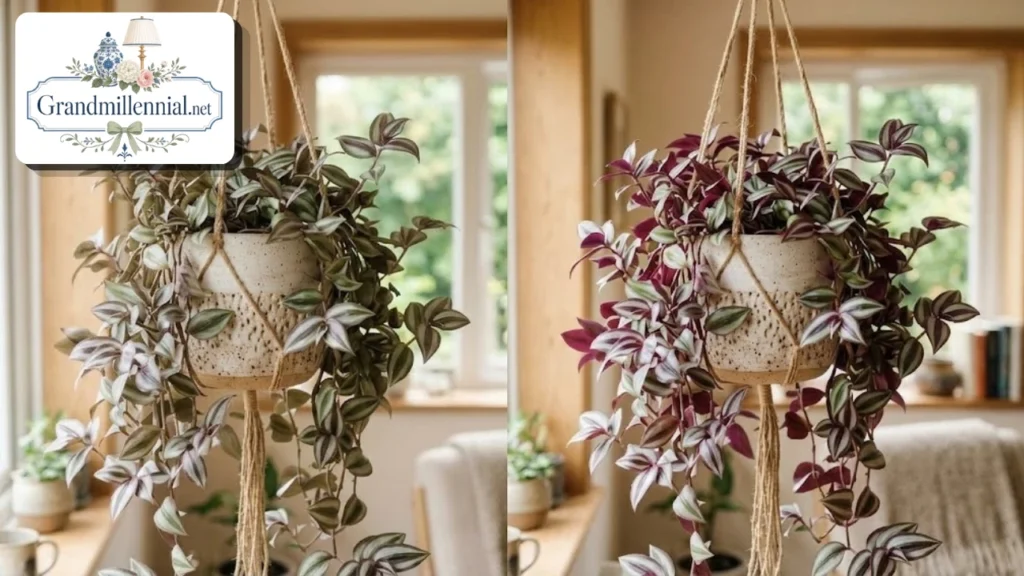
Light is the single biggest lever. Give these plants bright, indirect light and the stripes stay silver, and the undersides stay a rich purple. Give them a dim corner and the colors fade to plain green, with long gaps between leaves.
An east-facing window is ideal. A bright south or west window works too if you pull the plant back a little or filter the glare with a thin curtain. If you are choosing window dressing anyway, our guide to custom curtains covers sheer options that soften the sun without making a room dark.
Direct afternoon sun through glass can scorch the leaves, leaving papery brown patches. The plant will usually recover once you move it, but the damaged leaves will not repair themselves.
If you only have a dim room, a basic full-spectrum grow light on a timer solves it. Keep it a foot or two above the stems and run it for roughly 10 to 12 hours.
Watering, humidity and temperature
Water when the top inch or two of soil feels dry. Then water thoroughly until it drains from the pot, and empty the saucer. These plants like to be evenly moist in the growing season, not soggy, and not bone dry for weeks.
Overwatering is the classic killer. The stems turn translucent and mushy near the soil line, and the base can rot quickly. Underwatering is much kinder: leaves go limp and crispy at the tips, and a good soak usually revives them.
Average household humidity is fine. Very dry air from heating in winter can crisp the leaf edges, so keep the plant away from vents and radiators.
Temperature is easy. Normal room temperatures suit it, and it does best above roughly 55°F (13°C). Cold drafts and frost damage it fast, so bring outdoor pots in well before the first frost.
In winter, growth slows. Water less, skip the fertilizer, and expect the plant to look a little tired until spring.
Soil, pots and feeding
Use a standard, free-draining potting mix. A handful of perlite or coarse sand mixed in helps if your mix tends to hold water. Heavy garden soil in a pot is the usual mistake.
A pot with drainage holes matters more than the material. Terracotta dries faster and forgives a heavy hand with the watering can. Plastic holds moisture longer, which suits you if you forget plants for a week.
Fertilize lightly. A balanced liquid houseplant feed at half strength, roughly once a month in spring and summer, is plenty. Too much fertilizer produces weak, floppy growth and can burn the roots.
Repot when roots circle the pot or poke through the drainage holes. Go up only one size. A wandering jew plant in an oversized pot sits in wet soil for too long.
Pruning for a fuller plant
Left alone, the plant sends out long bare stems with leaves only at the ends. It gets leggy. The cure is a haircut, and you cannot really overdo it.
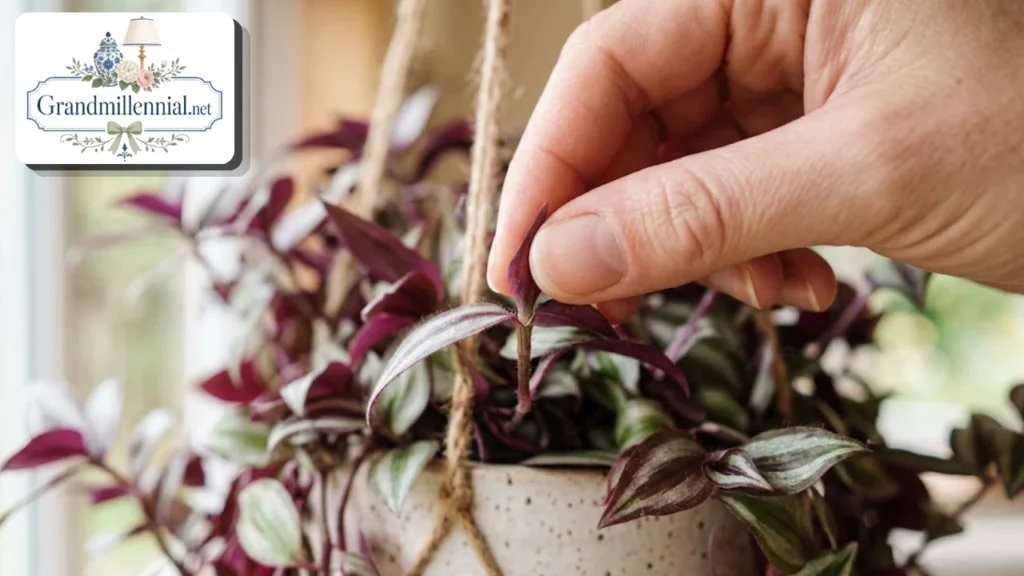
Pinch or snip the growing tip just above a node. The plant responds by branching from that point, so one stem becomes two or three. Do this every few weeks in the growing season and the pot stays dense.
Cut off any stem that has gone bare, brown, or papery. Remove old, yellow leaves as they appear. The plant redirects its energy into fresh growth.
The best part is that every trimming is a free cutting. Don’t toss them.
How to propagate in water or soil
Propagation is the reason many people own six of these plants. It is almost too easy.
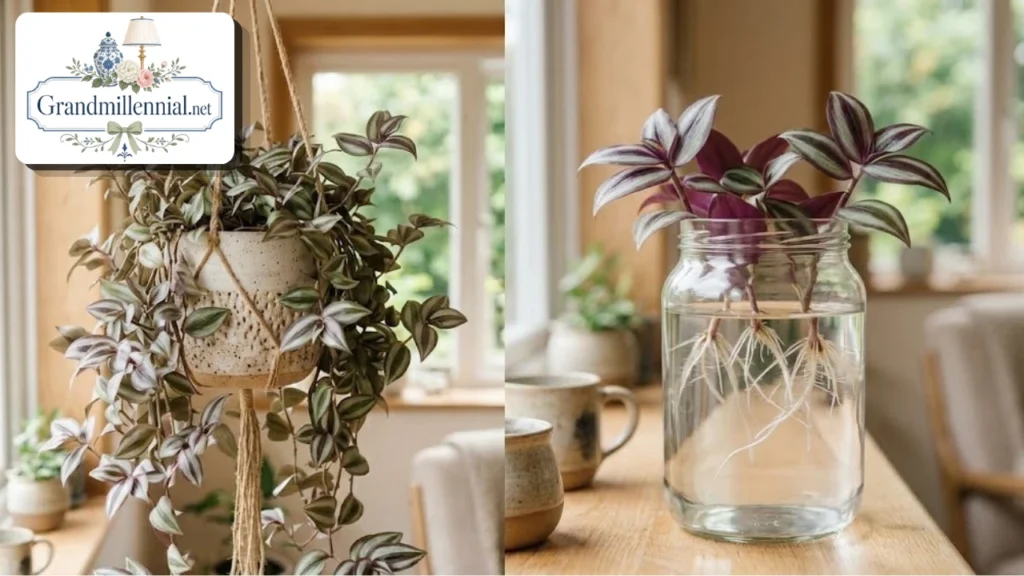
In water: Cut a stem about four to six inches long just below a node. Strip the lowest leaves so none sit under the waterline. Stand the cutting in a glass of room-temperature water on a bright shelf. Roots usually show within a week or two.
Change the water every few days if it turns cloudy. Once the roots are an inch or two long, pot the cutting in moist soil.
Directly in soil: Press the cut stems into damp potting mix, with a couple of nodes buried. Keep it lightly moist and out of harsh sun. Many cuttings root without any fuss.
For a full pot from day one, plant five or six cuttings around the edge of the same container. Within a few weeks,s you will have a bushy plant instead of a thin one.
A small tip from experience: don’t leave cuttings in water for months. They root happily there, but water roots struggle when moved to soil, so transplant while the roots are still short.
Fixing a leggy plant
Legginess has two causes. Too little light stretches the stems, and too little pruning lets the tips run away from the base.
First, move the plant somewhere brighter. Then cut the bare stems back hard, to just above a healthy node, and root the trimmings. Within a month or two, you should see new shoots near the base.
If the whole plant looks scruffy, there is a shortcut. Cut everything back to a few inches, and replant the best cuttings back into the same pot. It looks bare for a couple of weeks, then thickens quickly.
Common problems and quick fixes
| Symptom | Likely cause | Fix |
|---|---|---|
| Faded, plain green leaves | Too little light | Move to a brighter spot |
| Brown, crispy tips | Dry air or irregular watering | Water more evenly, keep away from vents |
| Mushy stems at the base | Overwatering or poor drainage | Cut healthy tops, root them, discard the rest |
| Long, bare stems | Low light, no pruning | Brighter light, pinch tips |
| Tiny webbing and speckled leaves | Spider mites | Rinse leaves, use insecticidal soap |
| Sticky residue, soft insects | Aphids or mealybugs | Wipe with soapy water, repeat weekly |
Pests are uncommon on healthy plants. Spider mites show up when the air is hot and dry. A shower in the sink and a few repeat treatments usually clears them.
Check under the leaves whenever you water. Catching a problem early is far easier than rescuing a plant after it has spread.
Pets, people and the sap
Here is the part many care guides skip or soften. The ASPCA lists these plants as mildly toxic to cats and dogs, with skin irritation the main concern. Per the references we checked, including Wikipedia citing the ASPCA, contact with the sap can cause dermatitis in pets and some people.
If a pet chews the leaves, you may see drooling or mouth irritation. Most cases are mild, but call your vet or an animal poison hotline if symptoms are significant or you are unsure what was eaten.
If you have a cat that treats every trailing stem as a toy, hang the plant high or choose a pet-safe alternative. For people with sensitive skin, wear gloves when pruning a large plant and wash your hands afterward.
This is general information, not medical or veterinary advice. When in doubt, ask a professional.
Outdoors: groundcover or weed?
In a pot on a patio, a wandering jew plant is charming. In the ground in a warm, wet climate, it can be a problem. The plant spreads by tiny stem fragments, and a piece the size of your thumb can start a new colony.
Biosecurity and conservation sources have flagged it as an invasive weed in several places. Massey University’s weeds database covers its impact in New Zealand, where it smothers native forest floor seedlings. Similar concerns have been raised in South Africa and the Galapagos.
If you live somewhere mild and frost-free, keep it in containers. Never dump clippings in a park, bush, or creek bank. Bag them and put them in the trash, or dry them thoroughly in the sun first.
Check your local extension service or agricultural department to see whether the plant is regulated where you live. Rules vary a lot by region.
In cold climates, the risk is much lower because frost kills it back. Many gardeners there happily use it as an annual in baskets.
Styling it at home
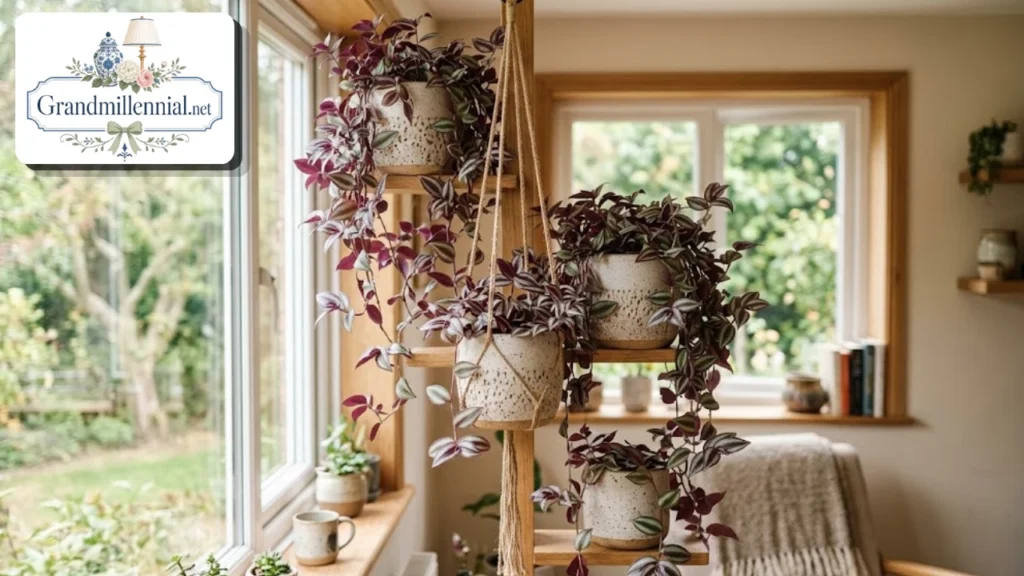
The trailing habit makes it a natural for high spots. A shelf edge, a macramé hanger, the top of a bookcase o, or a plant stand near a bright window all work well. Let the stems fall, and the pot nearly disappears.
The purple tones pair well with warm woods, white walls, and brass. In a traditional room with patterned fabrics, the striped leaves add movement without competing. For more ideas on layering greenery with furniture, see our guide to creating a cozy living room.
In a bathroom with a bright window, it can soften hard edges. Our notes on a small bathroom vanity show how a bit of greenery helps a tiny space feel less clinical. If you want broader inspiration, try 30 home decor ideas that actually work.
A grouping of three pots at different heights looks intentional. Keep the containers in one color family so the plants do the talking.
Buying a healthy plant
Pick a plant with full, bushy stems and leaves that sit close together. Skip any pot with mushy stems, a sour smell, or webbing under the leaves. Lift the plant gently and look at the drainage holes, because white roots are a good sign and black, slimy ones are not.
Small cuttings from a friend are often healthier than a big shop plant. They have not been shipped, shaded, or overwatered for weeks. Ask for a few pieces with at least two nodes each.
Quarantine any new plant for a week or two. Keep it away from your other houseplants, check the undersides of leaves, and only then move it to its permanent spot. It sounds fussy, but a single mite outbreak is a lot more work than a short wait.
Mistakes that quietly ruin these plants
Most failures come from a handful of habits. They are all easy to fix once you spot them.
The first is watering on a fixed schedule. A plant in a bright window in July is thirstier than the same plant in January, so check the soil with your finger instead of the calendar.
The second is a decorative pot without drainage. Water collects at the bottom, roots sit in it, and the base rots long before the leaves look unhappy. If you love the pot, keep the plant in a plastic nursery pot inside it and lift it out to water.
The third is never pruning. A trailing plant that is left alone becomes a few long ropes with a tuft at the end. Regular pinching is what keeps the wandering jew plant full from the pot rim down.
The fourth is cold glass. In winter, leaves pressed against a freezing window can blacken. Pull the plant a few inches back at night.
Advanced tips for fuller, more colorful plants
Rotate the pot a quarter turn every week or two. The stems lean toward the light, and rotating keeps growth even instead of lopsided.
Refresh the plant every year or two. Older stems lose vigor and the base gets woody. Taking new cuttings and replanting them into fresh mix is easier than rescuing a tired original.
For stronger color, give the plant the brightest indirect light it can take without scorching. Some growers also let it dry slightly more between waterings, which keeps growth compact and the leaf color deeper.
A bathroom or kitchen with a bright window suits it well. The extra humidity helps the leaf edges stay crisp-free, and the trailing stems soften hard counters and tile.
Finally, wipe dusty leaves with a soft,t damp cloth now and then. Clean leaves absorb more light, and you will spot pests sooner.
Choosing containers and hanging setups
Hanging baskets show off the trailing stems best, but they dry out faster than pots on a shelf. Check them more often in summer, and take them down to water so the drips don’t land on your floor.
A coco-liner basket breathes well and drains fast. Pair it with a slightly richer mix so the soil doesn’t turn to dust between waterings. A solid ceramic planter holds moisture longer, which suits a forgetful owner.
For wall-mounted shelves, choose a pot that is heavy enough not to tip once the stems grow long. Long vines act like a sail when a door opens, and a light pot can tumble.
If you want a lush look quickly, plant in a wide, shallow bowl rather than a deep, narrow pot. These plants have shallow roots and spread sideways, so a wide container gives them room and keeps the soil from staying wet at the bottom.
Mix varieties if you like contrast. A silver-striped zebrina next to a deep purple pallida makes a pot that looks planned, as long as both get the same light and water.
A simple year-round care calendar
Spring: Repot if root-bound. Start feeding at half strength. Take cuttings to refresh a tired plant.
Summer: Water more often, pinch tips every few weeks, and shield from harsh midday sun. Outdoor pots may need daily checks in heat.
Autumn: Bring outdoor plants in before cold nights. Check for pests before they come inside. Slow the feeding.
Winter: Water sparingly, skip fertilizer, and keep away from drafts and heaters. Expect slower growth and don’t panic about a few lost leaves.
FAQs:
Is the wandering jew plant easy to care for?
Yes. It tolerates missed waterings, grows fast,st and roots from cuttings in a glass of water. ThIt needsright indirect light and a gular trim.
Why is my plant losing its purple color?
Almost always light. Move it somewhere brighter, away from direct scorching sun, and the stripes and purple undersides usually return with new growth.
Is it poisonous to cats and dogs?
The ASPCA lists it as mildly toxic, mainly causing skin irritation and mouth discomfort. Keep it out of reach of chewing pets and contact a vet if you are concerned.
How often should I water it?
When the top inch or two of soil is dry. That may be weekly in summer and every two weeks or so in winter. Always check the soil instead of following a fixed schedule.
Can I grow it outdoors?
In a container, yes. In the ground, only in cold climates where frost controls it. In mild regions i, it can become an invasive weed, so keep it potted.
How do I make it bushier?
Pinch the tips regularly and cut leggy stems back above a node. Planting several cuttings in one pot also gives a fuller look quickly.
Why are the stems mushy at the base?
Usually overwatering or a pot that doesn’t drain. Cut off healthy tips, root them in fresh water or soil, and discard the rotten part.
Can it grow in low light?
It survives but looks weaker. Colors fade and stems stretch. A grow light on a timer is the simplest fix for a dim room.