

A tête-à-tête is an S-shaped sofa built for two people to sit facing each other, a genuinely distinctive shape that looks like nothing else in a typical furniture showroom.
The name comes directly from French, literally meaning “head-to-head,” and it describes exactly what the piece is designed to do: put two people in direct, comfortable eye contact without sitting side by side.
This guide untangles the terminology confusion around this piece, gives an honest read on comfort and practicality, and covers where it actually earns its place in a modern home rather than becoming an underused novelty.
If you’ve seen this shape somewhere and are trying to figure out what to even call it, you’re not alone it goes by several names, and we’ll sort those out first.
What “Tête-à-Tête” Actually Means
The literal translation, “head-to-head,” refers to the conversational function of the piece, not a literal description of the seating position.
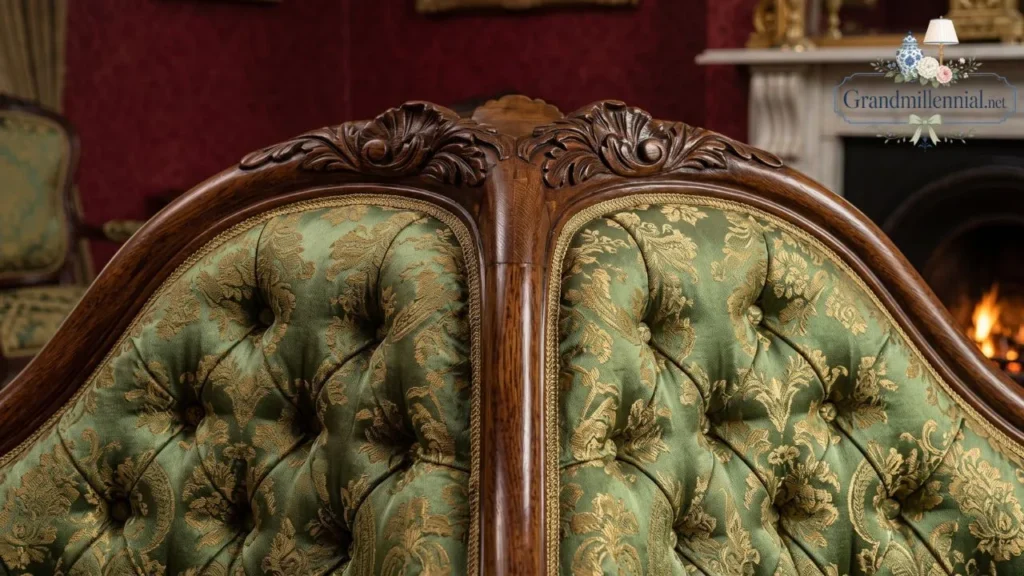
Structurally, the classic tête-à-tête uses a serpentine, S-curved backrest that lets two seats face opposite directions while remaining physically joined, so you end up angled toward your companion rather than staring straight across a room divide.
That curved form isn’t a decorative flourish alone. It solves a genuine design problem: how do you let two people talk face-to-face while still each having proper back support, something a straight bench or two separate chairs can’t do as elegantly?
Early versions in 18th-century France used this same basic logic, and the shape has remained recognizable across roughly two and a half centuries of furniture history since.
A Brief, Real History, Not Just “It’s Victorian”
Most existing guides mention “Victorian” and stop there. The real story has more genuinely interesting detail worth knowing.
The tête-à-tête emerged during the Rococo period of 18th-century France, an era defined by ornamentation, asymmetry, and a taste for playful, curving forms exactly the design vocabulary this piece speaks.
It reached its peak popularity in Victorian England during the 19th century, where it took on a very specific social role: facilitating supervised courtship conversation in a parlor or sitting room.
The genius of the design, socially speaking, was that it allowed a couple to sit close and converse privately while remaining fully visible to a chaperone across the room. Physical distance was maintained even as the seats angled the two people toward each other.
This is why the piece picked up nicknames like “courting bench,” “kissing bench,” and “gossip’s chair” names that describe its social function far more directly than the more formal French term does.
Some of the most elaborate surviving examples, including rosewood pieces by 19th-century maker John H. Belter, are held in major museum collections today, including the Metropolitan Museum of Art, a testament to how much craftsmanship went into what was, at its core, a piece of social furniture engineering.
Tête-à-Tête vs. Courting Bench vs. S-Chair vs. Loveseat
This is genuinely confusing territory, and almost no existing guide sorts it out clearly, so here’s the real breakdown.
Tête-à-tête is the broadest, most historically accurate term for the S-shaped, face-to-face conversation seat described above.
“Courting bench,” “kissing bench,” and “gossip’s chair” are all period nicknames for the same basic piece, referencing its historical social function rather than describing a structurally different object.
“S-chair” typically refers to the same serpentine shape, though the term shows up more often in contemporary and midcentury design contexts than in historical or antique furniture descriptions.
Loveseat is a genuinely different piece, a small two-person sofa where both people sit facing the same direction, side by side, rather than angled toward each other. It’s a common point of confusion, but the seating orientation is the key structural difference.
Tête-à-tête bench, somewhat confusingly, can also refer to a related but distinct outdoor furniture form: two chairs joined by a shared armrest, both facing the same direction, more common in garden and patio collections than indoor parlor pieces.
Knowing these distinctions matters practically: if you search “tête-à-tête” expecting the classic S-curve and get outdoor bench results instead, you’re running into this exact naming overlap.
Is It Actually Comfortable?
This is the question almost every existing guide skips entirely in favor of pure aesthetics, and it deserves an honest answer.
The classic historical form prioritizes the conversational angle over lounging comfort; the seat depth is often shallower than a modern sofa, and the curved backrest, while elegant, doesn’t offer the deep recline most people expect from everyday seating.
That’s a deliberate trade-off, not a flaw. This piece was never designed to be where you watch television for three hours; it was designed for a specific, shorter-duration social function.
Modern reproductions and contemporary interpretations, including designs by makers like Jonathan Adler often soften this trade-off somewhat, using more generous cushioning and updated proportions while keeping the recognizable silhouette.
If comfort for extended lounging is a priority, treat a tête-à-tête as a secondary seating piece, a statement addition to a room that already has a genuinely comfortable primary sofa rather than your only seating option.
Where to Actually Put One in Your Home
Room fit matters enormously with a piece this distinctive, and this is where most existing guides offer the least genuinely useful advice.
Bay windows are a natural home for a tête-à-tête; the curved shape often echoes a bay’s own geometry, and the spot naturally invites a shorter, seasonal-use kind of seating rather than all-day lounging.
Formal parlors and sitting rooms, especially in a home with a separate, more casual family room, let this piece serve its original social function without competing against a primary sofa for everyday use.
Wide entryways and landing areas, if generously proportioned, can use a tête-à-tête as a striking, semi-functional statement piece rather than a purely practical seating solution.
Reading nooks benefit from the piece’s naturally intimate scale, particularly in a room where two people genuinely do want to sit and talk rather than sprawl out separately.
As a rough sizing guide, most classic tête-à-têtes run somewhere in the range of 50 to 60 inches wide and 30 to 35 inches deep. Measure your intended spot generously, since the curved form needs some breathing room around it to read as intentional rather than cramped.
Avoid placing one as the sole seating in a room meant for everyday family use or in a tight walkway where its outward curves will create an awkward pinch point in daily traffic.
Antique, Vintage, or Modern Reproduction: What to Know Before Buying
Genuine antiques, particularly Victorian-era pieces, sit at the highest price point and carry real provenance and craftsmanship value, but they also require careful inspection for structural soundness, particularly in the joinery and any hand-tied spring upholstery underneath.
Vintage reproductions, often from the mid-20th century, can offer a more affordable middle ground, particularly appealing if you’re drawn to the midcentury modern interpretation of this shape rather than the ornate Victorian original.
Modern reproductions and contemporary designs from current manufacturers typically offer the most consistent comfort and durability, since they’re built with modern upholstery techniques and materials while preserving the recognizable silhouette.
When shopping for an antique specifically, check for wobble in the legs, verify the upholstery has been professionally reupholstered rather than just cosmetically patched, and ask directly about any structural repairs in the piece’s history before committing.
Notable Modern Designers Keeping the Shape Alive
The tête-à-tête’s resurgence over the past several years isn’t accidental; it’s tied to a broader design movement toward nostalgic, character-driven pieces over disposable, mass-produced furniture.
Jonathan Adler’s take on the form keeps the recognizable S-curve while updating proportions and upholstery choices for a more contemporary living room, often in bold colors or graphic patterns rather than traditional florals.
Midcentury modern designer Edward Wormley incorporated tête-à-tête forms into his broader furniture collections, favoring the shape’s blocky, planar geometric potential over its more ornate historical execution, proof that this silhouette translates across design eras far more readily than most people assume.
Smaller independent upholsterers and custom furniture makers also frequently take on tête-à-tête commissions, which is worth considering if you want a specific fabric or proportion that off-the-shelf reproductions don’t offer.
When researching current makers, look specifically at how a designer has handled the central connection point between the two seats; this is where quality and structural longevity differ most between a well-built reproduction and a purely decorative, less durable version.
Quick Reference: Is a Tête-à-Tête Right for Your Room?
| Your Situation | Good Fit? | Why |
|---|---|---|
| Formal parlor or sitting room, separate from main living space | Strong fit | Serves its original social function without competing for everyday use |
| Bay window with generous floor space | Strong fit | A curved shape often complements bay window geometry |
| Only seating in a busy family room | Weak fit | Shallow seat depth and shape don’t suit everyday lounging. |
| Tight walkway or narrow hallway | Weak fit | Outward curves create an awkward traffic pinch point. |
| The reading nook is meant for two | Good fit | Intimate scale suits quiet, shorter-duration use well. |
| Room already anchored by a bold statement piece | Situational | Consider restraint two competing focal points can feel cluttered |
Use this as a quick gut check before measuring if your situation lands in “weak fit,” the piece may still work as a secondary, occasional-use addition rather than primary seating.
Styling a Tête-à-Tête in a Grandmillennial-Style Room
This piece is almost tailor-made for grandmillennial styling, and it’s an angle nearly every existing guide misses entirely.
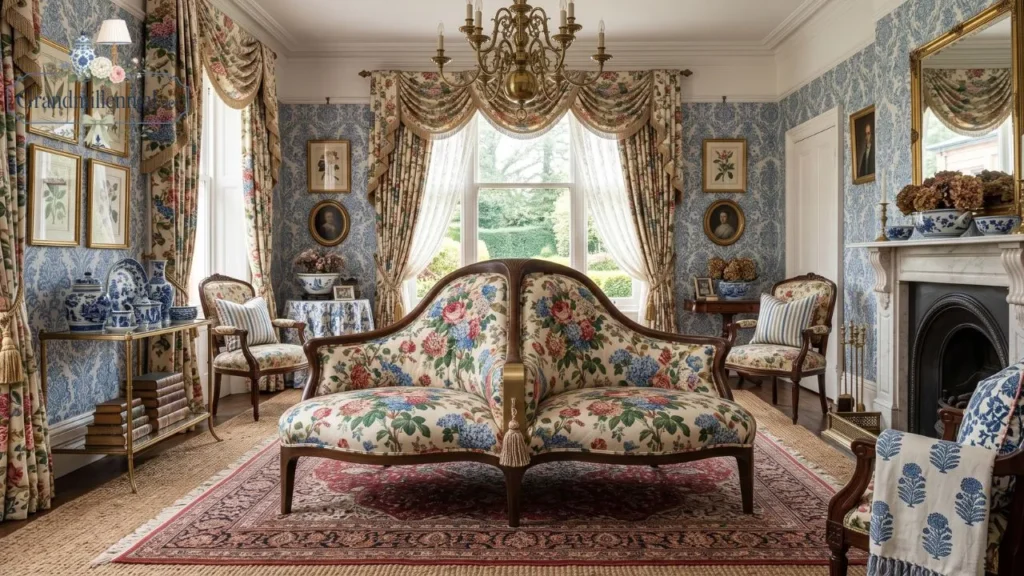
A tête-à-tête upholstered in a bold floral or striped fabric, paired with brass hardware and a layered mix of vintage-inspired textiles, reads as an authentic period piece rather than a costume-y throwback.
Placing one near custom curtains in a coordinating or complementary pattern helps ground the piece as part of a considered room design rather than an isolated novelty item.
A traditional wall treatment behind the piece of wallpaper, a gallery arrangement, or a single statement mirror gives the curved silhouette a backdrop worthy of its theatrical shape.
The goal with a piece this distinctive is restraint everywhere else in its immediate vicinity let the tête-à-tête be the visual anchor, and keep surrounding elements a touch quieter so the room doesn’t compete with its own centerpiece.
FAQs for tête-à-tête
What is a tête-à-tête sofa?
It’s an S-shaped sofa designed for two people to sit facing each other, with a curved backrest that provides support while angling both seats toward one another for conversation.
What is the difference between a tête-à-tête and a loveseat?
A loveseat seats two people side by side facing the same direction; a tête-à-tête’s curved form angles the two seats to face each other instead.
What is a courting bench used for?
Historically, it allowed a couple to sit close and converse privately while remaining visible to a chaperone, maintaining social propriety during Victorian-era courtship.
Are tête-à-tête sofas comfortable?
The classic historical form prioritizes conversational positioning over deep lounging comfort, though modern reproductions often offer more generous cushioning while keeping the recognizable shape.
Where can you buy a tête-à-tête sofa?
Genuine antiques are available through specialty antique dealers and auction houses, while vintage and modern reproductions are available through select furniture retailers and contemporary designers who work in this style.
What era is the tête-à-tête sofa from?
It originated in 18th-century Rococo France and reached its peak popularity in Victorian England during the 19th century, with a genuine resurgence among contemporary designers today.
A Direct Takeaway
A tête-à-tête earns its place in a home through genuine character, not everyday practicality; it’s a conversation piece in both the literal and decorative sense.
Give it room to breathe, pair it with a style that matches its theatrical history, and treat it as a secondary statement seat rather than your household’s primary sofa, and this centuries-old shape fits beautifully into a modern, well-considered room.