

Matilda Goad is a London-based homeware designer and creative consultant, and the founder of the brand MG&Co. (also styled Matilda Goad & Co).
She is best known for the scalloped rattan lampshade, a cheerful, curvy take on a classic, and for a playful but classic approach to colour. This guide covers her work, her design ideas as she has described them in interviews, and how to borrow the look at home.
Some designers become known for a single object. For Matilda Goad, it was a lampshade with a scalloped edge.
From that one product grew a brand that now makes hardware, lighting, mirrors, candles and everyday homewares. It has a studio and showroom in London and a loyal following among people who like colour with their classics.
This article is an independent profile. I am not affiliated with her or her brand, and it is not an interview. Everything below comes from her own brand site and from published features and interviews, which I name as I go.
I have kept to her professional work. I leave out her age, family and finances, because those details are private and the sites that publish them are often unreliable.
Where sources disagree or leave a gap, I say so. That matters most on the brand’s timeline, which different pages describe in different ways.
Who Matilda Goad is
According to Domino, Matilda Goad is a London-based homeware designer and creative consultant. It describes her scalloped rattan lampshades as a cult favourite in British fashion circles, and says she debuted them in 2017.
A 2017 interview on the Cabbages & Roses site calls her a creative consultant who focuses on interesting, stimulating visual spaces. It says she grew up in the countryside in Sussex.
Her own brand’s anniversary page adds more. It says she moved to London at 17 to study art and has lived there since.
She also worked as a set designer. That background shows in the brand’s look, which feels styled and staged in the best sense, with every object chosen to sit well beside the next.
The Arlington feature calls her a well-known figure in London’s design scene and describes her work as artful and purpose-led, with an emphasis on timeless designs for modern living.
That is the professional picture. A creative consultant with an eye for colour, who turned one good idea into a company.
The scallop lampshade story
The brand’s own telling is simple. While working as a set designer, she disliked the straight lines and serious shapes of the lampshades she saw.
She wanted a lampshade with a more colourful personality. That led to the Scallop Lampshade, which the brand calls its original product and the start of its story.
The curved, wavy edge is the signature. It softens a room the way a ruffle softens a dress, and it works in a modern flat as easily as in a country house.
The Papier interview notes her fondness for shell motifs and scalloped edges, which appear on lampshades, planters and napkins. The shape repeats across the range, and that repetition is what makes the brand recognisable.
On the anniversary page, she recalls the early days of posting lampshade parcels. She went to the Post Office on Golborne Road at least once a day, sometimes twice.
She also says that Hannah Weiland, the founder of Shrimps, bought the first Scallop Lampshade the brand made. The page presents the two as friends who have supported each other from the start.
I should flag the timeline. The anniversary page celebrates five years but is undated, Domino says the lampshades debuted in 2017, and a 2017 pop-up is mentioned in the Cabbages & Roses interview. I cannot reconcile these into one founding date, so I do not give one.
What MG&Co. makes
The brand’s site lists several product families. The range has grown well beyond the lampshade.
Lighting: ceiling lights, wall lights, lampshades, lamps and parts
Hardware: knobs, handles, hooks, backplates and door, window and everyday essentials
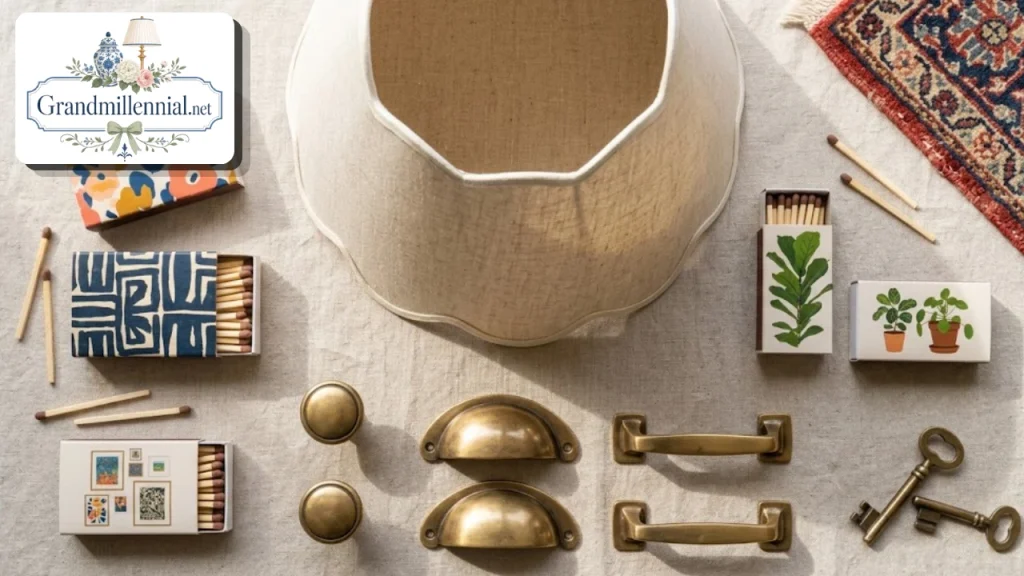
Homewares: kitchen and bathroom items, matchbox sleeves, mirrors, storage, candles, doormats and gifts
Seasonal items: such as Christmas crackers, which the Papier interview describes
The hardware comes in a range of finishes. The site lists aged brass, brushed nickel, polished brass, blackened bronze, polished nickel, coloured lacquer, acrylic and oak.
That variety matters for decorators. Small changes like a new cabinet knob or door handle are among the cheapest ways to change how a room feels.
The brand also sells through other retailers. A scalloped cushion appears in Anthropologie’s listings, for example, which shows the look has reached a wider audience.
Where the brand works from
The anniversary page gives a studio and showroom address at Ebury Street in London. The Arlington feature says the first store there opened in autumn 2025.
That detail suggests a brand that began online and through pop-ups before taking a permanent shop. The 2017 Cabbages & Roses interview describes a pop-up that sold her prints and lampshades alongside vintage rugs and wrapping paper from other makers.
In that interview, she names opening the pop-up as her proudest moment. It is a small, human detail that shows how the business started.
The anniversary page also credits a florist in Ladbroke Grove, Flowered Corner, with supplying flowers and props for the studio. Small local partners like that give the brand its texture.
Values as the brand states them
The brand site is open about what it cares about. It talks about craftsmanship, community, people and longevity.
The founder writes that a brand is only as brilliant as its people, and that a brand becomes a classic when it stands the test of time. Those are her words on the page, and I report them as the brand’s self-description rather than as an independent fact.
The site also displays a B Corp badge and links to a B Corp page. I did not verify the certification, and you should check the official B Corp directory if it matters to you.
The Arlington feature adds a human note. It says her friend Lucy Irby, a PR consultant, was the brand’s first employee.
Her design philosophy
Pulling the interviews together, a few consistent ideas appear. They are useful whether or not you ever buy anything from the brand.
The first is colour with confidence. The brand describes its visual language as playful but classic, sculptural yet soft.
The second is respect for the past. In the Domino piece, she favours vintage one-off pieces and giving old objects new life, which she notes is also more sustainable.
The third is balance. She suggests mixing styles, such as an antique sideboard under a modern artwork.
The fourth is function. She likes cosy, layered rooms that cope with long grey winters, which is a very London way to think about a home.
None of these ideas are exotic. What makes them hers is how consistently she applies them, and how cheerful the results look.
Colour and coziness
In the Domino interview, she says colour is the defining feature of many London homes. Because daylight is limited for much of the year, the goal is often a cosy, layered space.
That is a useful principle for any home with weak light. Instead of fighting a dark room with white paint, you can lean in with warm colours, soft textures and several light sources.
Her personal palette, as stated in the 2017 interview, favours green and acid yellow. Those are bold choices, but they work because they appear in small doses, such as a shade, a print or a cushion.
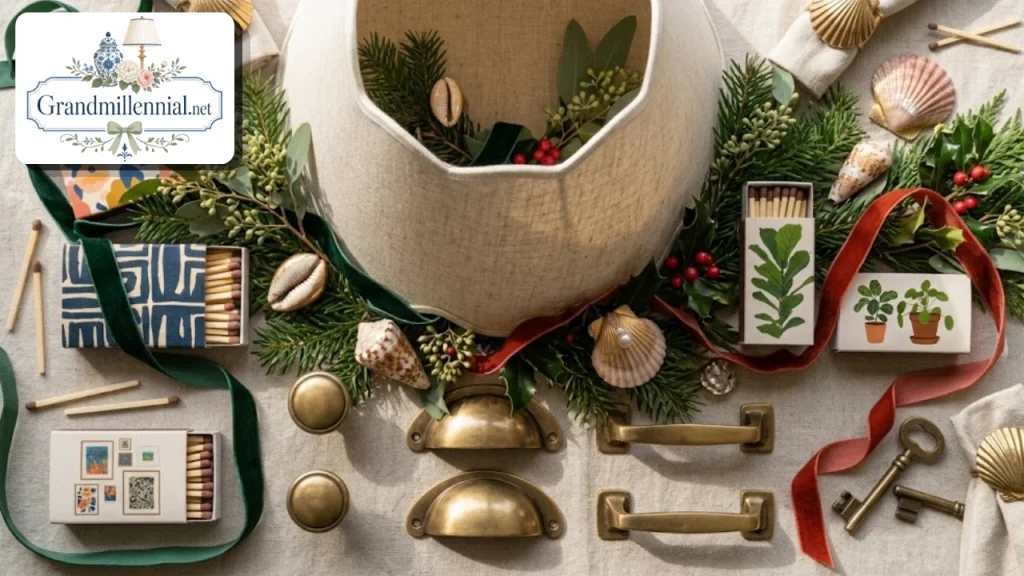
The brand’s Christmas styling shows the same instinct. The Papier interview describes a tree with shell ornaments, ribbon bows in bold jewel tones and traditional Scandinavian straw stars.
If you are building your own palette, start with one strong colour and repeat it three times in different materials. That echo is what makes a room feel designed rather than accidental.
Our guide on how to create a cozy living room with furniture goes deeper on layering, and it pairs well with this approach.
Small spaces and the largest piece
One of the more practical tips in the Domino interview concerns small rooms. She suggests avoiding a clutter of small items and choosing the largest piece the room can comfortably hold.
It sounds backwards, but it works. A single big mirror or sofa makes a room feel more deliberate than ten little objects.
She also advises against pendant lights where ceilings are low, and recommends flush-mount or dot lamps instead. Wallpaper, she says, works well in small rooms, especially those with awkward or sloped walls.
These tips fit tight London flats, and they fit any compact home. Fewer, larger things read as calm, while many small things read as busy.
If you want to follow the wallpaper idea, our guide on how to decorate walls has options for different surfaces and budgets.
Vintage, mixing and care
The same interview includes advice on buying vintage. She likes restorable pieces, but she avoids items with marks on linen, damaged mirrors and obvious chips.
The reason she gives for mirrors is that new glass never matches the original. That is a smart detail, because replacement glass often looks flat or different next to old silvering.
She also prefers to keep original features in historic buildings. In her own home, she kept them for financial reasons and to protect the character of the property.
She dislikes installing new fixtures in old buildings when they will likely be replaced within a decade. Her choices at home include a calm pink that mimics plaster, cupboards that blend into the walls and striped mustard-and-cream blinds.
For anyone renovating an older house, that is a useful brake. Before you rip something out, ask whether it can be restored, and read our renovation tips for a sensible order of work.
Hardware and the small details
It is easy to overlook knobs, hooks and handles. The brand built a whole category on them.
The idea is that small things carry personality. A scalloped knob or a lacquered handle changes how a cupboard looks without a full renovation.
For a rental or a budget project, this is the most flexible approach. You can swap fittings now and take them with you later.
When you replace hardware, measure the existing hole spacing first. It is a simple step that avoids drilling new holes in good doors.
Match finishes within a room. Mixing too many metals can look chaotic, while two finishes used on purpose can look rich.
Christmas and entertaining
The Papier interview gives the best view of her entertaining style. She describes filling the home with flowers and foliage, such as eucalyptus or greenery gathered outdoors, and adding gold spray for a quick, striking effect.
She suggests combining ribbons of different colours and widths into one bow, and keeping leftover ribbons to reuse. She also likes nostalgic touches like chocolate coins, candy canes and a gingerbread house.
The brand made Christmas crackers for the first time with the aim of avoiding cheap plastic toys. According to the interview, each cracker includes a recipe that uses leftovers, spice mix test tubes and a fortune fish, with the recipes developed with London chefs Tart.
The Arlington feature, which is a long-lunch conversation, adds a mood. Her comments focus on good food, service, setting and good company, and on how a holiday lunch feels freer when nothing needs to end on time.
The common thread is generosity. Her style is about making guests feel the table was set with them in mind.
Where she finds ideas
In the Papier interview, she says she finds inspiration through travel and local culture, and that she visits British seaside towns. That helps explain the shell and scallop motifs.
She advises getting out when you feel uninspired rather than browsing online endlessly. It is plain advice that most designers would agree with.
The 2017 interview adds a few favourites. She names Wes Anderson films and A Bigger Splash among her favourite films, and a scented English rose as her favourite flower.
These details may seem trivial, but they point to a consistent taste. Wes Anderson’s films are known for careful colour palettes and symmetry, which echoes in her own styling.
How to get the look at home
You do not need to buy the brand to borrow the approach. Here is a simple plan based on the ideas above.
Pick one signature shape. Repeat a curve, such as a scallop or a shell, in two or three places.
Choose one bold colour. Use it three times, in different materials.
Layer your lighting. Add a lamp, a wall light and a candle, not just a ceiling light.
Buy one large piece. In a small room, choose the biggest mirror or sofa that fits.
Mix old and new. Put a vintage piece beside a modern one.
Change the hardware. Swap knobs and handles for something with personality.
Add flowers or greenery. Fresh or foraged, it finishes a room.
If you want ideas for putting it together, our collection of home decor ideas that actually work is a good next stop.
Window treatments are another easy win. Our guide to custom curtains shows how to add colour and pattern at the windows.
Why the look works
It is worth asking why this style feels so appealing. The answer says something about good design in general.
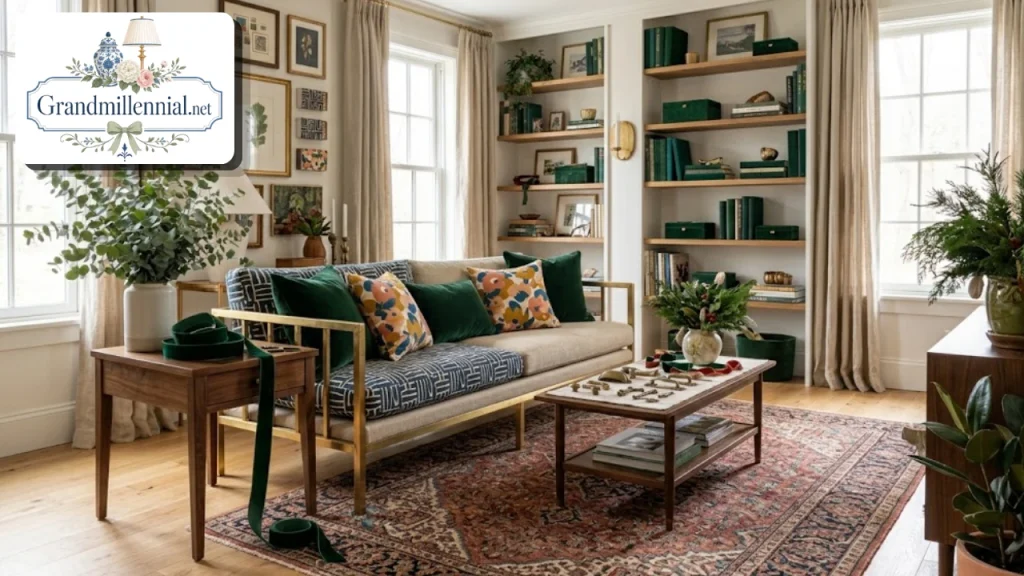
First, it is easy to read. A scalloped edge, a bright cushion and a brass knob are simple shapes that the eye takes in at once, so the room feels friendly instead of fussy.
Second, it repeats. Designers call this rhythm. When the same curve or colour appears several times, the eye finds a pattern and the room feels resolved.
Third, it mixes classic and playful. The brand’s own phrase is playful but classic, and that balance is hard to achieve. A traditional form with a cheerful twist feels fresh without feeling trendy.
Fourth, it respects the building. By preferring original features and vintage pieces, the approach avoids the flat, matching look of a showroom.
That is why Matilda Goad is a useful designer to study even if her colours are not yours. The method works with any palette.
If you prefer calm neutrals, use the same logic with texture. Repeat a weave, a curve and a finish, and you get the same sense of rhythm.
Buying notes and sensible checks
If you decide to buy from the brand or a retailer that stocks it, a few practical checks help. They apply to any design-led homeware.
Check the product page for dimensions, materials and care instructions before you order. A lampshade has to fit its base and bulb, and a mirror has to fit its wall.
For lighting, check the fitting type and the bulb rules in your country. Electrical items should be installed safely and, where required, by a qualified person.
For hardware, confirm hole spacing and the thickness of your door or drawer front. A knob that is too short for a thick front will not fit.
Look at the returns policy and delivery times, especially for seasonal items. Christmas products sell out and ship late in busy weeks.
If sustainability matters to you, read the brand’s own pages and check any certification at the source. The site shows a B Corp badge, but the details sit on its own page.
Finally, set a budget before you shop. Distinctive pieces are easy to fall in love with, and a plan keeps you to the few that matter.
You can also achieve the same effect on a smaller budget. A single scalloped item, a painted knob or a thrifted lamp with a new shade can carry a room.
Common mistakes when copying a look
The first is copying the objects instead of the idea. Buying a scalloped lamp helps less than repeating a shape and colour on purpose.
The second is using too many colours at once. The look works because each colour is repeated, not scattered.
The third is crowding small rooms with many small items. Her own advice is to choose the largest piece the room can hold.
The fourth is replacing vintage items that could be restored. She prefers to give old objects new life.
The fifth is ignoring light. A bold room needs layered lighting to feel warm instead of heavy.
The sixth is forgetting the setting. Entertaining style works best when it suits your own home and habits.
FAQs:
Who is Matilda Goad?
Matilda Goad is a London-based homeware designer and creative consultant, and the founder of the brand MG&Co. Domino describes her scalloped rattan lampshades as a cult favourite in British fashion circles.
What is Matilda Goad best known for?
She is best known for the Scallop Lampshade, which the brand says started its story. The scalloped and shell motifs now appear across lighting, planters, napkins, cushions and other homewares.
What does MG&Co. sell?
The brand site lists lighting, hardware such as knobs and handles, and homewares including mirrors, candles, storage, doormats and gifts. It also sells seasonal items such as Christmas crackers.
When was Matilda Goad’s brand founded?
Sources differ. Domino says she debuted the lampshades in 2017, and the brand’s anniversary page celebrates five years but is undated. I do not give a single founding date.
Where is Matilda Goad based?
She lives and works in London. The brand lists a studio and showroom on Ebury Street, and the Arlington feature says its first store there opened in autumn 2025.
What is her decorating style?
It is colourful, layered and playful but classic, according to the brand and interviews. She favours vintage pieces, mixes old and new, uses wallpaper in small rooms and prefers the largest piece a room can hold.
Is this page affiliated with her brand?
No. This is an independent profile based on published interviews and the brand’s site. It is not endorsed by Matilda Goad or MG&Co.