

In the United States, shower renovation costs most often land between about 2,000 and 15,000 dollars, depending on the shower type, materials, labor, and surprises behind the walls. Sources put the national average around 7,000 to 8,200 dollars.
A prefab unit sits at the low end, and a custom tiled or curbless walk-in at the high end. Add a contingency of 10 to 20 percent for hidden problems.
Few home projects produce as many different answers to one simple question. Ask three websites what a new shower costs and you may get 500, 8,000 and 50,000 dollars, and all three can be technically right.
That gap is the reason this guide to shower renovation cost exists. It pulls together the published figures from several large cost guides, explains why they disagree, and shows how to build a realistic budget for your own bathroom.
All prices below are US dollars as reported by the sources named. Your local prices will differ, and no article can replace written quotes from licensed contractors.
The short answer
Here is what the major cost guides report. Treat these as a starting map, not a price tag.
| Source | Reported average | Reported range |
|---|---|---|
| HomeAdvisor | About $7,000 | $2,000 to $9,000 typical; $300 to $15,000 broader |
| Bob Vila | About $8,000 | $200 to $15,000 |
| HomeLight (citing HomeAdvisor) | About $8,197 | $500 to $14,300 average range |
| This Old House (tub-to-shower conversion) | Not stated | $2,000 to $12,000 |
If you want a fully one-person working number, plan on somewhere between 5,000 and 10,000 dollars for a typical fully tiled shower, and set a firm contingency on top. A simple prefab swap can cost far less, and a luxury curbless walk-in can cost far more.
The rest of this guide explains how to place your project on that scale.
Why the numbers disagree
You will notice the sources above do not match. They are not wrong so much as measuring different things.
First, the projects differ. A fiberglass insert, a full tiled walk-in and a tub-to-shower conversion are three different jobs, yet many pages blend them into one average.
Second, the units differ. Some prices are per project, some per square foot, and some per hour. A tile price of 5 dollars per square foot says nothing about the finished shower until you add labor, waterproofing, and the pan.
Third, location matters. Labor rates in a large city can be far above those in a small town, and Bob Vila’s own state averages swing widely.
Fourth, the data is imperfect. Several guides rely on customer surveys with unclear sample sizes, and some mix data from different years. Even the big pages contradict themselves, with walk-in showers priced two different ways on the same page.
That is why the best approach is to build your own estimate from components, which is what the next sections do.
Shower renovation cost by shower type
The type of shower is the biggest driver of shower renovation cost. Here are the figures reported by the sources.
| Shower type | Reported range | Notes |
|---|---|---|
| Prefab shower unit (HomeLight) | $700 to $3,000 | Fiberglass or acrylic; quickest to install |
| Prefab, installed (Bob Vila) | $200 to $8,000, plus $400 to $1,000 installation | Very wide spread |
| Tub-to-shower conversion (Bob Vila) | $1,200 to $3,600 | Simple swaps |
| Tub-to-shower conversion (This Old House) | $2,000 to $12,000 | Wider, includes bigger jobs |
| Custom walk-in (Bob Vila) | $6,000 to $10,000 | Tiled, custom |
| Custom walk-in (Angi via HomeLight) | $6,000 to $12,000 | Similar range |
| Walk-in (HomeAdvisor) | $1,500 to $8,000, average about $5,400 | Wide, includes simpler builds |
| Curbless (This Old House) | $8,000 to $15,000 | Needs floor work |
| Steam shower (HomeAdvisor) | $2,600 to $6,050, average about $4,300 | Special equipment |
A few patterns stand out. Prefab units are the budget option. Custom tile and curbless designs cost the most because they need more labor, more waterproofing and sometimes changes to the floor.
Curbless showers, which have no step at the entry, often involve lowering the subfloor or reworking the drain. That is why they sit at the top of the range.
Cost by material
Materials are only part of the bill, but they shape the look and the labor.
Shower base and walls
HomeAdvisor lists acrylic at 500 to 2,500 dollars, fiberglass at 400 to 5,000 dollars and cultured marble at 700 to 2,450 dollars. These are unit prices for the surround or insert, not the whole project.
Prefab shower pans cost much less than custom ones. Bob Vila reports a standard prefab pan around 200 dollars and a custom pan up to 3,500 dollars, while HomeLight reports ready-made pans at 150 to 600 dollars and custom pans from about 900 dollars.
Tile
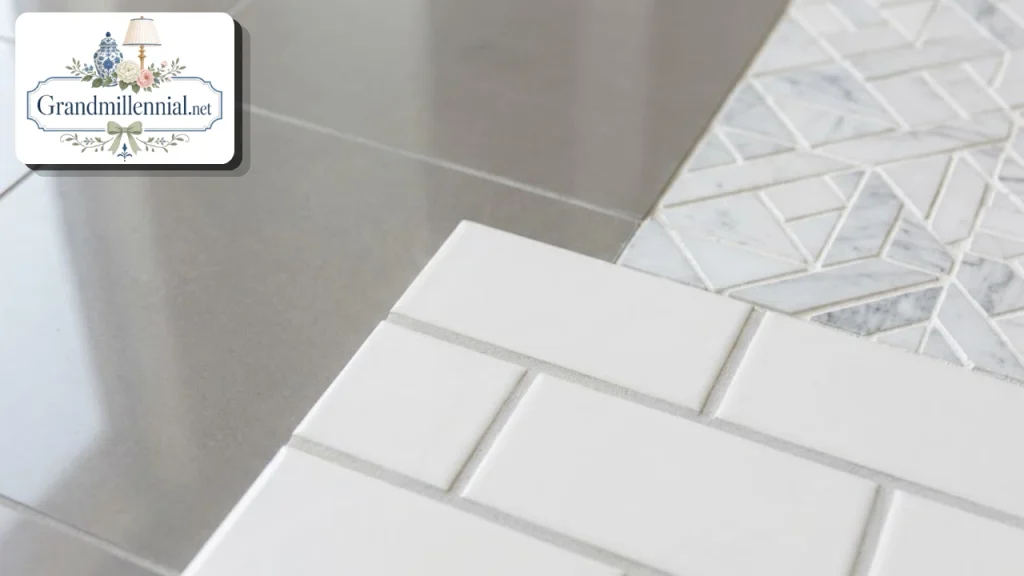
Tile prices vary widely. HomeAdvisor reports tiling at 5 to 10 dollars per square foot in one place and a very wide 0.50 to 100 dollars per square foot across ceramic options in another. HomeLight reports an average retiling cost of about 25 dollars per square foot, which includes labor, and old tile removal at 1.50 to 4.50 dollars per square foot.
The takeaway is that the tile itself may be the cheaper part. Cutting, setting, grouting, waterproofing, and finishing add a lot.
Large-format porcelain slabs have fewer grout lines and look sleek, but the tiles are heavy and harder to set. Small mosaic tiles on the floor help with slope but take longer to install. Our modern backsplash ideas show how pattern and scale change the look and the effort.
Stone and solid surface
HomeAdvisor lists stone slab at 40 to 65 dollars per square foot and solid surface at 40 to 70 dollars per square foot. These cost more but offer a seamless, premium look with fewer joints.
Shower doors and glass
Doors surprise people. A glass enclosure can cost as much as the tile.
| Door type | Reported range | Source |
|---|---|---|
| Framed | $350 to $830 | Bob Vila and HomeAdvisor |
| Semi-frameless | $820 to $2,000 | Bob Vila and HomeAdvisor |
| Frameless | $1,000 to $3,300 | Bob Vila and HomeAdvisor |
| Corner | $1,400 to $3,300 | HomeAdvisor |
| Double | $830 to $5,000 | HomeAdvisor |
HomeLight quotes an agent who says frameless prices have dropped toward 1,000 dollars at major retailers. Custom glass can run higher, and This Old House notes custom doors start at about 3,000 dollars with no stated upper bound.
A shower curtain on a rod is the cheapest option by far, and it can still look good with a pretty curtain and a clean liner.
Labor, plumbing and demolition
Labor is often the biggest slice of any shower renovation cost estimate. Bob Vila says labor can be up to about half of a bathroom remodel estimate, and HomeLight cites 40 to 65 percent of a home remodel.
Here are the labor numbers reported:
| Item | Reported range | Source |
|---|---|---|
| Plumber | $45 to $200 per hour | HomeAdvisor |
| Tile installer | $30 to $120 per hour | HomeAdvisor |
| Electrician | $50 to $130 per hour | HomeAdvisor and Bob Vila |
| Demolition and haul-away | $300 to $500 | HomeAdvisor |
| Bathroom demolition | $1,000 to $2,300 | HomeLight |
| Old fixture removal | $70 to $800 | Bob Vila |
| Moving a shower or plumbing | $600 to $3,500 | HomeAdvisor |
| Drain move | $900 to $1,100 | This Old House |
| Shower valve | $700 to $1,200 | This Old House |
The single biggest budget multiplier is moving plumbing. If your new shower sits where the old tub or shower was, you keep the supply and drain lines in place and save money. If you want a different layout, expect plumbing and floor work.
Hiring one contractor to manage the project often costs more than hiring each trade, but it also reduces your coordination work and risk.
Permits and code
Permits cost money and protect you. Bob Vila lists permits at 175 to 2,000 dollars, and HomeLight lists 100 to 1,000 dollars. The fee depends on where you live and the scope of work.
Many places require a permit for plumbing or structural changes, and some for electrical work. Rules differ widely. Your contractor should know the local rules, and an unpermitted job can cause trouble when you sell or file an insurance claim.
Check whether your project triggers other code requirements, such as ventilation, GFCI protection for outlets and safety glass. Ask your contractor to confirm in writing.
Hidden costs: the surprises behind the wall
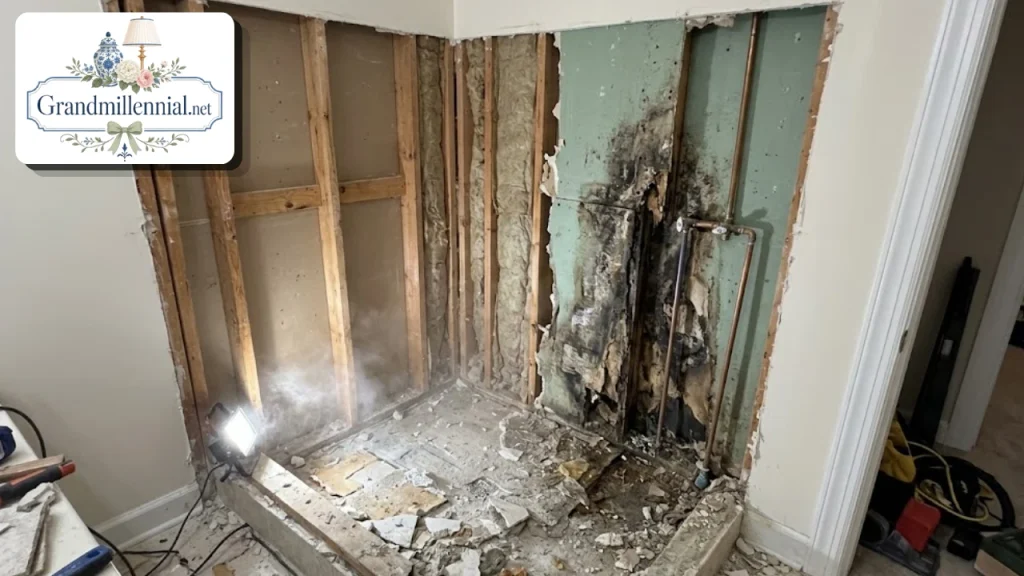
This is the part of shower renovation cost planning nobody wants to hear. Behind old tile and tired grout, there may be problems you can’t see.
Water damage and mold are the classic surprises. HomeAdvisor reports repairs from 300 to 5,500 dollars, water damage repair at 1,000 to 3,000 dollars and mold removal starting at 500 dollars. HomeLight reports mold remediation at 500 to 1,000 dollars and says major water damage restoration can reach about 8,000 dollars.
Old plumbing may need replacing once the wall is open. Bob Vila lists plumbing repairs at 600 to 1,600 dollars. Subfloor rot is another common find, especially near an old leaking tub.
This Old House suggests a 10 to 20 percent contingency for unknowns, and that is a sensible rule. If your estimate is 8,000 dollars, set aside 800 to 1,600 dollars more.
Don’t treat the contingency as spending money. Treat it as insurance that you hope to bring home.
Three sample budgets
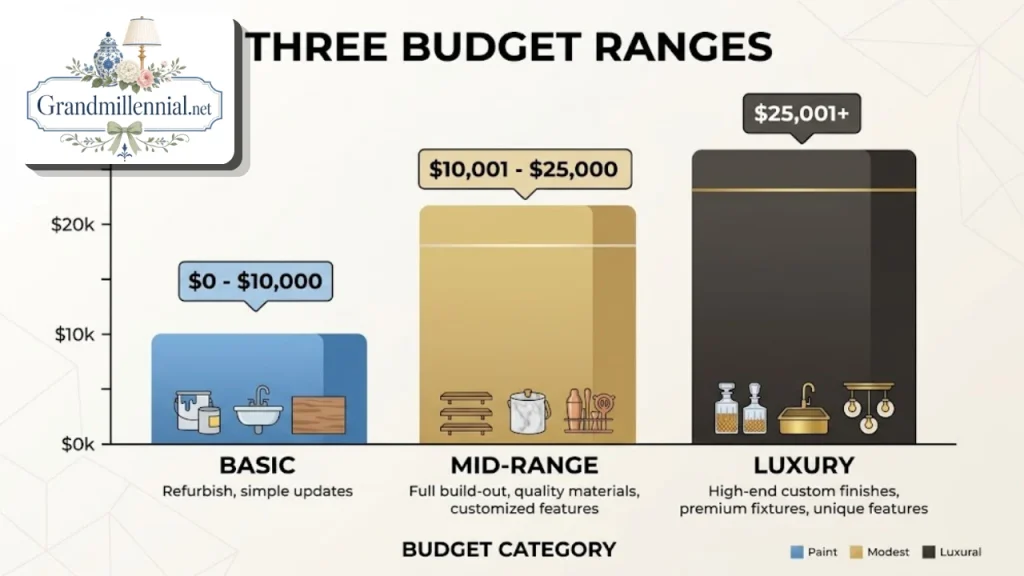
To make this concrete, here are three examples built by adding the ranges reported above. These are illustrations, not quotes, and your local prices will differ.
| Level | What it includes | Rough total |
|---|---|---|
| Budget | Prefab unit (700 to 3,000 dollars), installation (400 to 1,000), demolition and haul-away (300 to 500) | About 1,400 to 4,500 dollars |
| Middle | Custom tiled walk-in (6,000 to 10,000 dollars) | About 6,000 to 10,000 dollars |
| High end | Curbless walk-in (8,000 to 15,000), plumbing changes (600 to 3,500), frameless glass (1,000 to 3,300) | About 9,600 to 21,800 dollars |
Then add your contingency of 10 to 20 percent to each, and your permit fee.
Notice that the middle row uses the sources’ own all-in walk-in ranges, which may or may not include a door. Ask any contractor exactly what a quote covers.
If you land outside these ranges, check your assumptions. A very small stall, a very simple design, or low local labor rates can bring costs down. A large shower, premium stone or high-cost city can push them up.
How to save without cutting corners
Saving money in a shower is different from saving in a living room. Water finds every mistake.
Keep the plumbing where it is. This is the biggest saver. A new shower on the old footprint avoids the largest cost driver.
Choose a prefab base or a good pan, and spend your money on waterproofing. A cheap tile on a well-built, well-sealed base will outlast expensive tile on a poor one.
Pick standard tile sizes and a simple layout. Fancy patterns and tiny mosaics add labor. Use a feature wall of special tile and a plain tile elsewhere.
Consider a framed or semi-frameless door instead of fully frameless glass, or a clean curtain and rod. The door is often the largest single fixture cost.
Buy fixtures yourself if your contractor allows it, but check compatibility first. A mismatched valve can cost more than you saved.
Do your own demolition and cleanup only if you are safe and capable. Bob Vila and others note the risks of DIY, and mistakes in waterproofing can be costly.
Get at least three written quotes with the same scope so you can compare them fairly.
DIY or hire a pro
Small updates are DIY-friendly: swapping a shower head, re-caulking, regrouting, painting around the shower and updating accessories.
A full tile shower is not a beginner project. Waterproofing, sloping the pan to the drain, and setting tile all affect whether the shower leaks years later. A hidden leak can rot a floor before you notice.
Plumbing and electrical work are best left to licensed professionals, and many areas require it. If you do some work yourself, have a pro inspect the waterproofing before tile goes on.
Where you live and how old the house is
Location changes the bill more than most people expect. Labor rates in a big city can be far higher than in a small town, and permits, disposal and materials vary too. Bob Vila’s state-by-state averages swing from about 2,200 to 3,800 dollars in the examples it lists, though it gives no method, so treat them as a hint rather than a rule.
The age of the house matters just as much. Homes built decades ago may have galvanized or cast-iron plumbing, thin subfloors, no proper waterproofing behind tile, or wiring that needs updating once walls are open. Some older homes also contain lead paint or asbestos materials, which require special handling by trained professionals.
If your home is old, ask the contractor to inspect the plumbing and the subfloor before finalizing the price. A short pre-construction visit can save you from a dramatic change order later.
Paying for the project
Most people pay from savings, but a larger shower renovation may call for financing. Options include a home equity loan or line of credit, a personal loan, or a contractor payment plan. Each has different interest rates, fees and risks, so compare terms carefully and read the fine print.
Avoid paying a large share upfront. A common practice is a modest deposit followed by payments tied to progress milestones. Ask your contractor to put the schedule in writing, and keep records of every payment.
Check whether your area offers rebates for water-saving fixtures. A low-flow shower head can reduce your water bill a little over time, though the savings are usually modest.
Reading contractor quotes
A good quote is specific. It should list the scope, materials, fixtures, labor, permits, disposal, timeline, payment schedule,e and warranty.
Look for who supplies each item, what happens if hidden damage is found, and how change orders are handled. Ask what waterproofing system will be used and what the warranty covers.
Be cautious of a quote that is much lower than the rest, asks for a large payment upfront, or has vague line items such as “bathroom work.” Check licensing, insurance, and reviews.
Keep every document, receipt, and warranty in one folder.
Timeline and disruption
A simple prefab swap can take a few days. A custom tiled walk-in often takes much longer, because waterproofing and tile need time to cure and dry between steps.
Plan for the bathroom to be out of use. If it is your only shower, think about where you will wash. Some families arrange a stay with relatives or use a gym for a while.
Delays are common when hidden damage appears or special-order fixtures arrive late. Order glass and fixtures early.
Is it worth it?
Many people ask about return on investment. HomeLight cites a 2025 cost-versus-value report putting bath remodels at roughly 42 to 80 percent cost recovery, which means a remodel rarely returns more than it costs on resale.
That’s not the whole picture. A safe, leak-free, pleasant shower is worth something every day you live there. For older homeowners, a walk-in with a low threshold can make the home safer to live in.
If you plan to sell soon, keep upgrades modest and neutral. If you plan to stay, spend on things you’ll enjoy daily, such as a good shower head, a bench, and good lighting.
Before you start, think about the whole room. Our guide to a small bathroom vanity and notes on bathroom vanity depth can help you plan the space around the shower, and our renovation tips cover budgeting for bigger projects.
Style choices that change the price
Design decisions quietly move the total.
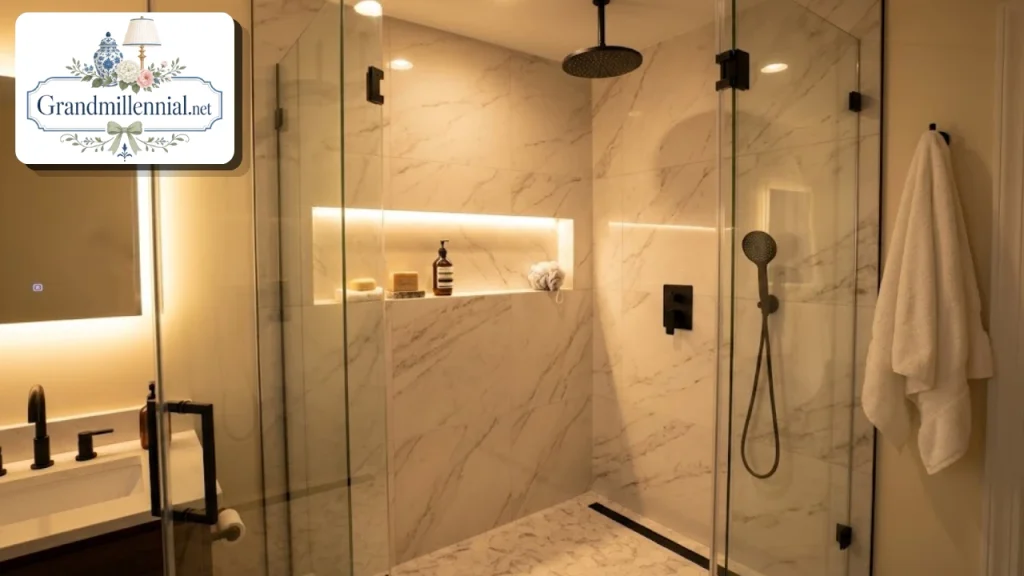
A built-in niche looks neat and avoids a shelf, but it adds waterproofing and tile cuts. A bench adds comfort and cost. A rainfall shower head can look dramatic, with prices that range from 100 to 500 dollars according to Bob Vila.
Large tiles mean fewer grout lines, which can be easier to clean. Dark grout hides stains. Glass mosaic accents look beautiful and cost more to buy and set.
Warm metal fixtures, whether brushed brass or matte black, change the feel of the room without affecting the structure. For color and layout ideas beyond the shower, see our home decor ideas that actually work.
Good lighting and a quiet fan help too. They keep the room comfortable and reduce moisture.
Mistakes that blow budgets
The first mistake is starting without a firm scope. Changing your mind midway costs money.
The second is skipping the contingency. Almost every renovation finds something.
The third is choosing the cheapest bid without checking what it leaves out.
The fourth is ignoring waterproofing. A shower is a water container, and the work you can’t see matters most.
The fifth is moving plumbing for a small gain in layout. Ask whether the benefit is worth the cost.
The last is forgetting the small items: the door, the niche, the trim, the paint, the fan. They add up quickly, and a realistic shower renovation cost plan includes them from the start.
FAQs:
How much does it cost to renovate a shower?
Most guides put it between about 2,000 and 15,000 dollars, with averages around 7,000 to 8,200 dollars. Prefab units cost less, and custom tiled or curbless showers cost more.
What is the cheapest way to renovate a shower?
A prefab insert or surround, on the existing plumbing, with a simple curtain or framed door. HomeLight reports prefab units at 700 to 3,000 dollars, plus installation.
How much does a walk-in shower cost?
Reported ranges vary: HomeAdvisor says 1,500 to 8,000 dollars, while Bob Vila and Angi put custom walk-ins at 6,000 to 12,000 dollars. The type and finish decide where you land.
How much does a tub-to-shower conversion cost?
Bob Vila reports 1,200 to 3,600 dollars for simple conversions, while This Old House reports 2,000 to 12,000 dollars across wider scopes.
How long does a shower renovation take?
A simple prefab swap may take only a few days, and a custom tiled shower can take much longer because waterproofing and tile need drying time. Hidden damage can add more.
Does a shower renovation increase home value?
Usually it recovers part of its cost. HomeLight cites 42 to 80 percent recovery for bath remodels, so the gain is partial, though comfort and safety add value you feel daily.
Do I need a permit?
Often yes if you change plumbing, electrical, or structure. Fees reported range from about 100 to 2,000 dollars. Ask your local building department.
How much should I set aside for surprises?
This Old House suggests a 10 to 20 percent contingency. Water damage, mold, and rotten subfloors are the usual culprits.