

Most of us know the feeling. You look out of the kitchen window at the same patch of lawn, the same tired fence, the same pot that never quite recovered from last summer, and think: this could be so much better.
The internet is full of garden ideas, from sweeping English borders to sleek modern terraces, and scrolling through them can leave you more overwhelmed than inspired. Where do you start? What will actually grow in your garden? And how do you make it look good for more than a fortnight in June?
This guide is designed to help you move from inspiration to action. It starts with a little planning, then offers ideas by space, style, budget and season, finishing with a simple plan for your first weekend, first season and first year.
Quick answer: The best garden ideas start with your conditions, not a photo. Note where the sun falls, test your soil, decide how you want to use the space, then add structure (paths, trees, focal points) before choosing plants suited to each spot. Layer in seasonal colour, wildlife-friendly planting and comfortable places to sit.
Before you start: five questions to answer
A little thinking now saves a lot of money and disappointment later. Garden blogger Lee Burkhill, quoted by Suttons, puts it simply: measure your space and draw your design first, rather than trying to wing it.
Where does the sun fall? Watch your garden at different times of day, as Home Depot’s design guide recommends. Note which areas get full sun, part sun, and full shade. This single step shapes every planting decision.
What’s your soil like? Is it heavy clay, sandy, chalky,y or rich loam? Does water pool after rain? A simple soil test kit tells you whether it’s acidic or alkaline, which affects which plants thrive.
How do you want to use the space? Dining, playing, growing food, relaxing, entertaining, keeping pets happy? Make a list and rank it.
What’s your budget? Hard landscaping (patios, paths, walls) costs far more than plants. Decide early what you can spend and where it will make the most difference.
How much time will you spend on upkeep? Be honest. A garden that needs weekly attention will quickly feel like a chore if you only have an hour a month.
Right plant, right place: the rule that changes everything
If there’s one principle worth remembering, it’s this. “Right plant, right place” is associated with the British designer and author Beth Chatto, who championed growing plants in conditions similar to their natural habitats, as the Kincardine Record explains.
In practice, it means matching plants to your conditions rather than fighting them. Sun-lovers such as lavender and rosemary go in the hottest, driest spot. Ferns and hostas go in the shade. Moisture-loving plants go where the ground stays damp.
The RHS uses the same ethos in its small-space displays, choosing hardy, low-water plants that suit their conditions and offer food and shelter for wildlife. Plants in the right spot grow better, need less water and fuss, and resist pests and diseases more easily.
Structure first: the bones of a good garden
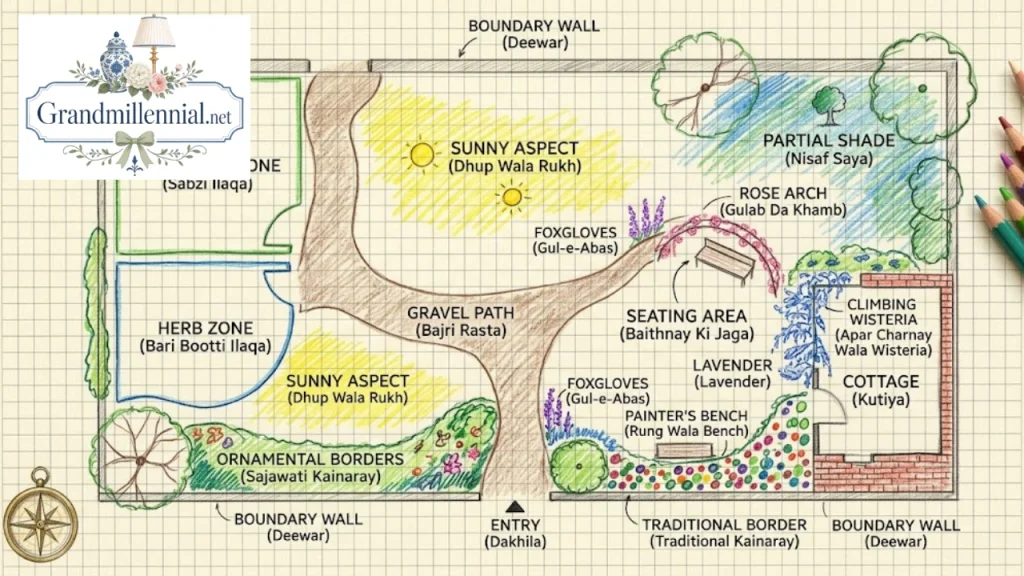
Good gardens have “bones”: the framework that looks good even in winter, when the flowers have gone. Add these before you fill in with plants.
Zones. Divide the space by use: a dining area near the house, a lawn or play space, a growing area, a quiet seat at the far end. Yours highlights how clear zones for dining, cooking,ng and planting make even small gardens feel considered.
Paths. Paths lead the eye and the feet. A curving gravel path invites exploration; a straight brick path feels formal and traditional.
Trees and shrubs. Yours notes that trees add structure, define zones, and offer privacy if a garden feels overlooked. Even one small tree, such as a crab apple or serviceberry, gives height and seasonal interest.
Focal points. A bench, birdbath, urn, sculpture, or arch gives the eye somewhere to land. A Savage, Minnesota, garden design guide recommends providing “a place for the eye to rest” so a planting doesn’t look chaotic.
Boundaries. Fences, hedges and walls can be part of the design: painted, planted with climbers, or softened with trellis.
Water features and focal points
The sound of water changes how a garden feels. A small recirculating fountain, a wall spout or a simple trough of water with a few aquatic plants can mask road noise and draw birds. Solar-powered fountains avoid the need for outdoor electrics.
If you’d rather keep things simple, a birdbath on a pedestal, a weathered urn planted with trailing ivy, or an old stone sundial can do the same job of anchoring a view. Place focal points at the end of a path, at a bend, or where you’ll see them from the kitchen window, so you enjoy them every day, not just when you’re outside.
Garden ideas for small spaces and balconies
Small spaces can be the most charming of all, because every choice counts.
Go vertical. Use trellis, wall planters and climbers such as clematis and climbing roses to add greenery without losing floor space.
Use containers. The RHS notes that container gardens can move with you, which is especially useful for renters. Group pots in odd numbers and vary their heights.
Choose multi-purpose furniture. A bench with storage, folding bistro chairs,s or built-in seating saves space.
Pick one colour palette. Repeating two or three flower colours makes a small garden feel calm and intentional.
Add a mirror. An outdoor mirror on a fence can make a narrow garden feel wider (position it so birds won’t fly into it).
Light it. Solar fairy lights or lanterns extend the evening and make a small space feel magical.
On a balcony, check weight limits and drainage before adding heavy pots, and choose wind-tolerant plants for upper floors.
Front garden ideas
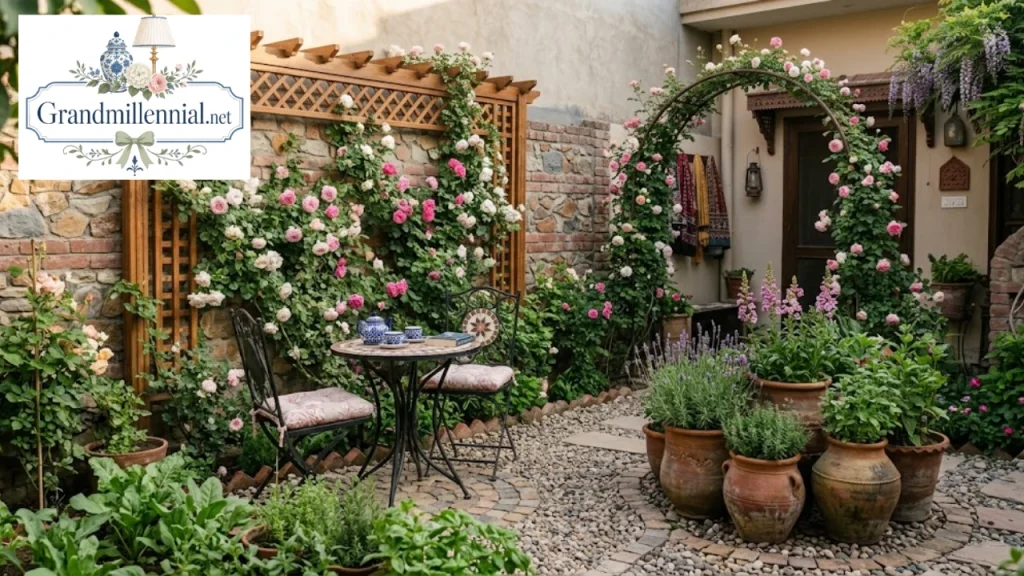
Your front garden is the first thing visitors see, so a few changes make a big impression.
- Frame the front door with a pair of matching pots or standard bay trees.
- Edge the path with low plants such as lavender, catmint or creeping thyme.
- Paint or replace a tired gate and house number.
- Add a window box or two for seasonal colour.
- Keep bin storage tidy with a simple screen or planted store.
Front gardens are also a chance to help wildlife. Swapping some paving for planting improves drainage and gives pollinators more to feed on.
Containers that look abundant
Pots are some of the most versatile garden ideas for any space, from front steps to balconies. Garden designers often use a simple “thriller, filler, spiller” formula for mixed containers.
Thriller: one tall, eye-catching plant in the centre or back, such as a grass, salvia, standard bay or small dahlia.
Filler: mounding plants around it, such as geraniums, petunias, nemesia or heuchera.
Spiller: trailing plants that tumble over the edge, such as ivy, trailing lobelia, creeping jenny or nasturtiums.
Choose a pot with drainage holes, use good-quality potting compost, and group several pots of different heights for an abundant look. Large pots dry out more slowly than small ones, so a few big containers are easier to care for than many tiny ones.
Ideas for shady, sloping and tricky spots
Every garden has a problem area. Treat it as a design opportunity rather than a failure.
Shade: create a woodland feel with ferns, hostas, hellebores, foxgloves and spring bulbs. Pale flowers and variegated leaves brighten dark corners.
Slopes: use terraces, steps or tough ground covers to hold the soil. Creeping phlox, thyme and low shrubs look lovely tumbling down a bank.
Damp areas: make a rain garden or bog garden with plants that enjoy wet feet, such as astilbe, iris and ferns.
Hot, dry spots: try a gravel garden with Mediterranean plants such as lavender, rosemary, sage and ornamental grasses.
Cottage and grandmillennial garden ideas
If your home leans traditional, these garden ideas carry that charm outdoors. Cottage and grandmillennial gardens are generous, romantic and full of personality, with a slightly nostalgic, collected feel.
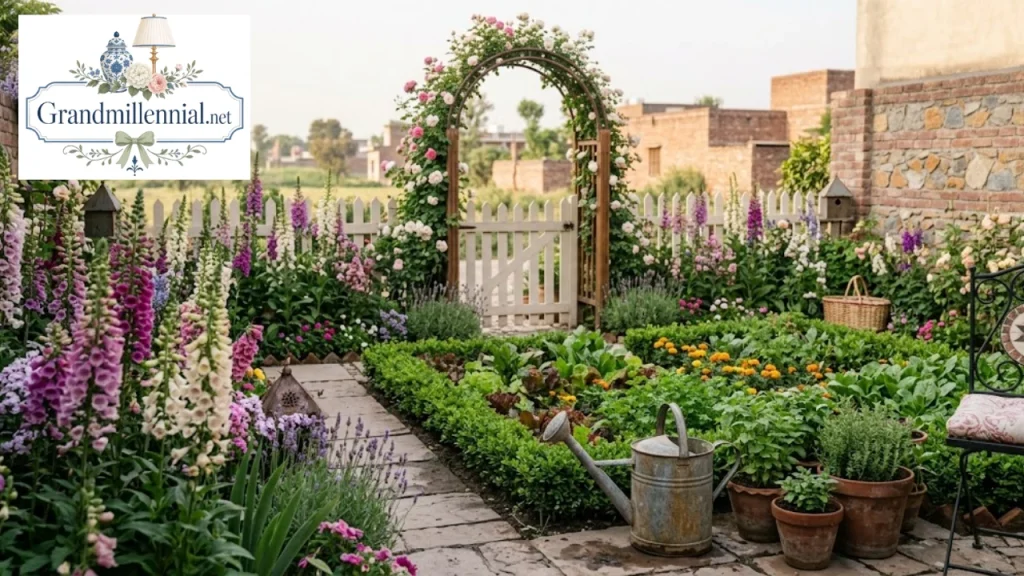
Roses everywhere: climbing roses on arches and walls, shrub roses in borders.
Abundant borders: foxgloves, delphiniums, hollyhocks, lupins, peonies and sweet peas, planted closely so there’s little bare soil.
A picket fence or clipped box edging to give structure to loose planting.
A potager: a small, pretty kitchen garden mixing vegetables, herbs and flowers in neat beds. Sorrel, tarragon, chives and strawberries all look at home here.
Vintage touches: galvanised watering cans, old terracotta pots, a weathered bench, a cast-iron urn.
Painted details: a sage-green or soft blue door, shed or garden gate.
The joy of this style is that imperfection suits it. Self-seeding flowers and a little moss on the path only add to the charm.
Other styles to consider
Mediterranean: gravel, terracotta, olive trees in pots, lavender, rosemary and a shady pergola. Ideal for sunny, dry gardens.
Modern: clean lines, a limited palette of plants and materials, large-format paving, ornamental grasses and architectural plants.
Japanese-inspired: raked gravel, moss, stone, maples and a calm, restrained palette.
Kitchen garden: raised beds, fruit trees and herbs arranged for easy picking.
Wildlife garden: native plants, a pond, long grass and log piles (see below).
You don’t have to pick just one. Many beautiful gardens combine a formal structure near the house with looser, wilder planting further away.
Kitchen and herb garden ideas
Few things are as satisfying as picking dinner from your own garden. Even a small space can grow a surprising amount.
Start with herbs, which are easy, pretty and expensive to buy fresh: chives, parsley, thyme, rosemary, mint (in a pot, as it spreads), tarragon and sorrel. Place them close to the kitchen door so you’ll actually use them.
Raised beds make vegetable growing easier on the back and help in areas with poor or heavy soil. Salad leaves, radishes, beans, courgettes and tomatoes are rewarding for beginners. Edge beds with marigolds or nasturtiums for colour and to attract helpful insects.
Fruit doesn’t need an orchard. Strawberries grow well in pots and window boxes, blueberries thrive in containers of ericaceous compost, and wide apple and pear varieties are available on dwarfing rootstocks for small gardens or as trained cordons along a fence. Kitchen garden ideas like these blend beauty and usefulness, which is exactly the spirit of a traditional potager.
Wildlife-friendly garden ideas
A garden full of birdsong and butterflies feels truly alive, and small changes make a real difference.
Plant for every season. A pollinator garden design guide from the USDA Natural Resources Conservation Service recommends planting so that something is always blooming from spring through autumn, so pollinators have food all season.
Plant in groups. The Savage design guide suggests planting species in clumps rather than single plants, which looks better and helps pollinators find food.
Go easy on pesticides. The NRCS guide cautions that pesticides can harm pollinators. Encourage natural predators instead, and accept a little damage.
Add water. Even a shallow dish or small pond attracts birds, frogs, and insects. Include a sloping edge so wildlife can climb out.
Leave some mess. Seed heads, leaf litter and log piles give insects and birds food and shelter through winter.
One simple planning formula, suggested in the Kincardine Record, is to plant three of each of three species for each of three seasons, plus a few grasses, which creates a balanced, nature-friendly bed of around 30 plants.
Budget garden ideas
You don’t need a big budget to create a beautiful garden. Some of the most charming spaces are built slowly and thriftily.
Grow from seed. Annuals such as cosmos, nasturtiums, sunflowers,s and calendula are cheap and quick.
Divide perennials. Many plants can be split every few years, giving you free plants for new areas.
Swap with friends and neighbours. Plant swaps and cuttings save money and build community.
Use salvaged materials. Old bricks, reclaimed timber and vintage containers add character for little cost.
Paint, don’t replace. A fresh colour on fences, sheds and furniture can transform a garden in a weekend.
Mulch. Mulch keeps weeds down and soil moist, saving time and water.
Prioritise. Spend on one key feature, such as a good seating area or a small tree, and fill the rest gradually.
Garden ideas for families and pets
Gardens that work for everyone need to be tough as well as pretty. Family-friendly garden ideas often come down to durable materials, clear zones and a few safety checks.
Leave enough open lawn or play surface for running about, and place delicate borders where footballs are less likely to land. A sandpit or mud kitchen in a corner gives children their own space; a small vegetable bed lets them grow something to eat.
Check that plants near play areas aren’t toxic to children or pets, and choose sturdy plants that bounce back from the occasional trampling. For dogs, plan paths along the routes they already run, use gravel or bark rather than delicate lawn in busy spots, and include a shady spot to rest.
Soft-edged furniture, secure fences and gates, and a covered area for rainy days make the garden usable for more of the year.
A garden for every season
The best garden ideas look ahead to winter as well as summer. Ideal Home suggests treating the garden as an extra room you can use all year.
| Season | What to plan for |
|---|---|
| Spring | Bulbs (snowdrops, daffodils, tulips), blossom trees, early perennials, creeping phlox |
| Summer | Roses, perennials, annuals, climbers, herbs and vegetables |
| Autumn | Asters, sedums, ornamental grasses, autumn-colour trees, berries |
| Winter | Evergreens, structural shrubs, coloured stems, seed heads, winter-flowering hellebores |
Evergreens such as box, yew, holly and small conifers keep the garden’s shape through winter, while succession planting (planting things that flower one after another) extends colour through the year.
Making it an outdoor room
Treat your garden like another room of the house,se and it will become a place you actually use.
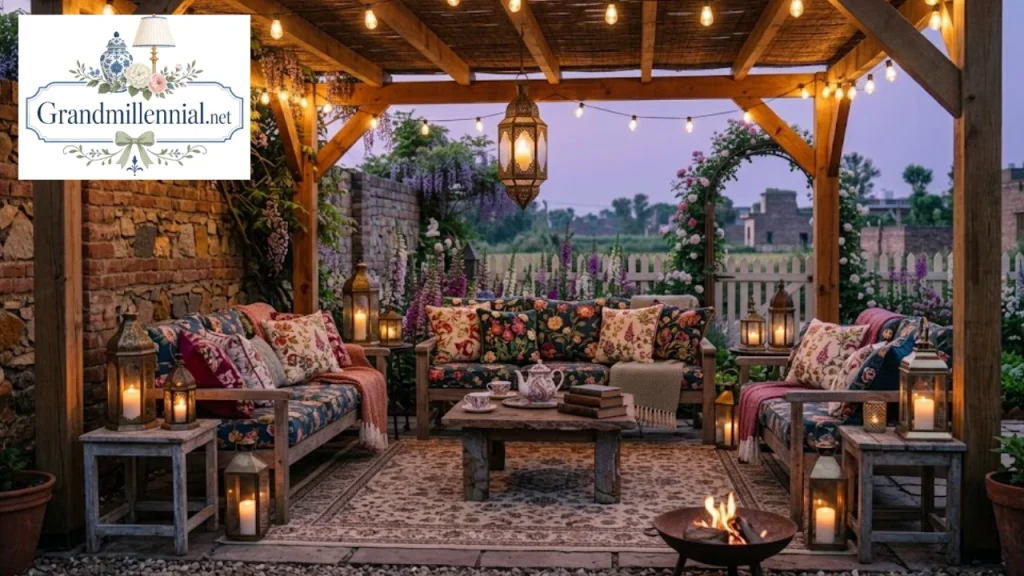
Comfortable seating is the priority. A table for meals, a bench in a sunny spot, or a pair of chairs facing the best view.
Textiles soften hard surfaces: outdoor cushions, throws and rugs. The principles of arranging a cosy indoor space apply outdoors too; these cozy living room ideas translate surprisingly well to a terrace. An outdoor rug defines a seating zone; for inspiration, see these DIY area rug ideas.
Lighting extends evenings. Mix solar path lights, string lights, and lanterns. If you’re adding smart outdoor lighting or cameras, this design-first smart home guide can help you choose devices that look good.
Shelter makes a garden usable in more weather: a pergola, parasol, sail shade or a covered corner.
Personal touches make it yours: vintage finds, painted pots, a collection of favourite plants. These home decor ideas that actually work offer more ways to bring a collected, personal style outside.
Low-maintenance garden tips
A beautiful garden doesn’t have to mean endless work.
Choose the right plants for the site, so they thrive with little intervention.
Favour perennials and shrubs over annual bedding that needs replacing each year.
Use native plants, which, as your notes note, are already adapted to your climate.
Mulch beds to suppress weeds and retain moisture.
Plant densely so there’s less bare soil for weeds.
Install drip irrigation or soaker hoses in beds and containers.
Reduce lawn if mowing is a chore, replacing some with gravel, ground cover, or meadow.
If you have dogs, choose tough plants and plan paths where they naturally run; these tips for keeping your yard looking good with dogs help balance a pretty garden with a happy pet.
Your first weekend, first season and first year
Breaking the work into stages keeps it manageable and fun.
This weekend: clear clutter, weed one bed, cut back overgrown shrubs, wash the patio and put out a couple of pots of seasonal colour. Sit outside and note where the sun falls.
This season: sketch a plan, decide on zones, test your soil, and plant one new border or a few containers using the right plant, right place approach. Add one comfortable seat.
This year: tackle the bigger structural jobs, such as a path, small patio, raised beds, or a tree. Plant spring bulbs in autumn for colour next year. Start a compost heap.
Over the next few years: fill gaps by dividing plants, add a focal point, refine the planting and let the garden mature. Gardens grow into themselves; the best ones are never quite finished.
FAQs:
How do I plan my garden layout?
Measure the space, note sun and shade, decide how you want to use it, then sketch zones, paths and focal points before choosing plants.
How can I make my garden look nice cheaply?
Tidy and edge beds, add pots of seasonal colour, paint fences and furniture, grow from seed and divide existing perennials.
What is the easiest garden to maintain?
One built on right plant, right place: perennials and shrubs suited to your conditions, mulched beds, dense planting and less lawn.
What plants give colour all year?
Combine spring bulbs, summer perennials and roses, autumn grasses and sedums, and winter evergreens and hellebores.
How do I make a small garden look bigger?
Use vertical planting, a limited colour palette, mirrors, multi-purpose furniture and a path that leads the eye.
How do I attract wildlife to my garden?
Plant flowers for every season, add water, avoid pesticides and leave some seed heads and log piles.
What are good cottage garden plants?
Roses, foxgloves, delphiniums, hollyhocks, lupins, peonies, sweet peas, lavender and catmint.
When is the best time to start a garden?
Autumn and spring are ideal for planting, but planning can start any time.