

You only notice it at night. Someone walks across the bedroom upstairs, and in the room below it sounds like a slow drumroll. Choosing the best flooring for a second floor isn’t just about looks. Upstairs floors carry footsteps over someone else’s head, sit on a lighter wooden structure, and often include bathrooms and laundry rooms where a leak travels straight down.
Why upstairs flooring is different
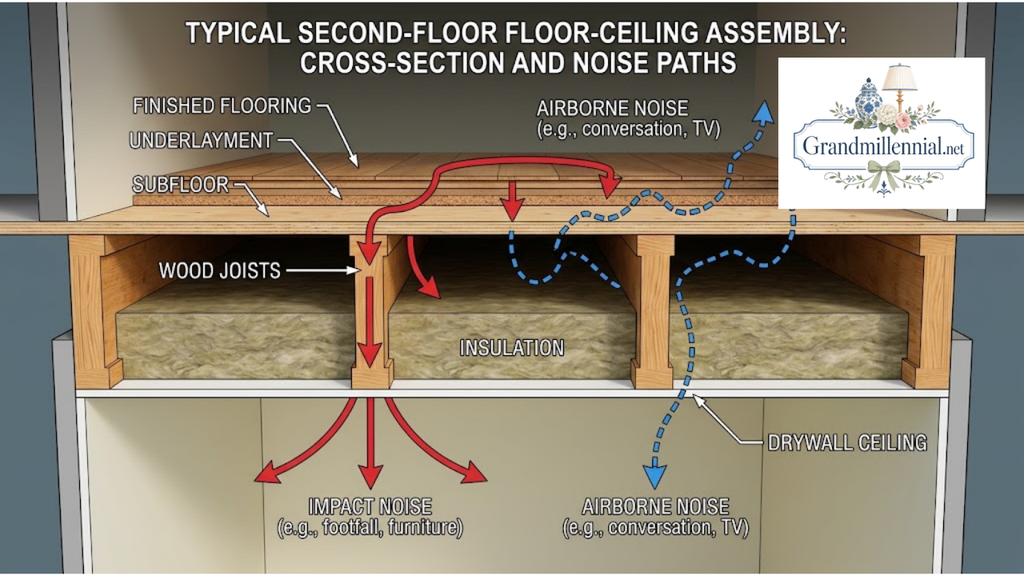
Ground floors in many homes sit on concrete or a heavily supported frame. Second floors usually rest on wooden joists and a plywood or OSB subfloor, with the ceiling of the room below fastened directly underneath.
That structure creates three upstairs problems. Noise: footsteps travel through the joists into the ceiling below. Weight and flex: heavy, rigid floors such as tile need a stiff subfloor, or they crack. Water: a leak upstairs doesn’t stay upstairs. So the best flooring for a second floor is the one that handles all three for the room it’s in. No single material wins everywhere, which is why a room-by-room plan works better than one floor throughout.
Understanding noise: impact vs. airborne
Not all upstairs noise is the same, and different fixes work for each type.
Impact noise comes from contact with the floor: footsteps, dropped toys, dragged chairs, a dog’s claws. It travels through the structure, and it’s what most people mean when they complain about upstairs noise. Airborne noise is voices, music, and television. It passes through gaps and thin materials, and flooring alone does little to stop it.
Two ratings measure these. Impact Insulation Class (IIC) rates how well a floor-ceiling assembly blocks impact noise; Sound Transmission Class (STC) rates airborne sound. Higher numbers mean quieter.
The ratings apply to the whole assembly: floor, underlayment, subfloor, joists, and ceiling. In apartments and condos, the International Building Code requires floor-ceiling assemblies between dwelling units to reach at least IIC 50 and STC 50 in lab tests, according to AWCI’s summary of IBC Section 1206. Inside a single-family house, there’s no such requirement, but those numbers are a useful benchmark for “quiet”.
Second-floor flooring options, compared
Here’s how the common choices stack up upstairs. Ratings are relative, from the perspective of a typical wood-framed second floor.
| Flooring | Impact noise below | Weight | Water resistance | Comfort underfoot | Cost tier |
|---|---|---|---|---|---|
| Carpet with pad | Quietest | Light | Poor | Softest | Low to mid |
| Cork | Very quiet | Very light | Fair (sealed) | Warm, cushioned | Mid |
| Luxury vinyl plank (LVP) | Good with underlayment | Light | Excellent (most are waterproof) | Firm, warmer than tile | Low to mid |
| Engineered hardwood | Fair to good with underlayment | Light to moderate | Fair | Firm | Mid to high |
| Laminate | Fair; can sound hollow | Light | Fair (water-resistant types better) | Firm | Low |
| Ceramic or porcelain tile | Loud without isolation | Heavy | Excellent | Hard and cold | Mid to high |
| Natural stone | Loud without isolation | Heaviest | Good (sealed) | Hard and cold | High |
Carpet remains the quiet champion. A dense pad absorbs footsteps before they reach the joists, which is why many families still choose it for bedrooms and playrooms. LVP is the most versatile hard floor upstairs. It’s light, usually waterproof, and quieter than laminate, especially with a quality acoustic underlayment or an attached pad. Engineered hardwood gives the look of real wood with more stability than solid boards. Over a good underlayment, it’s a lovely choice for hallways, offices, and bedrooms with rugs. Cork is the quiet, under-sung option: naturally cushioned and warm, though it dents under sharp furniture legs and needs sealing in damp rooms. Laminate is affordable but tends to make a hollow, clicky sound when floated over thin foam. If you choose it, invest in a dense acoustic underlay.
The layer you don’t see: underlayment
Even the best flooring for a second floor can sound loud over the wrong underlayment. It’s the thin layer between the subfloor and the finished floor, and it decides much of the impact noise that reaches the room below. Look for underlayments sold as acoustic or sound-rated, with published IIC or STC figures. Cork, rubber, and dense felt underlayments generally outperform basic thin foam. Check compatibility before you buy. Many LVP and laminate products specify which underlayments keep their warranty valid, and some already have a pad attached, so adding another layer can make the floor feel spongy and strain the click joints. For carpet, the pad does the same job. A dense pad improves both comfort and quiet; a thin, cheap one wears out quickly and transmits more noise.
Can you put tile or stone upstairs?
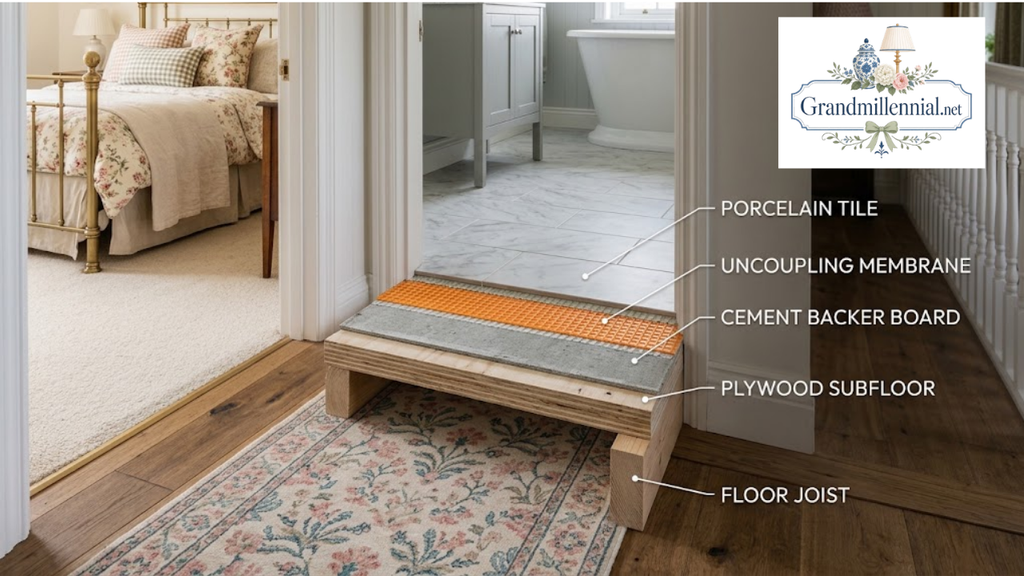
Yes, but the floor underneath needs to be stiff enough. Tile and stone don’t flex, so if the joists and subfloor bounce, grout cracks and tiles loosen. Industry guidance used by the Tile Council of North America is commonly summarised as a deflection limit of about L/360 for ceramic and porcelain tile, and a stricter L/720 for natural stone. In plain terms, stone needs a noticeably stiffer floor than tile.
Upstairs bathrooms are usually built with this in mind, often with a thicker subfloor, cement backer board, or an uncoupling membrane under the tile. Putting tile across a whole bedroom or hallway is a bigger question. If you want tile or stone beyond a bathroom, have a contractor or structural engineer check joist size, span, and spacing first. For an existing tiled upstairs room that’s cracking, the same check applies before you re-tile.
Room-by-room plan
The best flooring for a second floor often changes from room to room. Here’s a practical starting point.
| Room | Best choices | Why |
|---|---|---|
| Bedrooms and nursery | Carpet, or LVP / engineered wood with acoustic underlay and rugs | Quiet at night, warm underfoot |
| Hallway and landing | LVP or engineered hardwood with a runner | Durable for traffic; runner softens footsteps |
| Bathroom | Porcelain tile on a properly prepared subfloor, or waterproof LVP | Water resistance |
| Laundry room | Waterproof LVP or tile, plus a washer drain pan | A leak upstairs damages two floors |
| Home office | LVP, engineered wood or cork | Chair-friendly and quiet with a chair mat |
| Playroom | Carpet or cork | Absorbs dropped toys and jumping |
If the laundry is upstairs, add a drain pan under the washer and a water-leak sensor. These small additions protect the ceiling below, and these over-washer shelf ideas help keep the space tidy too.
For upstairs bathrooms, plan flooring and fixtures together; getting the bathroom vanity depth right affects where tile meets cabinet and how much floor you actually need.
Stairs and transitions
Stairs are where upstairs and downstairs meet, and they’re often where a flooring plan looks unfinished. Whatever you choose as the best flooring for a second floor, check that matching stair treads and nosing are available; most LVP and engineered hardwood lines offer them. For the sake of both safety and visual continuity, it is essential to handle stairs and transitions correctly when installing flooring on the second floor. Stairs are high-traffic zones that endure constant foot impact, requiring materials that offer superior grip and wear resistance.
A cohesive design flow is created by using the same flooring material from the upper hallway down the staircase, such as Luxury Vinyl Plank (LVP) or engineered hardwood. However, ensuring flush stair nosings and secure adhesive bonding is vital to prevent tripping hazards and withstand daily edge wear.
Threshold strips need to be carefully chosen when moving from vinyl flooring in a hallway to carpeted flooring in a bedroom or tile flooring in a bathroom on the second floor. Low-profile transition T-moldings or reducer strips allow seamless movement across rooms while accommodating slight height differences.
In addition to being attractive, the right transition strips protect raw edges from moisture, prevent material from lifting, and permit the natural expansion of floating floors. You can maintain structural integrity, sound dampening, and safe navigation throughout your upper level by investing in long-lasting stair nosings and precise transition profiles.
Where one floor type meets another, use proper transition strips (reducers, T-moldings or thresholds) so edges don’t catch toes or vacuum heads. Keeping one colour family across both floors helps the house feel connected, even when the materials differ.
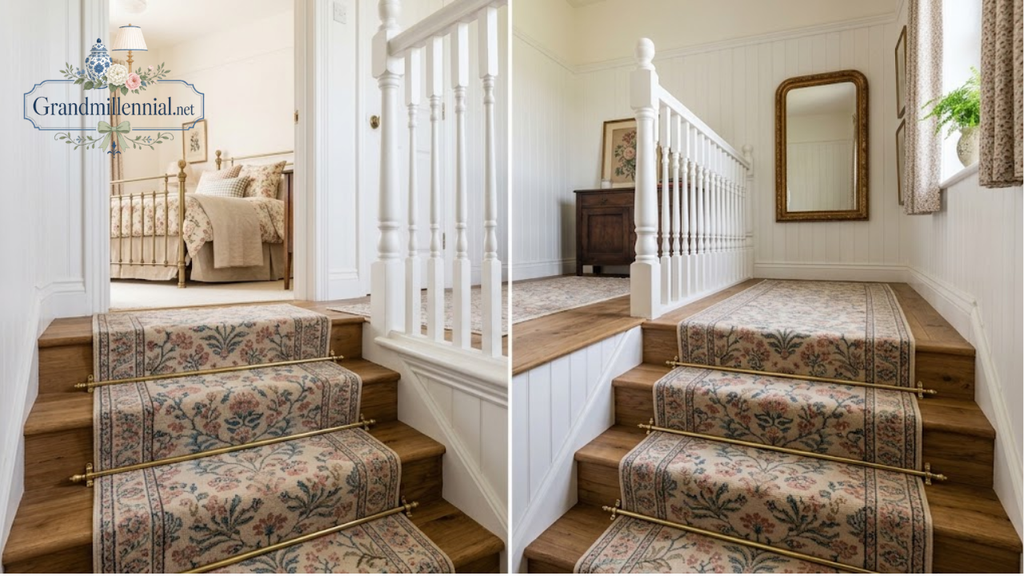
Carpeted stairs remain the quietest choice and the safest for small children and older relatives. A stair runner over wood treads is a good compromise if you prefer the look of wood.
Quieting the floor you already have
Not ready to replace anything? These steps reduce noise without new flooring. A large rug over a dense felt or rubber pad is the single most effective fix for an upstairs hard floor. These DIY area rug ideas are an affordable way to cover a big area. Put felt pads under chair and table legs, and move noisy activities such as exercise equipment onto a rubber mat.
If the ceiling below is ever opened for repairs, adding mineral wool insulation between the joists helps with airborne sound. For bigger gains, a contractor can add resilient channels or a second layer of drywall to the ceiling. Squeaks are a separate issue. They usually mean the subfloor has loosened from the joists, and screwing it down, rather than relying on nails, is the classic fix.
Condos and HOAs: check the rules first
Enforced in multi-story developments to prevent unwanted sound transmission between units. Most HOAs mandate specific acoustic performance standards, typically requiring a minimum Impact Insulation Class (IIC) and Sound Transmission Class (STC) rating of 50 or higher. These metrics dictate how effectively a floor dampens footstep impacts and airborne noise traveling to lower neighbors.
When replacing soft carpets with engineered hardwood, Luxury Vinyl Plank (LVP), laminate, or other hard surfaces, formal board approval, submissions for architectural review, and detailed specification sheets are frequently required. You may need to install specialized cork, rubber, or high-density foam underlayments to meet these sound-reduction thresholds.
In addition to acoustics, some associations restrict floor weight, permitted renovation hours, and waste disposal. Before installing flooring, it can cost a lot of money to check and follow the HOA’s rules, which could lead to structural inspections or the removal of flooring that doesn’t follow the rules. If you take the time to check the rules, the renovation will go smoothly, protect your investment, and keep neighbors happy.
In a condo or townhouse, the best flooring for a second floor is also the one your association will approve. Many buildings require hard flooring to meet a minimum IIC or STC rating, often around 50, and some ask you to submit product and underlayment details first. Choosing an underlayment with published lab ratings makes approval much easier. It also protects you if a neighbor later complains about noise.
Building up, not just across
If you’re planning a home addition with a new second story, decide on flooring early. Joist size, subfloor thickness, and ceiling insulation are cheap to upgrade during construction and expensive afterwards.
The same goes for a remodel. These smarter renovation tips explain how to sequence work so floors go in after the messiest trades have finished.
Once your new floors are down, protect the finish. This guide to cleaning hardwood floors safely applies to most engineered wood upstairs as well.
FAQs:
What is the quietest flooring for upstairs?
Carpet with a dense pad. For a hard floor, cork or LVP over an acoustic underlayment, plus area rugs, comes closest.
Can you put tile on a second floor?
Yes, if the subfloor and joists are stiff enough. Tile needs a floor that doesn’t flex; natural stone needs an even stiffer one. Have a pro check the structure for large areas.
Is LVP good for upstairs?
Very. It’s light, usually waterproof, and reasonably quiet, especially with a quality underlayment or attached pad.
Is laminate too loud for a second floor?
It can sound hollow over thin foam. A dense acoustic underlayment and rugs make a big difference.
Should upstairs bedrooms be carpet?
Not necessarily, but carpet is the quietest and warmest choice. Hard floors work well with rugs and good underlayment.
What IIC rating should upstairs flooring have?
In multifamily buildings, codes and HOAs commonly require around IIC 50 for the floor-ceiling assembly. In a house, aim for the highest-rated underlayment your floor allows.
Does underlayment really reduce noise?
Yes. For hard floors upstairs, a sound-rated underlayment is one of the most effective ways to cut footstep noise below.