

Oak has a well-earned reputation as one of the best hardwoods for furniture dense, durable, and capable of lasting for generations when properly built and cared for.
That reputation is accurate, but it’s also incomplete. Oak furniture comes with real trade-offs: weight, cost, and a genuine need for proper care that most retailer guides quietly skip past.
This guide covers what actually makes oak durable, the real difference between solid oak and veneer, honest cost expectations, and how to tell whether oak fits your home’s style before you commit.
What Actually Makes Oak Durable
Oak’s durability isn’t marketing language it comes down to genuine physical properties that set it apart from softer woods like pine.
Oak is a dense hardwood, meaning its cell structure is tightly packed compared to softwoods, which translates directly into better resistance against dents, scratches, and general daily wear.
You’ll also see reference to medullary rays the silvery streaks running through quarter-sawn oak grain. These aren’t flaws; they’re a structural feature unique to oak’s growth pattern, and they’re part of what gives the wood its distinctive, prized look.
Oak’s natural tannin content also provides some inherent resistance to insects and fungal decay, a genuine advantage over many other common furniture woods that require more chemical treatment to achieve the same protection.
None of this means oak is indestructible it means the wood itself starts from a stronger baseline than most alternatives, which matters more over a decade of daily use than it does on day one.
Solid Oak vs. Oak Veneer: What You’re Really Buying
This distinction is the single most important thing to understand before shopping, and it’s the piece most guides gloss over.
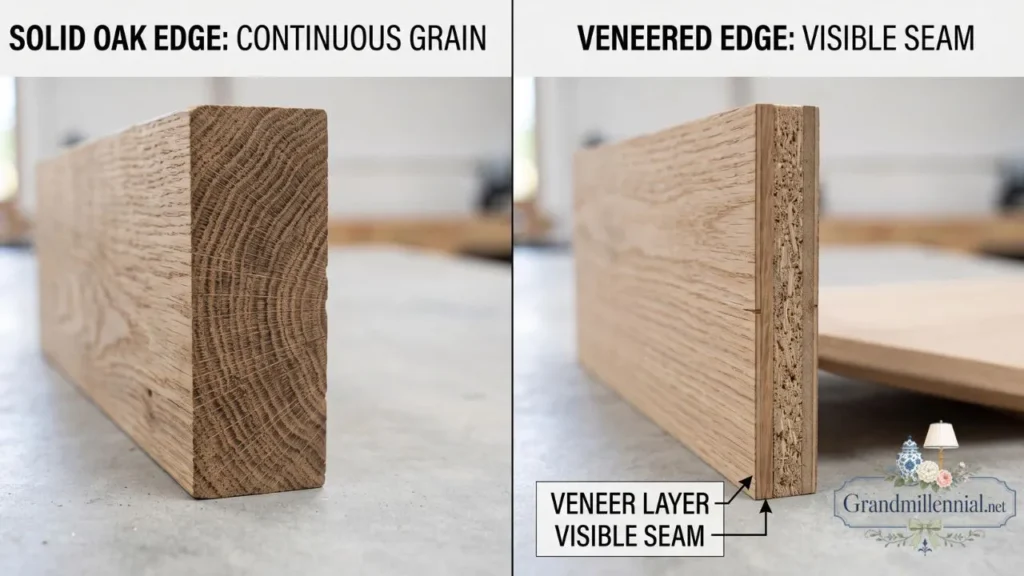
Solid oak furniture is built from oak lumber throughout the visible surface and the structural core, the same material is used. It can be sanded and refinished multiple times over its life, and it holds up to real structural stress at joints and load-bearing points.
Oak veneer furniture uses a thin layer of real oak, typically bonded over an engineered wood core like MDF or particleboard. It captures oak’s genuine look at a meaningfully lower price point, but it can’t be sanded and refinished the way solid oak can, and it’s more vulnerable to damage if the veneer layer is chipped or delaminates.
Neither option is inherently dishonest a well-made veneer piece from a reputable manufacturer can be a perfectly reasonable choice, particularly for lower-stress furniture like a decorative side table or a bookcase.
The mistake is buying veneer while believing you’re getting solid oak’s full durability and repairability. Always ask directly, and check listings carefully. “Oak” alone in a product name doesn’t guarantee solid construction.
A simple way to check in person: look at an edge or corner. Solid oak shows continuous grain wrapping around the edge; veneer typically shows a visible seam where the thin oak layer meets the substrate underneath.
Red Oak vs. White Oak: Does the Species Matter?
Once you’ve settled on solid oak, the species is the next real decision, and the two most common options behave differently.
Red oak is the most widely used species in American furniture manufacturing, prized for its warm reddish undertone and slightly more open grain pattern.
White oak tends to be more water-resistant than red oak, thanks to the tighter grain structure that makes it naturally better suited to pieces that see more moisture exposure, like a kitchen table or a bathroom vanity.
Neither species is objectively “better”; the choice comes down to color preference and how much moisture exposure the specific piece will realistically face in your home.
If you’re choosing oak for a dining table in an active household, white oak’s added moisture resistance is a genuine practical advantage worth the (typically modest) price difference.
The Honest Cons of Oak Furniture
Weight. Solid oak is heavy a large sideboard or dresser can be genuinely difficult to move alone, which matters if you rearrange rooms often or live somewhere without easy ground-floor access.
Higher upfront cost. Solid oak furniture typically costs more than softwood or engineered alternatives, and that premium is real, not just a brand markup on comparable materials.
Scratch susceptibility despite the hardness. Somewhat counterintuitively, oak’s open grain can actually show scratches more visibly than some other hardwoods, even though the wood itself resists denting well.
Sensitivity to standing water and direct sun. Left unsealed or improperly finished, oak can develop water spotting or grain discoloration; prolonged direct sunlight can also cause uneven color fading over time.
Wood movement with seasonal humidity changes. As a natural material, solid oak expands and contracts slightly with humidity shifts. Well-built furniture accounts for this in its joinery, but poorly constructed pieces can develop sticking drawers or slightly uneven doors over time.
None of these cons are dealbreakers on their own, but they’re worth knowing before you commit rather than discovering after the fact.
How Much Oak Furniture Actually Costs
Pricing varies enormously by construction type, so it’s worth understanding what’s actually driving the number on any given price tag.
Oak veneer pieces a dresser, bookcase, or side table commonly range from budget-friendly retail pricing up through mid-range, depending on the quality of the underlying construction and hardware.
Solid oak pieces from mainstream retailers typically cost noticeably more than comparable veneer options, reflecting both material cost and the more labor-intensive joinery solid wood construction requires.
Custom or bespoke solid oak furniture from a specialty workshop sits at the top of the range, often justified by superior joinery, made-to-measure sizing, and a genuine expectation of multi-generational use.
The honest framing: a well-built solid oak piece bought once is frequently cheaper over a decade or more than replacing a lower-quality alternative every few years but that math only holds if the construction quality is genuinely good, not just the material.
Caring for Oak Furniture Long-Term
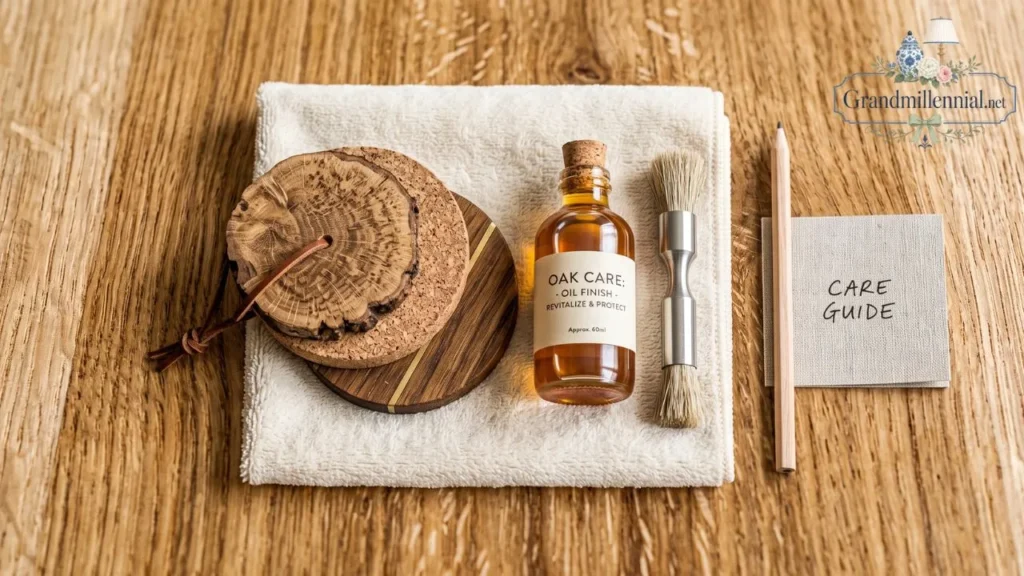
Wipe spills immediately. This matters more for oak than it sounds standing liquid can work into the grain and cause discoloration or spotting if left too long, especially on unsealed or lightly finished surfaces.
Use coasters and placemats routinely, not just for special occasions this single habit prevents the majority of the water-ring and heat-mark damage that shows up on oak dining and side tables over time.
Dust regularly with a soft, dry cloth, and avoid furniture polishes with silicone or heavy wax buildup, which can leave a residue that dulls the wood’s natural finish over repeated use.
Manage indoor humidity where possible. Extreme swings between very dry winter air and humid summer conditions are what drive the wood movement described earlier a basic humidifier or dehumidifier, used seasonally, genuinely helps joinery stay tight over the years.
Keep oak furniture out of direct, prolonged sunlight where practical, or rotate accessories on top periodically, since uneven sun exposure is one of the more common causes of visible color inconsistency on oak surfaces.
Refinish solid oak when it genuinely needs it, not preventatively light sanding and a fresh coat of oil or sealant every several years (more or less depending on use) keeps solid oak looking sharp without unnecessary wear from over-maintenance.
Does Oak Fit Your Home’s Style?
Oak’s warm, natural grain makes it more versatile across design styles than people often assume, but the right finish and pairing matter.
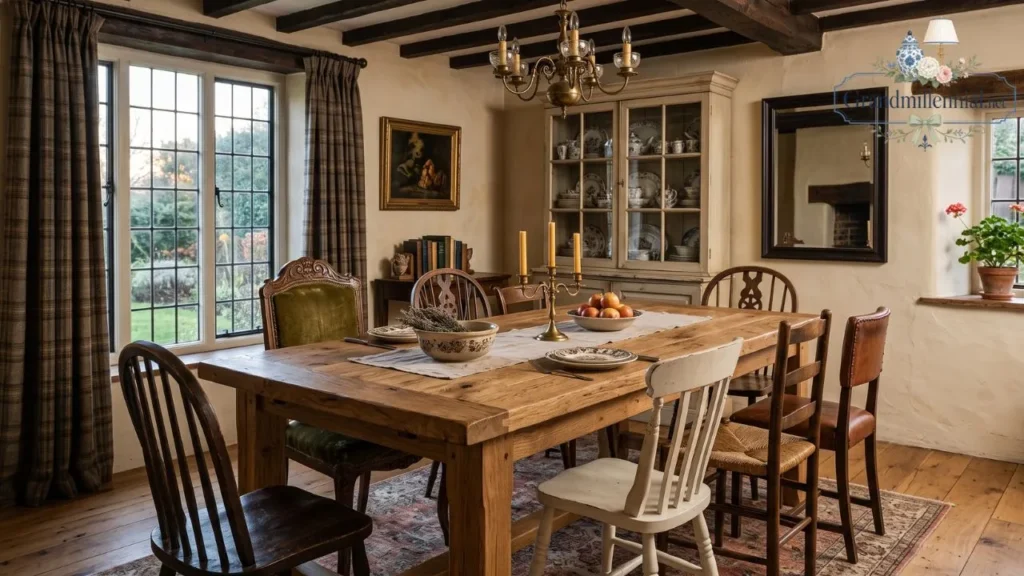
Traditional and grandmillennial-style homes pair beautifully with oak in a natural or lightly stained finish, particularly alongside brass hardware, layered patterns, and vintage-inspired textiles the material’s inherent warmth complements this style’s nostalgic, collected-over-time feel.
Farmhouse interiors often favor a slightly distressed or whitewashed oak finish, leaning into the wood’s natural character rather than a glossy, uniform look.
Modern and minimalist spaces can absolutely use oak but typically favor a cleaner, more uniform grain selection and a matte or satin finish rather than heavy staining or ornate detailing.
Coastal and relaxed interiors often reach for a lighter, whitewashed or bleached oak finish, which keeps the material’s warmth without reading as heavy or overly rustic.
If you’re building out a grandmillennial-style room, oak furniture pairs especially well with the kind of layered wall treatments and custom curtains this style typically favors the goal is warmth and texture working together, not any single piece carrying the whole room.
FAQs for Oak Furniture
Is oak a good wood for furniture?
Yes, oak’s density and grain structure make it genuinely durable, resistant to dents and daily wear, and capable of lasting for generations when properly built and maintained.
What is the difference between solid oak and oak veneer?
Solid oak is oak lumber throughout and can be sanded and refinished repeatedly; oak veneer is a thin oak layer bonded over an engineered wood core, offering the look at a lower cost but with less repairability.
How do you take care of oak furniture?
Wipe spills immediately, use coasters and placemats, dust with a soft dry cloth, manage indoor humidity, and refinish solid oak with fresh oil or sealant every several years as needed.
Is oak furniture worth the money?
For long-term use and genuinely good construction, yes, a well-built solid oak piece often costs less over a decade than replacing lower-quality furniture repeatedly, though veneer remains a reasonable choice for lower-stress pieces.
Does oak furniture scratch easily?
Oak resists denting well due to its density, but its open grain can show surface scratches more visibly than some other hardwoods, making protective habits like coasters and placemats genuinely worthwhile.
What is the difference between red oak and white oak?
Red oak has a warmer reddish tone and slightly more open grain; white oak is generally more water-resistant due to its tighter grain structure, making it a strong choice for pieces exposed to more moisture.
A Direct Takeaway
Oak furniture earns its reputation through genuine physical properties density, grain structure, and natural resistance to decay not just marketing language repeated across retailer sites.
Know whether you’re buying solid oak or veneer, match the species and finish to your actual household needs, and a well-chosen oak piece will comfortably outlast most alternatives in the same room.