

Furniture shopping usually begins with appearance. A sofa catches your eye, a recliner feels comfortable for a moment, and a fabric sample seems perfect beneath showroom lighting. Yet the purchases people enjoy longest are rarely chosen by appearance alone.
Successful seating must work with the room, support the people using it, and survive the realities of everyday life. A beautiful sofa that blocks a walkway, a recliner that overwhelms a small room, or a pale fabric that cannot cope with children will quickly become a source of frustration.
This guide examines Best Home Furnishings from a practical design and buying perspective. Instead of asking whether one brand is universally “best,” it explains how to select the right furniture type, proportions, upholstery, and comfort features for your particular home.
Start With the Room, Not the Furniture
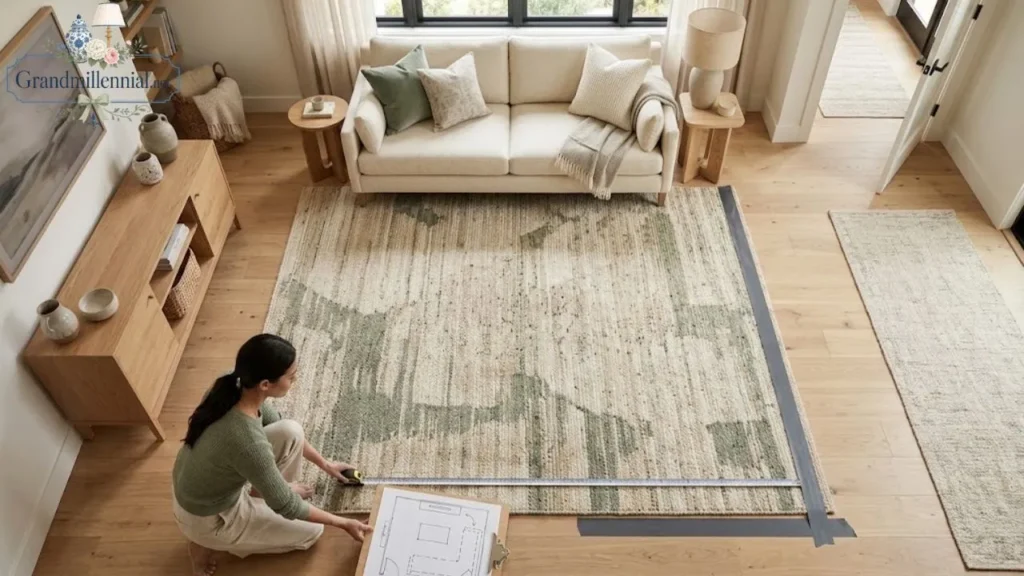
One of the easiest furniture-buying mistakes is falling in love with a product before understanding the space it must occupy. A large showroom can make substantial furniture look surprisingly compact. High ceilings, wide aisles, and open displays create a sense of scale that is completely different from the average living room. Once delivered, the same sofa may dominate the room. Begin by creating a simple floor plan. It does not need to be professionally drawn. Record:
- The length and width of the room
- Door and window positions
- Heating vents and radiators
- Electrical outlet locations
- Television placement
- Fireplace dimensions
- Existing tables and storage
- Main walking routes
- Door-swing clearance
Mark the area available for new seating with painter’s tape. Live with that outline for a day or two. Walk around it, open nearby doors, and sit where the furniture would be positioned. This simple exercise reveals problems that measurements on paper often miss.
Decide What the Room Must Accomplish
Before comparing sofas and recliners, define the room’s main job. A formal sitting room used twice a month has different requirements from a family room occupied every evening. A television room may benefit from reclining seats and supportive headrests, while a conversation area works better when people can face one another without turning awkwardly. Ask yourself:
- How many people normally use the room?
- Does anyone regularly lie down on the sofa?
- Will the room be used for television, reading or conversation?
- Are children likely to climb or eat on the furniture?
- Do pets shed, scratch or sleep on the cushions?
- Does anyone need help sitting down or standing up?
- Will the furniture be used daily or occasionally?
- How often do you move or rearrange the room?
These questions are more useful than starting with a style label such as traditional, farmhouse, or contemporary.
Understanding the Best Home Furnishings Range
Best Home Furnishings specializes in upholstered seating rather than complete bedroom, dining, and storage collections. Its current range includes chairs, recliners, sofas, loveseats, and sectionals, with manual, power, lift, and stationary configurations.
The manufacturer also provides numerous upholstery and customization choices. Its website currently promotes hundreds of cover options, including fabrics, performance materials, and leather choices. It also offers online customization and room-planning tools.
That variety is useful, but it creates a more complicated buying decision. Two pieces sharing a similar exterior design may behave differently because of their dimensions, cushion construction, covering, or motion features. Treat every model as an individual product rather than assuming that one successful purchase represents the entire range.
Choosing Between a Sofa, Loveseat and Sectional
The right seating format affects how comfortably a room functions.
Sofa
A standard sofa is usually the most flexible choice. It provides seating for several people while remaining easier to move and arrange than a large sectional. A sofa works particularly well when:
- You may rearrange the room later
- You expect to move homes
- The room has several entrances
- You want to combine seating from different collections
- You prefer a coffee table in the center
A sofa and two chairs can sometimes provide better conversation seating than a sectional because the chairs can be angled toward the center of the room.
Loveseat
A loveseat can solve space problems, but it should not automatically be treated as a miniature sofa. Measure the actual seating width between the arms. Wide, padded arms can reduce usable space significantly. A loveseat may technically accommodate two adults while still feeling cramped during prolonged use.
Loveseats are most useful in apartments, bedrooms, offices, and small living rooms where a full sofa would restrict movement.
Sectional
A sectional can make an open room feel welcoming and provide generous seating without requiring multiple separate pieces. It is especially effective for large families and television-focused rooms. However, sectionals are less forgiving when measurements are wrong. Before ordering, confirm:
- Whether the chaise is left- or right-facing
- The size of every individual section
- Connector locations
- Reclining clearance
- Delivery access
- Whether sections can be reordered
- Whether the configuration will work in another home
Orientation descriptions are based on the manufacturer’s or retailer’s viewing convention. Never rely on the words “left” and “right” alone. Ask for a diagram showing the exact arrangement.
Stationary or Reclining Furniture?
The decision between stationary and motion furniture influences appearance, maintenance and room layout.
Why stationary seating still makes sense
Stationary sofas and chairs are mechanically simple. They usually have cleaner lines, require no electrical connection, and can be positioned closer to walls. They may be the better choice when:
- Reclining is not a priority
- The room is compact
- You prefer a tailored appearance
- Furniture will be moved regularly
- You want fewer mechanical components
- The room lacks convenient outlets
Stationary furniture should not be seen as the basic or inferior option. For many homes, simplicity is a genuine advantage.
When reclining furniture earns its space
Reclining furniture is valuable when people spend long periods reading, watching television or resting. It can also help users vary their sitting position rather than remaining upright for hours.
The trade-off is additional depth and operating clearance. A reclining sofa may fit when closed but interfere with a coffee table or walkway when extended. Test the furniture in every position. Record both its closed dimensions and its fully reclined footprint.
Manual vs Power Recliners
Manual recliners are generally straightforward to operate and do not need an outlet. They can be practical in rooms where cords would cross walkways or where power interruptions are common.
Their movement may require more physical effort, however. A person with limited hand strength, shoulder mobility, or leg control should operate the chair personally before purchasing.
Power recliners allow more gradual adjustments and may offer independently controlled headrest, lumbar or leg support. Some models also incorporate charging connections and specialized comfort positions. Those conveniences bring several planning requirements:
- Nearby power access
- Safe cord placement
- Space around transformers
- Access beneath or behind the chair
- A plan for operation during an outage
- Future servicing of controls or motors
Do not hide a transformer where it will be crushed by the mechanism. Avoid placing loose cords where people walk.
Fit Matters More Than Softness
Shoppers often describe a seat as comfortable when they really mean soft. Softness creates a pleasant first impression, but good fit depends on several measurements working together.
Seat depth
When sitting upright with your back supported, there should not be excessive pressure behind the knees. If the seat is too deep, a shorter user may slide forward and lose back support. Decorative lumbar pillows can compensate slightly, but they cannot fully correct a badly proportioned chair.
Seat height
The user’s feet should rest naturally when the chair is upright. A very low seat can be difficult to leave, particularly for older adults or people with knee limitations. A high seat may be easier to stand from but uncomfortable for a shorter person whose feet cannot reach the floor.
Back height
A tall recliner does not necessarily provide correct head support. The position and shape of the cushion matter as much as its total height. Check whether the head remains neutral. Some heavily padded headrests push the head forward, especially when the user is upright.
Arm position
Armrests should support the arms without lifting the shoulders. Arms that are too low encourage leaning, while overly high arms may create tension in the neck and shoulders. The most reliable method is to sit normally for at least 15 minutes. Do not adopt an unnaturally formal showroom posture.
How to Choose Upholstery That Fits Your Life
Upholstery has an enormous influence on how furniture ages. Color is only one part of that decision.
Busy family households
In a frequently used family room, look for material that is easy to maintain and visually forgiving. Medium-tone fabrics with subtle texture often conceal crumbs, lint, and minor marks better than very light or extremely dark solid colors.
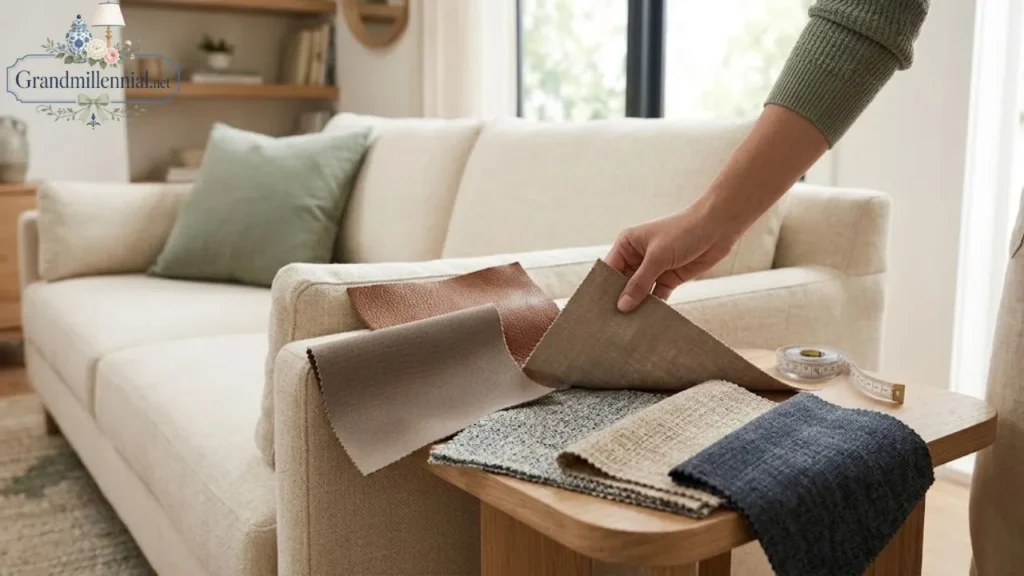
Ask the dealer for the manufacturer’s cleaning code and maintenance instructions. Keep those instructions with the purchase record. The word “performance” does not mean indestructible.
Confirm what the description covers, such as stain resistance, liquid repellency, or easier cleaning. It may not protect against punctures, pet claws, fading, or improper cleaning products.
Homes with pets
Pet owners should consider weave, texture, and hair visibility. Loose or heavily looped fabrics can catch claws. Very dark upholstery may show light pet hair, while pale material may display muddy paw marks.
A closely woven, mid-tone cover is often a more forgiving compromise. Take a sample home if the dealer permits it. Rub it gently with fabric resembling your pet’s hair and check how easily the fibers can be removed.
Leather choices
Leather can be durable and easy to wipe, but shoppers need to understand precisely what they are purchasing. Ask:
- Is the material top-grain, corrected-grain, or another leather type?
- Are all surfaces leather?
- Are non-contact panels made from matching synthetic material?
- What cleaner and conditioner are recommended?
- Can sunlight cause uneven fading?
- How should spills be treated?
Never assume every surface uses the same material unless that detail appears in the written specifications.
Sunlight and fading
Strong natural light can affect both fabric and leather. If furniture will sit beside a sunny window, request information about lightfastness and rotate movable cushions when appropriate. Window treatments can reduce direct exposure, but they should not be treated as complete protection.
Coordinating Furniture Without Buying a Matching Set
A room does not need identical furniture to look intentional. Matching sofa, loveseat, and chair combinations can be easy to order, but repeating the same shape, fabric, and scale throughout a room may produce a heavy showroom appearance. A more personal arrangement can be created by repeating selected elements:
- Similar leg finishes
- Related fabric undertones
- One repeated accent color
- Comparable arm heights
- Coordinated but different patterns
- Consistent visual weight
For example, a neutral sofa can be paired with two swivel chairs in a restrained pattern. The colors connect the pieces, while the different shape prevents the arrangement from looking overly uniform.
When combining collections, check seat heights. Furniture can look mismatched when one chair sits dramatically higher than the sofa beside it.
Selecting Furniture for a Small Living Room
Small rooms benefit from furniture that leaves visible floor space and maintains clear movement. Consider:
- Narrower arms
- Raised legs
- Compact swivel chairs
- A sofa rather than a sectional
- Lighter visual profiles
- Furniture with less unnecessary depth
- Wall-hugging motion designs, where suitable
Do not fill every available wall. A room often feels larger when furniture is grouped deliberately and at least one surface remains visually quiet.
Measure the pathway into the room as carefully as the room itself. A sofa that fits the final space may still be impossible to carry through a narrow staircase or turn.
Planning a Large Family Room
Large rooms create the opposite problem: furniture may feel scattered and disconnected. Rather than pushing every seat against a wall, build a defined conversation zone. A rug can visually connect a sofa, chairs, and coffee table. Side tables should remain within comfortable reach without blocking recliner movement.
In an open-plan home, the back of a sofa can establish the boundary between living and dining areas. Make sure the back is visually suitable for exposure and leave sufficient circulation space behind it.
A sectional may work well, but it should not become the only solution considered. Two sofas facing each other can create a balanced arrangement and may offer greater flexibility.
Buying for Different Body Types
A shared sofa must accommodate more than one person. Couples and families should avoid letting a single shopper make the comfort decision for everyone. When users differ significantly in height, consider seating that provides separate adjustable positions.
Alternatively, combine a generally comfortable sofa with an individually fitted recliner for the person who uses the room most. Decorative cushions can improve support for occasional users, but they should not be necessary for the primary user to sit comfortably.
For lift seating, mobility needs require particular care. The user should test the control, seat height, arm support, and complete lifting motion. Furniture testing does not replace medical guidance; consult a qualified professional when a health condition affects safe seating or standing.
Create a Realistic Budget
The advertised price rarely tells the whole story. Custom upholstery, power mechanisms, adjustable features, delivery and protection plans can change the total considerably. Request an itemized quotation that shows:
- Base product price
- Upholstery upgrade
- Power upgrade
- Headrest or lumbar options
- Accessories
- Sales tax
- Delivery
- Assembly
- Removal of old furniture
- Protection plan
- Final amount due
This prevents an attractive starting price from becoming an unexpectedly expensive order. Compare like with like. A manually operated chair in standard fabric is not a meaningful price comparison for a power model covered in upgraded leather.
Evaluate the Retailer Before Paying
Because Best Home Furnishings products are sold through independent dealers, the retailer plays an important role after the sale. The manufacturer’s official FAQ says warranty matters are handled through the dealer from which the furniture was purchased.
The product identification number, model, fabric number, and manufacturing date may be needed for assistance. Before ordering, find out:
- Who receives the furniture when it arrives
- Whether it is inspected before delivery
- Who handles visible delivery damage
- Whether the store has service technicians
- How warranty claims are submitted
- Whether labor or travel charges may apply
- What happens if replacement parts are delayed
- Which custom orders cannot be returned
- Whether cancellation fees apply
- How complaints are escalated
Read recent reviews of the specific dealer, not only reviews of the furniture manufacturer. A well-managed retailer can make ordering and servicing much easier.
What to Verify on the Sales Order
A custom order should never depend on memory or a salesperson’s verbal description. Before paying a deposit, check that the paperwork includes:
- Correct model and product number
- Every furniture component
- Sectional orientation
- Selected upholstery code
- Color name
- Manual or power configuration
- Optional features
- Product dimensions
- Quantity
- Delivery charge
- Estimated delivery window
- Deposit amount
- Remaining balance
- Cancellation conditions
- Return restrictions
- Warranty documents
Check the upholstery code against the physical sample. Similar color names can apply to distinctly different materials. If you have negotiated a special condition, such as a guaranteed doorway check or removal service, make sure it appears on the signed order.
Delivery-Day Inspection
Do not wait until the following week to examine newly delivered furniture. As soon as practical:
- Confirm that every piece matches the order.
- Check that a sectional faces the correct direction.
- Inspect arms, corners, backs, and lower edges.
- Look for pulled seams, marks, tears, or uneven stitching.
- Sit in each seat.
- Operate every manual function.
- Test all power controls and charging features.
- Listen for grinding, scraping, or unusual clicking.
- Make sure backs and sectional connectors are secure.
- Photograph the furniture and identification labels.
If you notice a problem, record it on the delivery paperwork and contact the retailer within the specified reporting period. Keep boxes or packing materials only if the retailer asks you to do so. Do not attempt electrical or structural repairs before receiving instructions.
Caring for Upholstered Furniture
Maintenance should follow the instructions for the exact cover rather than general advice found online. Some cleaners that are safe for one fabric may damage another. Avoid experimenting with household chemicals in a visible area. Helpful habits include:
- Vacuuming with an upholstery attachment
- Treating spills promptly according to instructions
- Keeping furniture away from direct heat
- Protecting it from prolonged strong sunlight
- Checking exposed connectors periodically
- Preventing children from jumping on footrests
- Keeping cords away from moving mechanisms
- Rotating reversible cushions where permitted
Motion furniture should be operated normally, not forced when an object is blocking the footrest.
Mistakes That Can Turn a Good Product Into a Bad Purchase
Buying the largest piece the room can hold
Furniture needs breathing room. Leaving only a few inches for movement makes the room inconvenient even when the product technically fits.
Choosing a cover under artificial lighting
Showroom lighting can change undertones. Take the sample home and view it during the day and evening.
Ignoring the fully open dimensions
A closed recliner measurement does not show how it will interact with tables, walls, and walkways.
Assuming customization means easy returns
Customized furniture may have strict cancellation and return conditions. Read them before ordering.
Selecting for appearance alone
A stylish chair that does not support the main user will rarely remain a favorite.
Treating a warranty as complete insurance
Warranties commonly distinguish defects from normal wear and may separate parts coverage from labor. Obtain the current written terms and ask the dealer to explain the claim process.
Is Best Home Furnishings the Right Choice for You?
Best Home Furnishings is worth considering when you want upholstered seating with extensive style, cover, and comfort choices and can shop through a capable authorized retailer. It may appeal particularly to shoppers who:
- Want to test seating locally
- Need a specific recliner size
- Prefer customizable upholstery
- Want manual and power choices
- Are furnishing a family or television room
- Value furniture made in the United States with domestic and globally sourced components
Another option may suit you better if you want:
- Immediate online checkout with fixed pricing
- A long in-home trial
- Simple nationwide returns
- Minimal product customization
- Lightweight furniture for frequent moves
- A complete coordinated collection for every room
No brand should be purchased solely because its name appears on a “best furniture” list. Comfort, dimensions, construction, upholstery, and retail support must all align.
A Final Pre-Purchase Checklist
Before ordering Best Home Furnishings, confirm that you can answer yes to the following:
- The furniture fits the room without obstructing movement.
- It can pass through every delivery entrance.
- The primary users have tested it properly.
- The seat depth and height suit their bodies.
- Recliners have enough operating space.
- Electrical connections can be routed safely.
- The upholstery suits children, pets, and cleaning habits.
- The precise model and cover codes are written down.
- The dealer’s return and cancellation policies are clear.
- The warranty process has been explained.
- All upgrades and delivery charges appear in the final price.
- The complete order has been reviewed before payment.
If any answer is no, pause the purchase. Correcting a detail before ordering is much easier than resolving it after a customized sofa reaches your home.
Final Thoughts
The best furniture purchase is not necessarily the softest chair, the largest sectional, or the model with the longest feature list. It is the furniture that fits your body, your floor plan, and your daily habits without creating new problems.
That is where Best Home Furnishings offers both an advantage and a challenge. Its range of configurations and covers gives shoppers considerable control, but every additional choice must be made carefully. Measure first. Test the actual seat. Examine upholstery in your own light.
Understand the dealer’s responsibilities and put every important promise in writing. When the room, user, and product are evaluated together, furniture stops being an uncertain showroom decision and becomes a considered part of the home.
Frequently Asked Questions
What does Best Home Furnishings manufacture?
The company primarily manufactures upholstered seating, including chairs, recliners, sofas, loveseats, and sectionals. Available configurations vary across individual collections and models.
Can I purchase directly from the manufacturer?
Products are generally purchased through authorized furniture dealers. Use the manufacturer’s dealer locator and confirm that the retailer is currently authorized before ordering.
Can I customize the upholstery?
Many models offer multiple fabric or leather options. Availability and pricing depend on the product and dealer. Always record the exact cover code on the order.
Is a power recliner better than a manual recliner?
Neither is universally better. Power models provide gradual adjustment and may offer additional comfort controls. Manual versions do not require electricity and have fewer powered components. Choose according to the user’s mobility, room, and preferences.
How much space does a reclining sofa require?
It depends on the model and mechanism. Request the fully reclined dimensions and wall-clearance requirements instead of relying only on closed measurements.
Are performance fabrics pet-proof?
No fabric should be considered completely pet-proof. Performance features may improve stain resistance or cleaning, but they do not necessarily prevent claw damage, pulled threads, or hair accumulation.
Should every seat in a living room match?
No. Furniture can look coordinated through related colors, proportions, fabric undertones, or wood finishes. Mixing complementary pieces often creates a more natural room.
What information is needed for a warranty question?
According to the manufacturer’s FAQ, the original dealer may request the product identification number. The label can include the ID number, model, fabric number and manufacturing date.