

Pick a leaf, bite into it, and for a second your brain insists you’ve just tasted lemon. Bright, sharp and green, it’s one of the first fresh flavours of spring, and one of the most underrated plants in the kitchen garden.
That leaf is sorrel, a perennial herb that has been grown in European gardens for centuries and is enjoying a quiet revival among cooks and gardeners. It’s easy to grow, comes back year after year, and turns ordinary soups, sauces, and salads into something memorable.
This guide explains what sorrel is (and isn’t, since several plants share the name), the main types, how to grow and harvest it, how to cook with it, and how to enjoy it safely.
Quick answer: Sorrel is a leafy perennial herb in the genus Rumex, related to buckwheat and rhubarb. Its leaves taste tart and lemony because of oxalic acid. Garden and French sorrel are the main kitchen types. Grow it in sun or light shade, cut off flower stalks, and enjoy it in moderation in soups, sauces,s and salads.
What sorrel is
The sorrel most cooks mean is common or garden sorrel, Rumex acetosa. Wikipedia lists a string of older names for it: common sorrel, meadow sorrel, green sorrel, sour dock and spinach dock. It belongs to the Polygonaceae, the same family as buckwheat, rhubarb and garden docks.
It’s a slender, clump-forming perennial with arrow-shaped leaves that grow from a central rosette. In late spring and summer,er it sends up tall flower spikes of small, reddish flowers. The Royal Botanic Gardens, Kew notes that common sorrel is dioecious, with male and female flowers on separate plants, and that it’s native to meadows, grasslands and woodland edges in the UK.
The name itself tells you about the flavour. It comes from Old French surele, from a root meaning “sour,” and that sourness is the plant’s signature.
It has a long kitchen history too. Before citrus fruit was easy to find in northern Europe, Kew notes, sorrel was an important fresh source of spring vitamin C for rural households. And in French cooking, it’s traditionally paired with fish, partly because its acidity was said to help dissolve tiny fish bones.
Sorrel around the world
Few kitchens love sorrel more than those of Eastern Europe. Green sorrel soup, known as shchavel soup in Russia and Ukraine, zupa szczawiowa in Poland and schav in Jewish cooking, is a spring tradition, often served with hard-boiled eggs, potatoes and a spoonful of sour cream.
In France, soupe à l’oseille and sorrel sauces for salmon remain classics of home cooking. In Britain, older recipes used the leaves in green sauces for meat and fish, much as we use lemon today.
That long history is a good reminder that sorrel isn’t a passing food trend. It’s an old-fashioned kitchen-garden staple, which suits a grandmillennial-style potager perfectly.
Which “sorrel”? Other plants and meanings
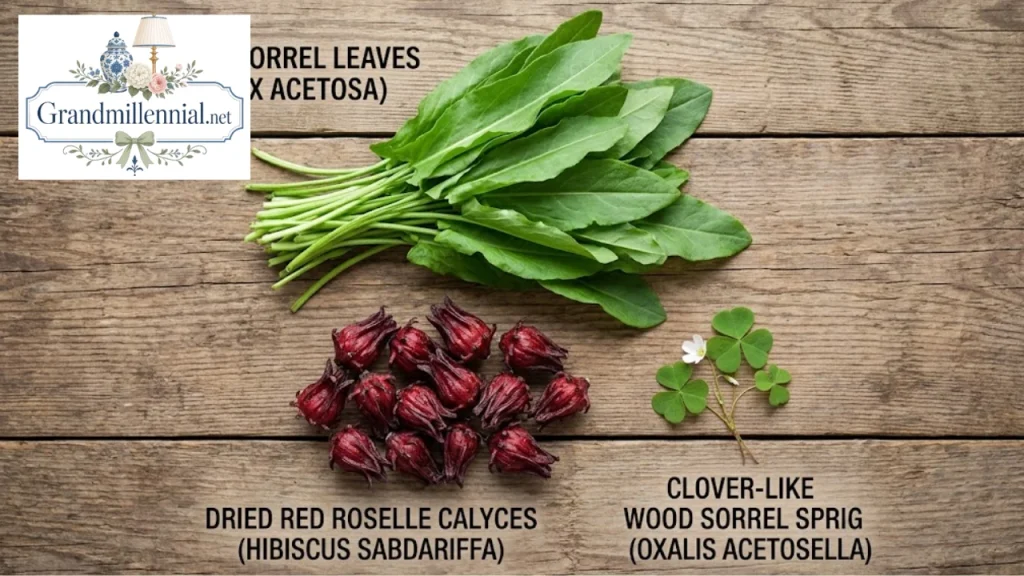
Search for sorrel, and you’ll quickly find recipes for a deep red Christmas drink, photos of shamrock-like weeds and pictures of chestnut horses. They’re not the same thing.
| Name | What it is | How it’s used |
|---|---|---|
| Garden or common sorrel (Rumex acetosa) | Perennial leafy herb | Soups, sauces, salads; the subject of this guide |
| French sorrel (Rumex scutatus) | Milder relative with smaller, rounded leaves | Salads, sauces, fish |
| Jamaican sorrel, roselle (Hibiscus sabdariffa) | Tropical hibiscus grown for its red calyces | The spiced red “sorrel” drink of the Caribbean, jams and teas |
| Wood sorrel (Oxalis species) | Unrelated low plant with clover-like leaves | Wild nibbling and garnishes; many are garden weeds |
| Sorrel tree, sourwood (Oxydendrum arboreum) | North American tree | Ornamental; known for sourwood honey |
| Sorrel (horse colour) | A reddish-brown coat colour | Often called chestnut |
In the Caribbean, “sorrel” usually means roselle. Its dried red calyces are steeped with ginger, spices and sugar to make a festive drink, especially around Christmas. If that’s the sorrel you’re after, look for hibiscus or roselle recipes; the leafy herb won’t work.
Wood sorrel shares the sour taste but belongs to a completely different plant family. Many types are common lawn and garden weeds.
Types of sorrel to grow and eat
Several Rumex species are grown or foraged for their leaves. They differ in leaf shape, sharpness and growth habit.
| Type | Leaves | Flavour | Growing notes |
|---|---|---|---|
| Common or garden sorrel (R. acetosa) | Large, arrow-shaped | Sharp and tart | Classic kitchen type; prefers rich, moist soil |
| French or buckler-leaved sorrel (R. scutatus) | Small, rounded, shield-shaped | Milder, lemony | Low and spreading; tolerates drier, stony soil |
| Red-veined sorrel (R. sanguineus) | Green with striking red veins | Mild when young | Ornamental; best as baby leaves |
| Sheep sorrel (R. acetosella) | Small, narrow, arrow-shaped | Very sharp | Wild and weedy; spreads by rhizomes |
French sorrel is often the cook’s favourite. NC State Extension notes that many food experts prefer it because it’s less acidic, and describes it as forming a clump around 2 feet tall and 3 feet wide.
A few named varieties are worth knowing. Mother Earth News mentions ‘Profusion’, a seed-sterile garden sorrel that doesn’t produce unwanted seedlings, and notes that some French sorrel strains have been selected for lower oxalic acid. Plant expert Arthur Lee Jacobson reports that in his garden, the silvery-leaved ‘Silver Shield’ French sorrel never reseeds.
Avoid planting sheep sorrel on purpose. It’s a persistent weed that spreads by underground runners, especially in acidic soils.
What does sorrel taste like?
The flavour is sharp, bright,t and distinctly lemony, with a fresh green note underneath. Young spring leaves are tender and only mildly tart; older, larger leaves are much sharper.
Illinois Extension notes that very early leaves can taste milder, gaining their characteristic acidity as the season goes on. CooksInfo points out that sorrel is too tart to eat by the bunch; it’s used like a herb or mixed with milder greens.
Cooked, it changes completely. The leaves collapse into a soft, silky purée in seconds and lose their bright green colour, turning an olive or khaki shade. The taste stays wonderfully tangy, which is why it makes such good sauces.
Nutrition and oxalic acid
Sorrel leaves are low in calories and provide useful amounts of vitamin C, vitamin A, fibre and minerals such as magnesium and potassium. As a rough guide, 100 grams of raw sorrel provides around 20 to 25 calories and a substantial share of daily vitamin C.
Healthline notes sorrel contains various antioxidants, but also that evidence for specific health benefits comes largely from test-tube and animal studies, so treat it as a nutritious green rather than a remedy.
Oxalic acid in context
The sourness comes mainly from oxalic acid, the same compound found in spinach, rhubarb and beet greens.
Mother Earth News describes oxalic acid as harmless in small amounts but says people with a history of kidney stones should avoid sorrel.
Kew notes that overconsumption can limit nutrient absorption, so sorrel shouldn’t be eaten in large quantities.
Illinois Extension advises people for whom oxalic acid is a dietary concern to use it sparingly.
Arthur Lee Jacobson observes that it would be difficult to eat enough sorrel to cause problems in normal cooking.
In practice, using sorrel as a flavouring, a handful in a soup or sauce, is fine for most people. If you have kidney stones, gout, kidney disease or take medicines affected by diet, talk to your doctor first.
Some growers note that blanching or boiling leaves and discarding the water reduces soluble oxalic acid, though it also softens the flavour.
Pets and skin
NC State’s plant database flags French sorrel as a potential problem for cats, dogs and horses, and lists contact dermatitis among its tags. Keep pets from grazing on it, and wear gloves if your skin is sensitive when handling large amounts.
How to grow sorrel
The good news is that sorrel is one of the easiest perennial herbs to grow. Mother Earth News lists it as adapted to USDA zones 4 to 9, and NC State notes French sorrel tolerates drought, frost, and wind once established.
Choosing a site
Illinois Extension recommends full sun and rich, moist soil for French sorrel. In hot climates, light afternoon shade helps keep leaves tender and slows bolting. Common sorrel likes moisture; French sorrel copes better with lighter, drier, stony soil.
Sowing
Sow seed in early spring, once the soil can be worked. Illinois Extension suggests sowing about an inch deep; many seed suppliers sow more shallowly, around a quarter inch, so follow your packet. Australian seed supplier Succeed Heirlooms notes most seedlings emerge within 7 to 14 days and suggests spacing plants about 25 cm (10 inches) apart.
You can also buy young plants or divisions from a friend’s established clump, which gives you a harvest much sooner.
Planting out
Set plants at the same depth they grew in their pots, water them in, and mulch lightly to keep moisture in and weeds down. Mother Earth News advises allowing seedlings a full season to establish and keeping weeds from crowding them.
Care: watering, bolting and division
Once established, sorrel needs little attention, but a few habits keep it productive.
Water in dry spells. Consistent moisture keeps leaves tender and mild. Drought stress makes them tougher and sharper.
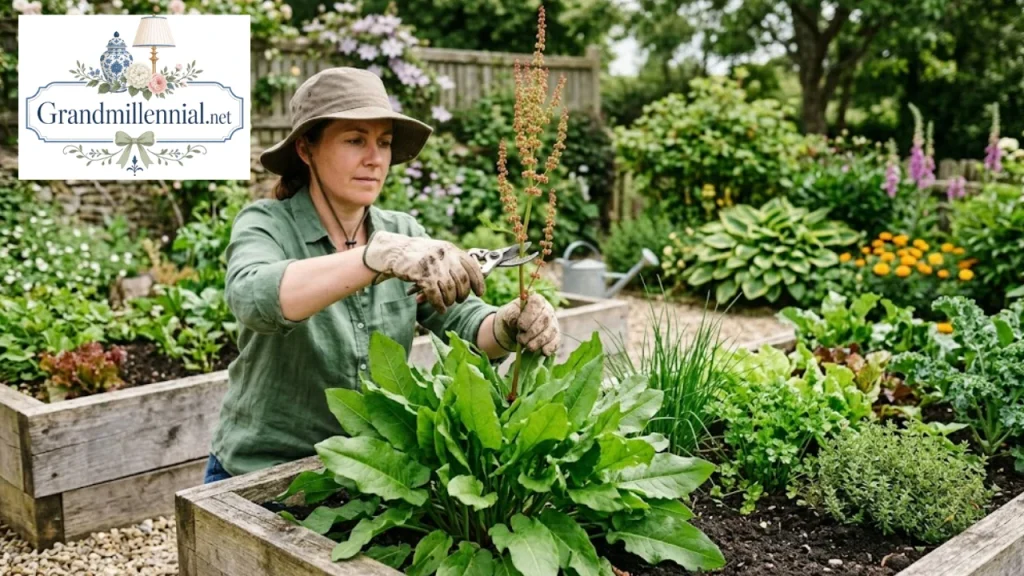
Remove flower stalks. This is the most important job. Illinois Extension notes that seed stalks reduce the quantity of usable leaves, and Mother Earth News calls cutting off flower spikes the biggest challenge in growing garden sorrel. Snip them off at the base as soon as they appear.
Prevent unwanted seedlings. Both garden and French sorrel can self-seed and spread. Removing flower stalks solves most of this; seed-sterile varieties such as ‘Profusion’ avoid it entirely.
Feed lightly. A top-dressing of compost in spring is usually all sorrel needs.
Divide every few years. Illinois Extension recommends dividing plants every three to four years to maintain vigour. Lift the clump in early spring or autumn, split it with a spade, and replant the healthiest sections.
Growing sorrel in containers
Sorrel grows happily in pots, which is ideal for balconies, patios and small gardens, and it keeps spreading types under control.
Choose a container at least 8 to 10 inches deep with drainage holes, and fill it with good-quality potting mix enriched with compost. Place it where it gets sun for at least part of the day, with some afternoon shade in hot weather.
Water more often than plants in the ground, as pots dry out quickly, and feed lightly every few weeks in the growing season. CooksInfo notes sorrel is hardy enough to survive even severe winters in a large enough pot outdoors.
A single pot of French sorrel by the kitchen door gives you a steady supply of lemony leaves for salads and sauces from spring to autumn.
Harvesting and storing
Start picking once plants have several healthy leaves. Harvest the outer leaves first, cutting them near the base and leaving the central rosette to keep growing. Regular picking encourages fresh, tender growth.
For salads, pick young, small leaves; for soups and sauces, larger leaves are fine. Many gardeners cut plants back hard in midsummer if leaves get tough, then enjoy a flush of new growth in late summer and autumn.
Fresh sorrel wilts quickly. Wrap leaves loosely in a damp paper towel inside a bag in the fridge and use within a few days. Illinois Extension notes sorrel freezes well: chop the leaves, or cook them down briefly into a purée, and freeze in small portions to drop into soups and sauces later.
Buying fresh sorrel
If you don’t grow your own, fresh sorrel can take a little hunting. Look at farmers’ markets in spring and early summer, specialty greengrocers, and Eastern European, Russian, Polish, and French delicatessens, which often stock it for traditional soups. Some supermarkets sell small packs in the fresh herb section.
CooksInfo advises choosing firm leaves with no blotches and avoiding wilted bunches. Smaller leaves are milder and better for salads; larger leaves suit soups and sauces. Because it wilts quickly, plan to use shop-bought sorrel within a day or two, or cook it down and freeze it.
If you can’t find fresh leaves, a handful of spinach with plenty of lemon juice and zest gives a similar effect in soups and sauces, though without quite the same depth.
Cooking with sorrel
Think of sorrel as a cross between a herb and a leafy green, with a built-in squeeze of lemon. A little goes a long way.
Practical tips
Use non-reactive pans. Illinois Extension notes sorrel’s acidity can discolour some metal pots. Stainless steel or enamelled cookware is best; avoid bare aluminium and cast iron.
Add it at the end. Sorrel melts in seconds. Stir it in just before serving to keep as much flavour as possible.
Expect a colour change. Cooked sorrel turns olive green. Adding a handful of spinach or fresh herbs at the end brightens the colour.
Balance the sharpness. Cream, butter, eggs, potatoes and rich fish soften its acidity beautifully.
Simple sorrel soup
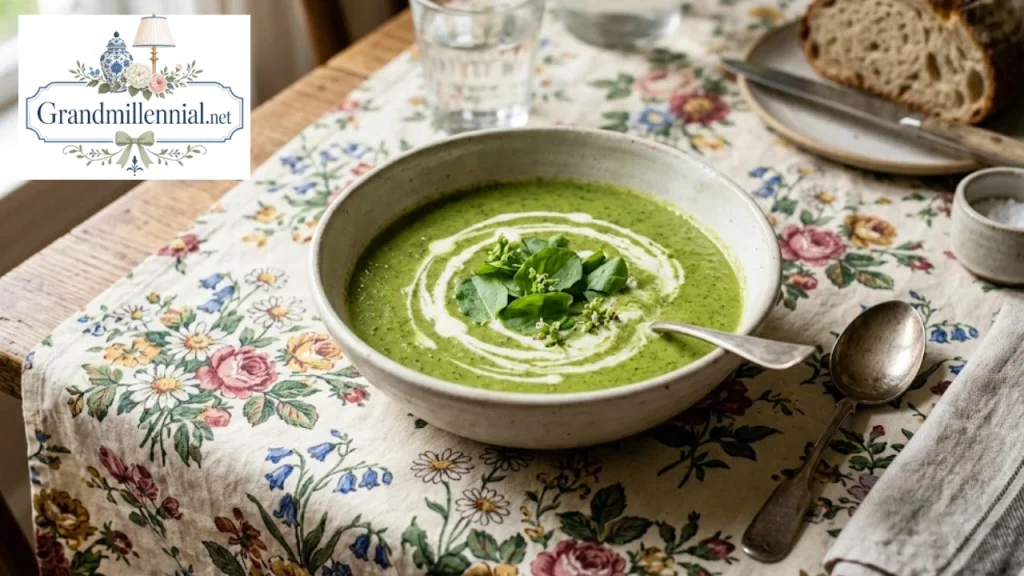
Soften a chopped onion and a diced potato in butter in a stainless steel pan. Add about a litre of stock and simmer until the potato is tender. Stir in two large handfuls of sorrel, cook for a minute until it wilts, then blend until smooth. Finish with a splash of cream, salt and pepper. Serve hot or chilled.
Quick sorrel sauce for fish
Soften a finely chopped shallot in butter, add a splash of white wine or stock and reduce slightly. Stir in a generous handful of shredded sorrel until it melts, then add cream and simmer briefly until glossy. Spoon over salmon, trout or white fish. This is the classic French pairing Wikipedia mentions.
Other ideas
- Tear young leaves into green salads with butter lettuce and soft herbs.
- Fold shredded sorrel into omelettes, scrambled eggs or frittatas.
- Mix with spinach when wilting greens, as CooksInfo suggests, to perk up the flavour.
- Blend into a lemony pesto or green sauce with parsley, olive oil and nuts.
- Stir through potato salad, risotto or lentils just before serving.
If you love cooking with fresh herbs, a bright, practical kitchen makes it a pleasure; these coastal kitchen ideas show how to create a calm, light-filled space for everyday cooking.
Troubleshooting
| Problem | Likely cause | What to do |
|---|---|---|
| Leaves very sour or tough | Older leaves, heat, drought | Pick young leaves; water regularly; cut back for fresh growth |
| Plant sending up tall stalks | Bolting, especially in heat | Cut stalks off promptly; give afternoon shade |
| Seedlings popping up everywhere | Self-seeding | Remove flowers before seed sets; choose seed-sterile ‘Profusion’ |
| Holes in leaves | Slugs, snails or leaf-eating insects | Hand-pick pests; use barriers; check under leaves |
| Fewer, smaller leaves after several years | Overcrowded clump | Divide every three to four years |
| Yellowing leaves in wet weather | Waterlogged soil | Improve drainage or grow in a raised bed or container |
NC State lists no major diseases or insect pests for French sorrel, which is part of why it’s such a low-maintenance herb.
Sorrel in the garden
Sorrel earns its place beyond the kitchen. Its fresh green rosettes are among the first leaves up in spring, and red-veined sorrel is ornamental enough for borders and containers.
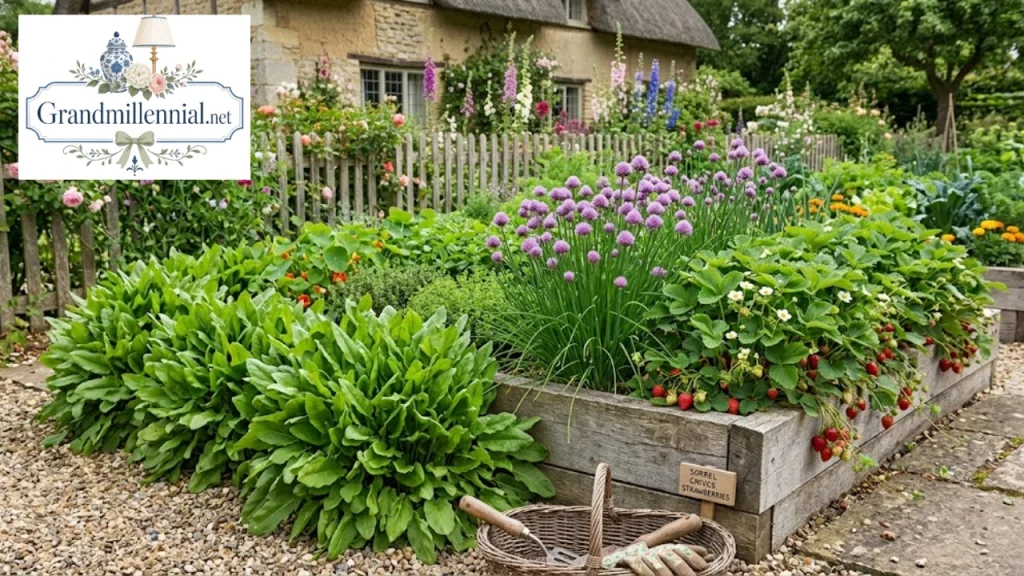
In a potager or cottage-style kitchen garden, plant it alongside chives, parsley, lovage and strawberries. Its tidy clumps make a neat edging for beds once flower stalks are removed.
It also supports wildlife. Kew notes that common sorrel is especially valuable in the UK as a caterpillar food plant for the Small Copper butterfly, and that many beetles, flies, butterflies and moths use it. If you can, let a clump in a wilder corner flower while you keep kitchen plants trimmed.
If you share the garden with dogs, plant sorrel where they’re less likely to graze, given NC State’s pet caution; these tips for keeping your yard looking good with dogs can help with layout. For bringing garden freshness indoors, these home decor ideas that actually work include simple ways to display herbs and greenery.
FAQs:
What does sorrel taste like?
Tart, bright and lemony, with a fresh green flavour. Young leaves are milder; older leaves are sharper.
Is sorrel safe to eat raw?
Yes, in moderation. Its oxalic acid means it’s best used as a flavouring rather than eaten in large amounts, and people with kidney stones should avoid it or check with a doctor.
What’s the difference between sorrel and Jamaican sorrel?
Garden sorrel is a leafy Rumex herb. Jamaican sorrel is roselle, a hibiscus whose red calyces are used to make the Caribbean sorrel drink.
Is wood sorrel the same as sorrel?
No. Wood sorrel is Oxalis, an unrelated plant with clover-like leaves that shares the sour taste.
How do I stop sorrel from bolting?
Cut off flower stalks as soon as they appear, keep plants watered, and give them afternoon shade in hot weather.
Can I grow sorrel in a pot?
Yes. Use a container at least 8 to 10 inches deep with good drainage, and water regularly.
Why does sorrel turn brown when cooked?
Heat changes its chlorophyll, turning it olive green. The flavour remains; add spinach or herbs for colour.
Can you freeze sorrel?
Yes. Freeze chopped leaves or a quick cooked purée in small portions for soups and sauces.