

On a hot July afternoon, few sights are as cheerful as a border full of coneflowers. Pink-purple petals sweep back from spiky copper cones, bees bumble from flower to flower, and the occasional swallowtail butterfly drifts in to feed.
That plant is a purple coneflower, Echinacea purpurea, one of the most popular native perennials in North American gardens. It’s tough, long-blooming, and easy to grow, and its seed heads feed birds well into winter.
This guide covers everything you need to know: where it comes from, which types to grow, how to plant and care for it, how to handle common problems such as aster yellows, how to design with it, and what the evidence really says about echinacea as an herbal remedy.
Quick answer: Purple coneflower (Echinacea purpurea) is a hardy, native North American perennial with pink-purple, daisy-like flowers on 2- to 4-foot stems. Grow it in full sun and well-drained soil. It’s drought-tolerant once established, blooms through mid to late summer, attracts pollinators, and needs little care beyond optional deadheading and occasional division.
Quick facts
| Feature | Details |
|---|---|
| Botanical name | Echinacea purpurea |
| Family | Asteraceae (daisy family) |
| Plant type | Herbaceous perennial |
| Hardiness | USDA zones 3 to 9 (Clemson); some sources list 4 to 9 |
| Height and spread | About 2 to 3½ feet tall and 1½ feet wide (Clemson); up to 3 to 4 feet in rich soil (K-State) |
| Bloom time | Mid to late summer, often into early autumn |
| Light | Full sun; tolerates light partial shade |
| Soil | Well-drained; adaptable; prefers pH about 6.0 to 7.0 |
| Water | Moderate; drought tolerant once established |
| Wildlife | Bees, butterflies, goldfinches |
| Deer | Generally considered deer resistant |
Figures come from Clemson Cooperative Extension, Kansas State University, White Flower Farm, and Rainyside Gardeners.
Where purple coneflower comes from
Clemson Extension describes the species as native to the central United States, extending into states such as North Carolina, Georgia, Mississippi, Tennessee, and Kentucky. Wholesale grower Walters Gardens notes it’s well adapted to hot, windy conditions, a clue to how tough it is.
The name Echinacea comes from the Greek echinos, meaning hedgehog or sea urchin, a reference to the spiky central cone. Purpurea simply means purple.
The plant has a long history of use. The USDA plant guide records widespread medicinal use by several Native American nations, and UVM Extension notes that Native Americans and, later, European settlers used coneflowers for pain relief, colds, sore throats,s and wound care. Today it’s both a garden staple and one of the best-selling herbal supplements.
A note on wild coneflowers
The USDA plant guide notes that native echinacea species are dwindling in the wild, partly because roots have been harvested for the herbal trade. Echinacea purpurea is less threatened than some relatives, but species such as smooth coneflower are of conservation concern.
The simple rule: buy plants and seed from reputable nurseries that propagate their own stock, and never dig coneflowers from the wild. Growing them at home is one small way to support native plants and the pollinators that depend on them.
Coneflower species and hybrids
Echinacea purpurea is the most widely grown coneflower, but it has several relatives, and plant breeders have created hundreds of hybrids.
| Species | Notes from Clemson Extension |
|---|---|
| E. purpurea (purple coneflower) | The most readily available; 2 to 3½ feet tall |
| E. angustifolia (narrow-leaf coneflower) | 12 to 16 inches tall; needs dry soil and won’t tolerate wet, poorly drained soil |
| E. pallida (pale coneflower) | Native to prairies from Oklahoma to Georgia; zones 4 to 8; drooping pale petals |
| E. paradoxa (yellow coneflower) | 2½ to 3 feet tall; the “paradox” is its yellow flowers |
| E. laevigata (smooth coneflower) | Rare species of conservation concern |
Should you grow the species or a hybrid?
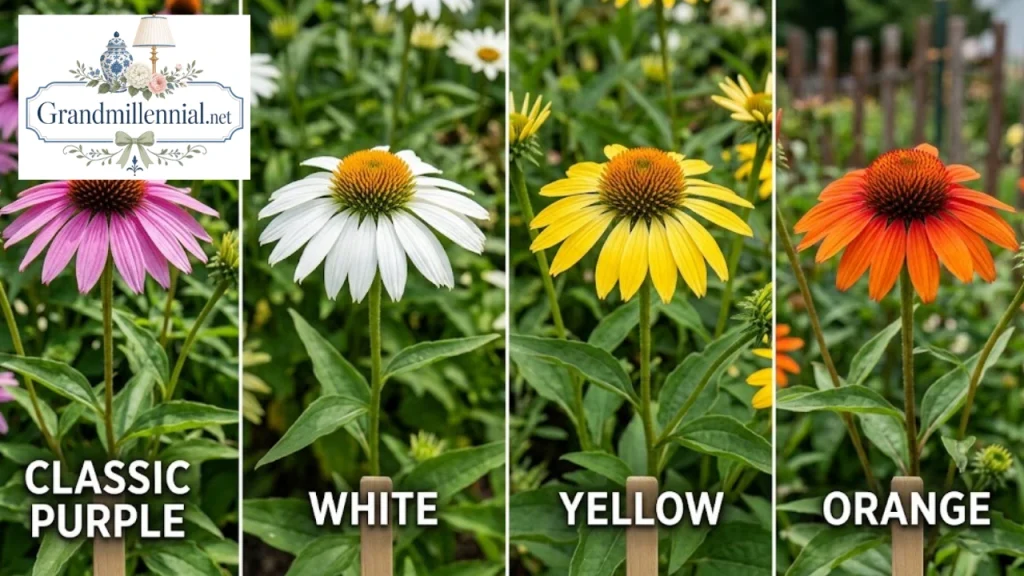
Hybrid coneflowers now come in white, yellow, orange, red, green,en and double “pom-pom” forms. UVM notes that gardeners can choose from many colours and flower forms.
They’re beautiful, but many gardeners find some hybrids less vigorous and shorter-lived than straight Echinacea purpurea, especially in heavy or wet soils. If you want a reliable, long-lived planting, start with the species or proven cultivars such as ‘Magnus’ (rosy purple) or ‘White Swan’ (white), which K-State lists among the available forms. Try fancier hybrids as a bonus, in your best-drained spots.
Where to plant purple coneflower
Give purple coneflowers what they would have in a prairie: sun, air, and soil that drains well.
Sun. Full sun produces the sturdiest stems and most flowers. K-State notes it tolerates partial shade, but in too much shade plants flop and bloom less.
Soil. White Flower Farm describes the plant as adaptable to most soils, preferring a sandy, well-drained loam with a pH of about 6.0 to 7.0. Heavy, waterlogged clay is the main thing to avoid, especially in winter.
Fertility. Average soil is ideal. Very rich soil and heavy feeding encourage soft, floppy growth. Walters Gardens specifically warns that echinacea in containers doesn’t like to be over-fertilised.
Spacing. Clemson gives a typical spread of around 1½ feet, so planting roughly 18 to 24 inches apart allows good air circulation, which helps reduce mildew.
How to plant purple coneflower
From plants
Nursery plants give you flowers the first summer. Plant in spring after the last frost, or in early autumn. White Flower Farm recommends early autumn planting in colder zones (zone 5 and below) so plants can establish before winter.
Dig a hole as deep as the pot and about twice as wide.
Set the plant at the same depth it grew in the pot; don’t bury the crown.
Firm the soil gently and water thoroughly.
Mulch lightly, keeping mulch away from the crown.
Water regularly through the first season until established.
From seed
K-State notes that Echinacea purpurea seed doesn’t need special treatment: sow directly outdoors in spring, or start indoors in very early spring and transplant in late spring. Rainyside suggests sowing at around 68°F (20°C).
Seed-grown plants often take a year or two to flower well, so they’re a good, economical option for filling larger areas.
Care through the year
Once established, purple coneflower is one of the easiest perennials you can grow.
Watering. Water regularly in the first season. After that, plants are drought tolerant and usually only need water during prolonged dry spells. K-State notes they respond well to irrigation, but overwatering, especially in heavy soil, can cause root problems.
Feeding. Usually unnecessary in average soil. A light top-dressing of compost in spring is plenty.
Deadheading. White Flower Farm notes coneflowers bloom for a long time even without deadheading, but removing spent flowers results in more blooms. The best approach is to do both: deadhead early in the season to keep flowers coming, then let late-summer flowers set seed for birds and winter interest.
Staking. Rarely needed in full sun and lean soil. If plants flop, they’re probably in too much shade or soil that’s too rich.
Cutting back. UVM notes you can cut back old growth at the end of the season or leave it until spring. Leaving stems and seed heads standing feeds birds and shelters insects over winter; cut them back in early spring before new growth starts.
| Season | Tasks |
|---|---|
| Early spring | Cut back old stems; divide or transplant if needed; top-dress with compost |
| Late spring | Plant new coneflowers; water young plants |
| Summer | Enjoy flowers; deadhead early blooms if desired; water in long droughts |
| Late summer | Let some flowers set seed for birds |
| Autumn | Plant in colder zones (early autumn); leave seed heads standing |
| Winter | Watch goldfinches feed on seed heads |
Overwintering
In the ground, established coneflowers are very cold-hardy; the biggest winter risk is wet soil around the crown rather than cold itself. Avoid heavy mulch piled over the crown, and make sure water drains away in winter.
Newly planted coneflowers benefit from being in the ground at least several weeks before hard frost, which is why White Flower Farm recommends early-autumn planting in colder zones. If a late-planted coneflower heaves out of the ground over winter, gently firm it back in place in early spring.
Dividing and propagating
Clemson recommends dividing perennials such as echinacea in spring or autumn. UVM suggests dividing in spring while the plant is still dormant, lifting the clump and splitting it so each section keeps several inches of roots.
Coneflowers don’t need frequent division. Many gardeners only divide when clumps become crowded, or the centre starts to die out, often every four years or so.
The species also self-seeds. K-State notes that plants reseed prolifically in gardens. That’s a bonus if you want a naturalistic drift; if you’d rather control it, deadhead before seeds ripen or pull unwanted seedlings in spring. Seedlings of hybrids won’t necessarily look like their parents.
Saving and sowing your own seed
If you’d like more plants for free, saving seed from purple coneflower is easy. Let a few flowers fade on the plant until the cones turn dark brown and dry in late summer or autumn.
Cut the heads and break them apart over a paper bag; the seeds are the small, angular pieces among the spiky chaff (wear gloves, as the cones are prickly). Store dry seed in a labelled envelope in a cool, dry place.
Sow outdoors in autumn or spring, or indoors in early spring. Seed from the straight species usually comes true; seed from hybrids may produce plants that look quite different from the parent. Remember to leave plenty of seed heads standing for birds.
Common problems
Coneflowers are generally tough, but a few problems are worth knowing.
Aster yellows
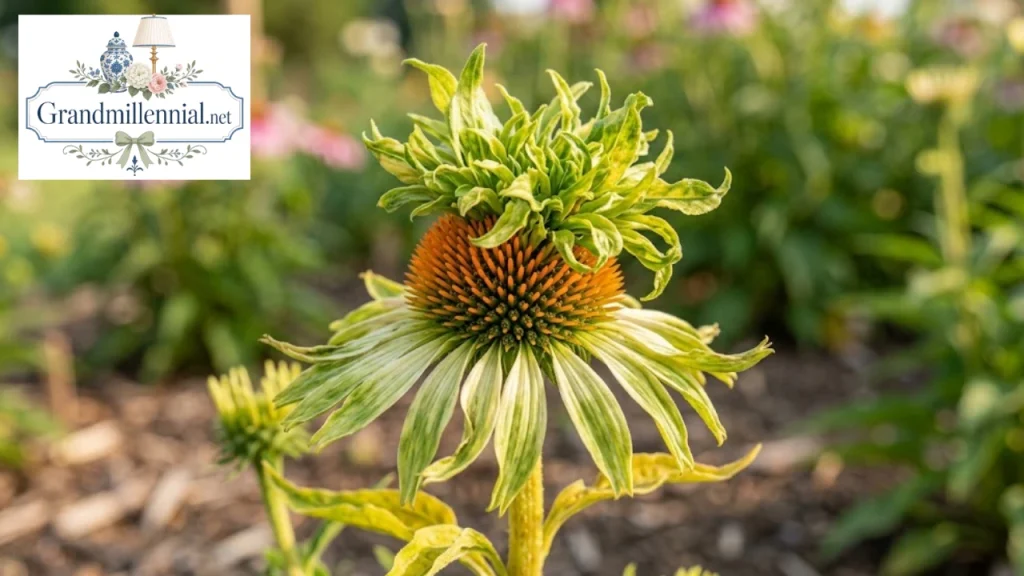
This is the most serious coneflower problem. Clemson explains that aster yellows is spread as leafhoppers feed on plants, and that it causes a witches’ broom effect in the flower head, green petals, stunting, and sometimes death. Walters Gardens identifies the cause as a phytoplasma spread by the six-spotted (aster) leafhopper, and notes deformed flowers as one of the most obvious signs.
If you see flowers with tufts of small green growth sprouting from the cone, or petals turning green, remove the whole plant, including roots, and dispose of it in the rubbish (not the compost). There’s no cure, and infected plants can serve as a source for others.
Powdery mildew and leaf spots
UVM lists powdery mildew among coneflower problems, and Rainyside notes occasional mildew and fungal leaf spots. Good spacing, full sun,n and watering at soil level reduce the risk.
Fusarium wilt and root rot
UVM mentions Fusarium wilt. Wet, poorly drained soil also leads to crown and root rot. The best prevention is good drainage.
Pests
Rainyside notes leaf miners as an occasional problem. Japanese beetles and aphids may visit in some areas. Healthy plants usually tolerate minor damage.
Plants not coming back
If coneflowers disappear after a winter, likely causes are wet soil, a short-lived hybrid, or planting too late in autumn for roots to establish. Choose well-drained spots and robust varieties.
Common mistakes to avoid
Most coneflower disappointments come from a handful of easy-to-fix mistakes:
Too much shade. Plants stretch, flop,op and flower sparsely. Move them to full sun.
Overly rich soil and heavy feeding. Lush growth looks good for a while, then collapses. Average soil suits them best.
Wet winter soil. The main cause of plants vanishing. Choose well-drained spots or raised beds.
Cutting everything back in autumn. You lose winter food for birds and shelter for insects; tidy up in early spring instead.
Planting too late in cold areas. Give roots several weeks to establish before hard frost.
Relying only on fancy hybrids. Mix in the straight species for a dependable backbone.
Ignoring deformed green flowers. Remove aster yellows-infected plants promptly before the disease spreads.
Wildlife value
Few plants work as hard for wildlife as purple coneflower.
Pollinators. Bees and butterflies visit the nectar-rich flowers throughout summer. Rainyside describes echinaceas as great butterfly, bird,ird and bee plants.
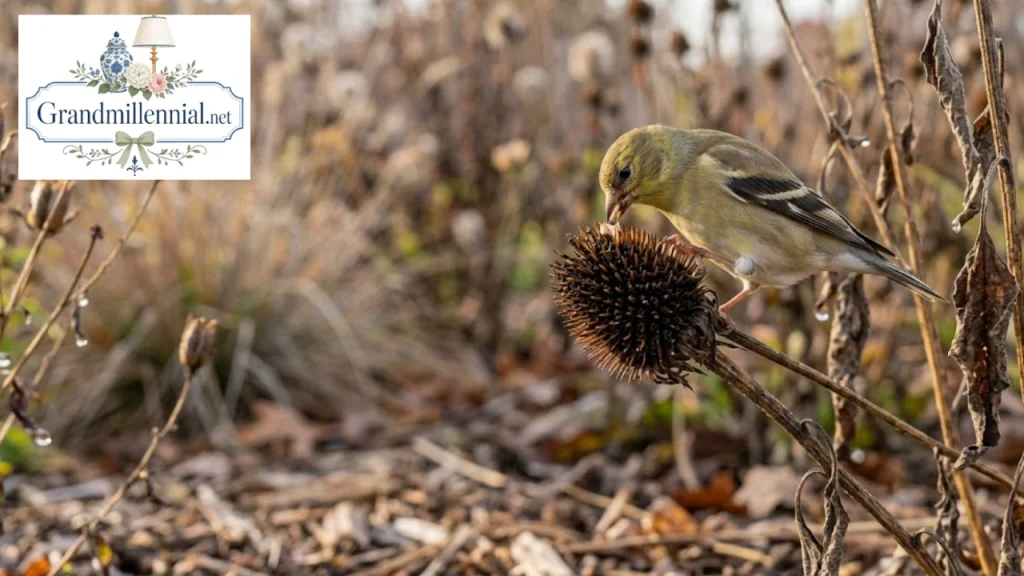
Birds. The USDA plant guide notes that goldfinches love the seed crop, and Clemson highlights the plant’s attraction to goldfinches in winter. White Flower Farm calls watching goldfinches pick seeds from the cones one of the most delightful sights in the garden.
Native plant benefits. As a native species, it fits well into pollinator gardens, meadow plantings, and habitat corridors.
To get the most wildlife value, plant coneflowers in groups, avoid pesticides, and leave seed heads standing through autumn and winter.
Designing with coneflowers
Coneflowers suit many garden styles, from wild prairie to tidy cottage borders.
Prairie and meadow style. Combine with black-eyed Susans, little bluestem, switchgrass, bee balm and blazing star for a naturalistic, low-maintenance planting.
Cottage garden. Mix with phlox, Shasta daisies, catmint, salvias, roses and hollyhocks. The upright form and bold colour add structure among softer flowers. UVM notes coneflowers perform well in borders and cottage gardens.
Pollinator borders. Pair with anise hyssop, asters, goldenrod and milkweed for a long season of nectar.
Containers. Compact varieties grow well in large pots in full sun, with good drainage and minimal feeding.
Planting tip. Plant in groups of three, five or more for impact, and repeat clumps along a border to create rhythm.
For bringing the same considered style indoors, these home decor ideas that actually work pair well with a garden full of flowers.
Growing coneflowers in containers
No border? Purple coneflowers also grow well in containers on sunny patios and balconies, especially compact cultivars. Choose a pot at least 12 to 16 inches wide and deep with drainage holes, and fill it with a free-draining potting mix with some added grit.
Place the pot in full sun, water when the top inch of compost is dry, and avoid heavy feeding; Walters Gardens notes echinacea in containers doesn’t like to be over-fertilised. In cold regions, potted roots are more exposed to freezing than plants in the ground, so move containers against a sheltered wall or into an unheated garage over winter, or sink the pot into a garden bed.
Echinacea as an herbal remedy
Many people know echinacea best from the supplement shelf. The National Center for Complementary and Integrative Health (NCCIH) lists “purple coneflower” among echinacea’s common names and notes that echinacea products are mainly promoted for colds and other respiratory infections.
What does the evidence say?
NCCIH says taking echinacea may slightly reduce the chance of catching a cold, but it’s still unclear whether it shortens a cold.
A Cochrane review of 24 controlled trials involving 4,631 participants concluded that some echinacea products may be more effective than placebo for treating colds, but the overall evidence for clinically relevant effects is weak.
Products vary widely, using different species, plant parts,s and preparations, which makes results hard to compare.
Safety. NCCIH notes that the most common side effects are digestive symptoms such as stomach pain or nausea. Some people have allergic reactions, which can be severe, particularly people allergic to plants in the daisy family. There’s conflicting evidence about interactions with some medicines, and theoretical concerns about immunosuppressants.
If you’re pregnant, breastfeeding, have an autoimmune condition, take regular medication, or are considering echinacea for a child, talk to a healthcare professional first. Don’t harvest garden plants for medicine without expert guidance; enjoy them in the border.
Cut flowers and seed heads indoors
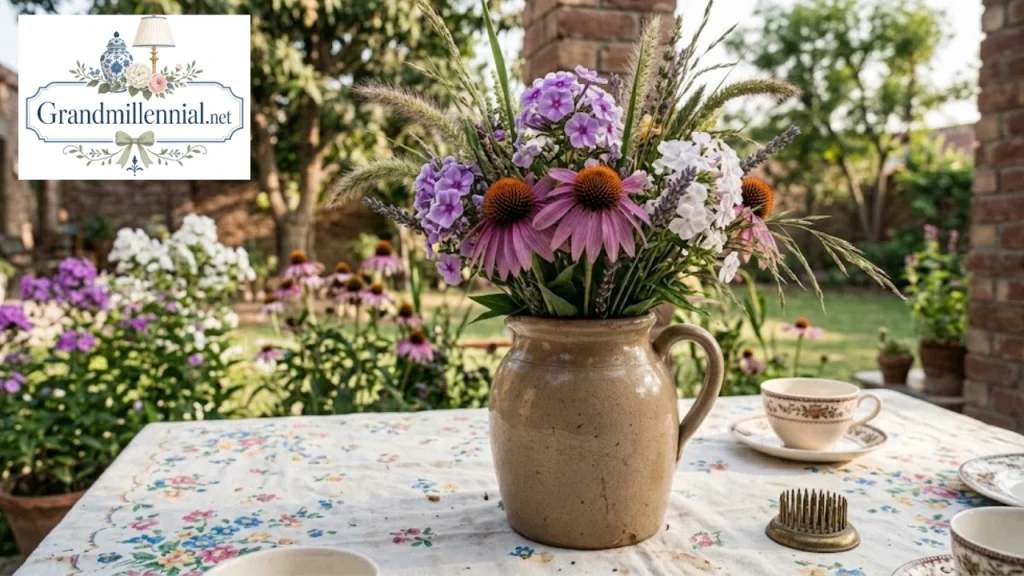
Coneflowers make long-lasting cut flowers. Rainyside suggests cutting them for fresh arrangements when the petals are just expanding. Strip lower leaves, recut stems underwater, and change the water every couple of days.
They look wonderful in simple jugs and vintage vases alongside garden roses, phlox and grasses. Later in the season, petal-less seed heads add texture to dried arrangements and wreaths, though leave plenty outside for the birds.
A jug of garden flowers on a side table is one of the easiest ways to bring the garden inside; these cozy living room ideas show how flowers and textiles can warm up a room.
Coneflowers and pets
Purple coneflower is generally regarded as low risk in the garden, but any plant can upset a pet’s stomach if eaten in quantity. If you have dogs that dig or nibble, plant coneflowers where they’re less likely to be trampled; these tips for keeping your yard looking good with dogs can help you plan tougher, pet-friendly beds.
FAQs:
Is purple coneflower the same as echinacea?
Yes. Purple coneflower is Echinacea purpurea, one of several echinacea species.
Do coneflowers come back every year?
Yes, they’re perennials. The species is long-lived in well-drained soil; some hybrids are shorter-lived.
Should you deadhead coneflowers?
You can deadhead early in the season for more blooms, then leave later flowers to set seed for birds.
Do coneflowers spread?
They form clumps and self-seed readily, so they can gradually spread through a bed.
When do purple coneflowers bloom?
Mid to late summer, often continuing into early autumn.
Can coneflowers grow in shade?
They tolerate light shade but bloom best and stand straighter in full sun.
Why are my coneflowers growing green, tufted flowers?
That’s usually aster yellows, a disease spread by leafhoppers. Remove and discard affected plants.
Does echinacea help with colds?
NCCIH says it may slightly reduce the chance of catching a cold, but evidence is limited. Talk to a healthcare professional before using supplements.