

Every spring there’s one slope in the neighborhood that stops traffic. For a few weeks it’s solid pink, lavender, or white, as if someone unrolled a rug down the hill.
That’s almost always creeping phlox. It’s tough, low, and unfussy once settled, but it has a few habits worth knowing, especially if you want the carpet to look as good in year five as it does in year one.
Quick answer: Creeping phlox (Phlox subulata) is a low, evergreen ground cover hardy in about USDA zones 3 to Plant it in full sun and well-drained soil, about 12 to 18 inches apart. Water until established, then shear it back by about half right after it flowers to keep it dense.
Quick facts
| Feature | Details |
|---|---|
| Botanical name | Phlox subulata |
| Other names | Moss phlox, moss pink, mountain phlox |
| Type | Low, mat-forming perennial; evergreen to semi-evergreen |
| Height and spread | About 4–6 inches tall, spreading 1–2 feet |
| Bloom time | Early to mid spring, for roughly three weeks |
| Colours | Pink, lavender, blue-violet, white, red, bicolour |
| Sun | Full sun for the most flowers; tolerates light shade |
| Soil | Well-drained, average to sandy or gravelly; neutral to slightly alkaline |
| Hardiness | Commonly listed as USDA zones 3–9 (some sources say 3–8) |
| Native range | Eastern and central United States |
It has a long garden history, too. Monticello notes that naturalist John Bartram first described it in a 1745 letter, and pink, white, and red garden varieties were known by 1850.
Which creeping phlox do you have?
Here’s the confusion most guides skip: two different plants share the common name.
| Phlox subulata | Phlox stolonifera | |
|---|---|---|
| Common names | Creeping phlox, moss phlox, moss pink | Creeping phlox, woodland creeping phlox |
| Leaves | Short, stiff, needle-like | Broader, rounded, softer |
| Light | Full sun | Light to partial shade |
| Soil | Dry to average, sharply drained | Moist, loose, humus-rich |
| Typical use | Slopes, rock gardens, walls | Woodland gardens, shady edges |
If you bought a flat of needle-leaved mats from the garden centre for a sunny bank, you almost certainly have Phlox subulata. That’s the plant this guide covers.
Woodland creeping phlox (P. stolonifera) likes the opposite conditions, which is why advice online sometimes seems contradictory. Ole Miss’s landscape guide notes it grows best in light to partial shade and moist soil.
Where to plant it
Think about where it grows wild: dry, rocky woodlands, barrens, and exposed outcrops, according to Washington and Lee’s native plant project. Give it a spot that echoes that.
The best places are sunny slopes, the top of a retaining wall where it can spill over, rock gardens, gravel paths, and the front edge of a border. On banks, it doubles as a pretty way to help hold soil.
Avoid low spots where water sits after rain. Heavy, soggy clay is the fastest way to lose a planting to root rot.
In hot-summer regions, a little afternoon shade is welcome. In cooler areas, give creeping phlox as much sun as you can; it flowers far more heavily in full sun.
How to plant creeping phlox
Spring and early autumn are the best times to plant. Cool weather and steady moisture help roots settle before summer heat or winter cold.
Clear the ground thoroughly. Missouri State University’s plant notes point out that it’s not competitive against weeds, so remove grass and perennial weeds, roots and all, before planting.
Improve drainage if needed. Loosen the soil and mix in a little compost. On clay, work in grit or plant on a gentle mound or slope.
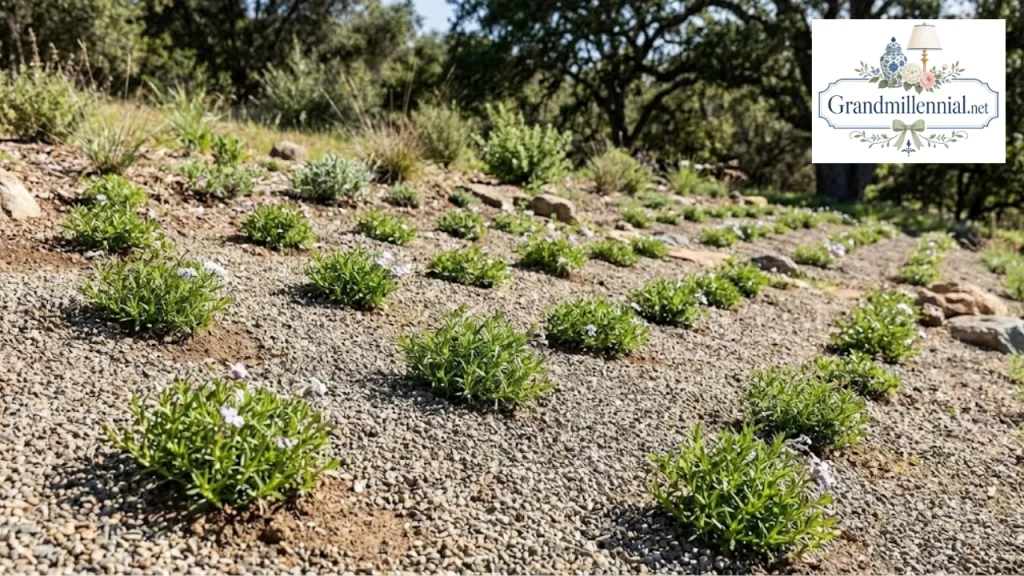
Space plants 12 to 18 inches apart. Closer spacing fills in faster; wider spacing costs less and fills in over two or three seasons.
Plant at the same depth as the pot. Firm the soil gently and water well.
Mulch lightly with gravel, not bark. A thin layer of fine gravel keeps the crown dry and discourages weeds; thick bark mulch holds moisture against the stems.
Care through the seasons.
Once established, creeping phlox needs very little, but a few well-timed jobs make a big difference.
| Season | What to do |
|---|---|
| Early spring | Tidy winter-browned bits; a light dusting of balanced fertiliser or compost if growth is weak |
| Bloom (early–mid spring) | Enjoy it; water if spring is unusually dry |
| Right after flowering | Shear back by about half to keep plants dense and encourage fresh growth |
| Summer | Water deeply during long dry spells in the first year; established plants tolerate drought |
| Autumn | Pull weeds from the mat; divide crowded clumps if needed |
| Winter | Leave foliage in place; avoid heavy pruning, which can expose stems to winter damage |
Watering: keep the soil lightly moist for the first growing season. After that, rainfall is usually enough except in drought. Overwatering does more harm than underwatering.
Feeding: go easy. Rich soil and high-nitrogen fertiliser push leafy growth at the expense of flowers.
Shearing: the single most useful job. Monticello recommends shearing plants back by about half after flowering to promote dense growth, and some plants reward you with a light rebloom.
Fixing common problems
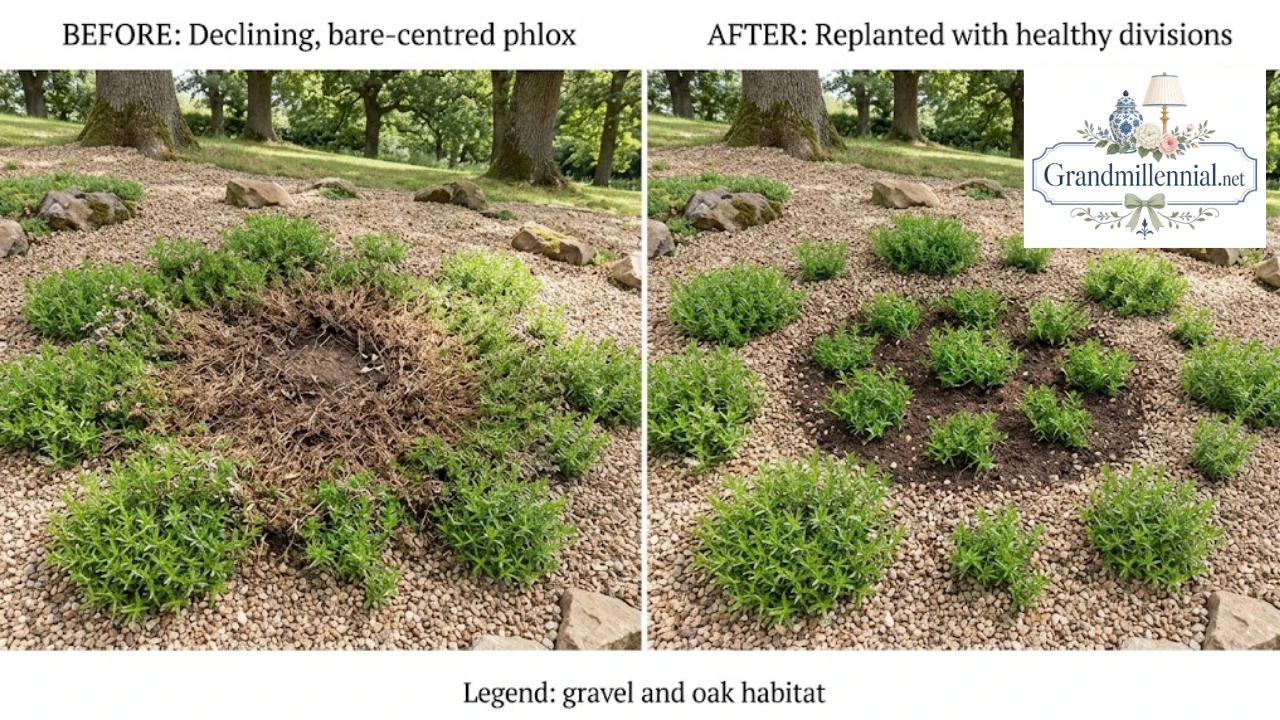
Brown or bare in the middle. Older mats often die back in the centre as stems become woody. Divide the plant, replant healthy outer sections, and top-dress the bare area with a little gritty compost.
Few or no flowers. The usual causes are too much shade, pruning at the wrong time (in autumn or early spring, removing flower buds), or too much fertiliser. Move it to a sunnier spot and shear only after bloom.
Grass and weeds growing through. Lift the edge of the mat gently and pull weeds from underneath. Once the plant knits together, weed pressure drops noticeably.
Yellowing, mushy stems. That points to root rot from wet soil. Improve drainage, cut out affected sections, and replant in grittier soil or a raised spot.
White, powdery leaves. Powdery mildew is less common on moss phlox than on tall garden phlox, but crowded plants in still air can get it. Thin the planting and avoid overhead watering in the evening.
Fine webbing and speckled leaves. Spider mites like hot, dry conditions. A strong spray of water on the foliage usually knocks them back.
Dividing and propagating
Dividing creeping phlox every few years keeps a planting vigorous and gives you free plants for new areas.
Division works best in spring after flowering or in early autumn. Dig up a clump, cut it into rooted sections with a sharp spade or knife, and replant at the same depth.
Softwood cuttings taken from new shoots in spring root readily in a gritty mix kept lightly moist, as Gardeners’ World recommends.
Layering happens on its own. Stems that touch the soil often root where they lie; snip them from the parent and move them where you need them.
Favourite colours and varieties
There are dozens of named forms of creeping phlox. A few widely available ones:
| Variety | Colour | Notes |
|---|---|---|
| ‘Emerald Blue’ | Soft lavender-blue | Classic, vigorous, bright green foliage |
| ‘Candy Stripe’ | White with pink stripes | Eye-catching bicolour |
| ‘Snowflake’ | White | Compact; lovely with darker colours |
| ‘Fort Hills’ | Rose-pink | Notched petals, reliable bloomer |
| ‘Red Wing’ | Deep pink-red | One of the boldest colours |
| ‘Purple Beauty’ | Violet-purple | Rich colour for rock gardens |
Mixing two or three colours makes a soft, tapestry effect on a slope. All shades tend to work together, so you can’t really go wrong.
Designing with creeping phlox
The flowering season is short, so plan for the other eleven months. Pair the mats with spring bulbs such as daffodils and grape hyacinths, then with summer-blooming plants like sedum, lavender, catmint and dwarf asters.
In a cottage-style garden, let creeping phlox spill along a brick path or soften the edge of steps. Its tidy evergreen mat provides structure long after the flowers fade.
It also works in containers and window boxes, trailing over the edge. Gardeners with dogs will appreciate that a tough ground cover can handle paws better than a pristine lawn; these tips for keeping your yard looking good with dogs pair well with a low, resilient planting.
Phlox is generally listed as non-toxic to cats and dogs, though it’s worth checking the ASPCA’s plant database for your specific plants.
If you like bringing the garden’s mood indoors, these home decor ideas that actually work include easy ways to echo spring florals inside.
Planting on slopes and walls
Slopes are where creeping phlox really earns its place. Mowing a steep bank is awkward and sometimes unsafe, and a dense evergreen mat looks good all year while helping hold the surface soil in place.
Plant in a staggered, zigzag pattern rather than straight rows, so rainwater can’t run in channels between plants. On steep banks, dig small, level pockets for each plant and add a little gritty soil so the roots aren’t sitting on a sheer face.
If the slope is very steep or freshly disturbed, pin biodegradable jute netting over the soil first and plant through slits cut in it. The netting holds things together until the roots take over, then rots away.
For walls, set plants along the top edge so their stems can cascade over the stone. In dry-stone walls you can also tuck small divisions into crevices packed with gritty soil; water them every few days until they root.

Growing it in containers
Moss phlox does well in pots, window boxes and the edges of large planters, where its stems soften hard rims and spill over the sides.
Use a container with drainage holes and a free-draining mix: about two parts potting compost to one part grit or perlite works well. Place it where it gets at least six hours of sun.
Container plants dry out faster than those in the ground, so check moisture weekly in summer. Water when the top inch feels dry, but never let the pot sit in a saucer of water.
Roots in pots are more exposed to cold than roots in the ground. In colder zones, move containers against a sheltered wall for winter, or sink the pot into a garden bed until spring.
What to expect from year one to year three
New plantings rarely look like the photos straight away. Knowing the usual timeline helps you avoid overwatering or overfeeding out of impatience.
| Stage | What you’ll typically see |
|---|---|
| Year one | Plants root in and spread modestly; flowering may be light |
| Year two | Mats widen noticeably, and gaps begin to close; a much fuller spring show |
| Year three | A continuous carpet at 12–18 inch spacing; time to start thinking about dividing older clumps in a few years |
If gaps remain after the second spring, fill them with divisions taken from the edges of established plants rather than buying more.
Winter care by climate
In cold regions (roughly zones 3–5), snow cover actually protects the mats. The bigger risk is winter burn: drying winds and bright sun on frozen ground can brown exposed foliage. A light covering of evergreen boughs after the ground freezes helps on windy sites.
In mild and warm regions (zones 6–9), winter is easy, but summer is the test. Missouri State University notes plants may go dormant in very hot conditions, so afternoon shade and deep, occasional watering during heat waves help them through.
Wherever you live, resist the urge to cut plants back in autumn. Clean up any winter-damaged growth in early spring instead, once new shoots appear.
8. FAQs
Does creeping phlox spread fast?
It spreads steadily rather than aggressively, typically reaching 1 to 2 feet wide. Plants set 12 inches apart usually knit together within a season or two.
Does creeping phlox come back every year?
Yes. It’s a hardy perennial, evergreen to semi-evergreen in most zones, and returns each spring.
Can creeping phlox grow in shade?
Phlox subulata tolerates light shade but flowers best in full sun. For shady spots, woodland creeping phlox (Phlox stolonifera) is the better choice.
When should I cut back creeping phlox?
Right after it finishes flowering in spring. Shearing by about half keeps it dense. Avoid heavy autumn pruning.
How far apart should I plant creeping phlox?
About 12 to 18 inches apart. Closer spacing fills an area faster.
Why is my creeping phlox brown in the middle?
Older plants often die back in the centre. Divide them, replant the healthy outer pieces, and refresh the soil.
Is creeping phlox deer resistant?
It’s often described as moderately deer resistant, but hungry deer may still browse it, especially in early spring.
Can creeping phlox grow in pots?
Yes. Use a container with drainage holes, a gritty potting mix, and full sun, and give pots some winter shelter in colder zones.
Is creeping phlox good for slopes?
Very. Its dense, evergreen mat suits sunny banks, especially when planted in a staggered pattern and watered well until established.