

Finding small piles of gritty specks on a windowsill is unsettling. If you suspect termite poop, you are probably wondering how worried to be and what to do first.
The short version is this. The pellets can be a real warning sign, but several other things look similar, and the pile alone does not prove an infestation.
This guide explains what the droppings are, how to tell them apart from look-alikes, and what to do before you clean. It draws on a University of Florida extension publication and three consumer pest pages, and it notes where they disagree.
Nothing here replaces an inspection. Termite work can involve licensed treatments, so use this as a way to ask better questions, not to diagnose your own home.
What it actually is
Pest control professionals call it frass. It is the dry waste that wood-eating insects push out of their tunnels, and it is what most people mean by the phrase.
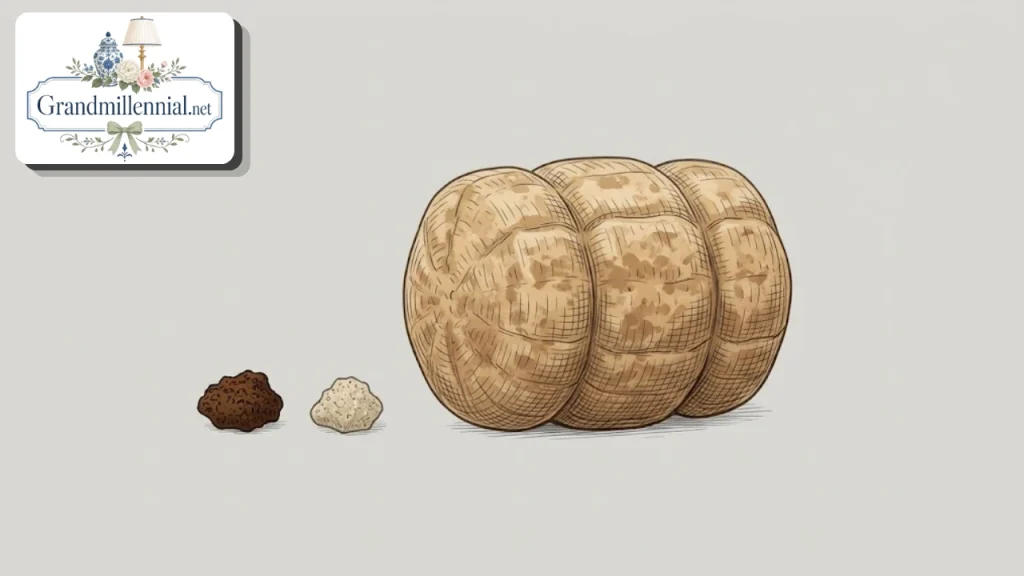
In drywood termites, frass takes the form of small, hard pellets. A University of Florida extension publication describes them as six-sided fecal pellets.
Termites do not leave sawdust in the usual sense. Terminix makes this point directly, saying the material people call termite dust is really excrement.
That detail matters, because it changes what you are looking for. You are searching for tiny, uniform pellets, not shavings or fibers.
Bob Vila notes that homeowners often see “piles of sawdust or pepper.” The shape under magnification is what settles it.
What it looks like
Size and shape are the most useful clues. Bob Vila describes drywood pellets as small ovals, roughly a millimeter long, with six concave sides.
DIY Pest Control gives a similar picture. It compares them to coarse coffee grounds or poppy seeds, and says they are about 1 millimeter, or roughly 1/32 of an inch, and uniform in size.
Terminix offers a memorable image. Under magnification, it says, the pellets look like tiny deflated footballs.
The University of Florida publication says they look like coarse sand grains or sawdust and resemble coffee grounds. It also notes that rolled between your fingers, they feel gritty, which is how many pest control operators identify them.
Color is where the sources disagree. The Florida publication says color ranges from light tan to almost black and does not match the wood being eaten.
Bob Vila, Terminix, and DIY Pest Control all say color depends on the wood the termites ate. That is a real conflict, so treat color as a weak clue and rely on shape and size.
A hand lens or a phone camera zoomed in helps a great deal. If you cannot see six small sides or ridges, you may be looking at something else.
Which termites leave visible droppings
Not every termite leaves a pile you can see. This is the single most useful fact for sorting out what you have.
Drywood termites leave dry pellets. Bob Vila says they push them out through small kick-out holes, which are never used as entrances.
Dampwood termites behave in a similar way. Bob Vila says they use their pellets to seal the galleries they tunnel through, and the Florida publication says their frass clumps on gallery walls.
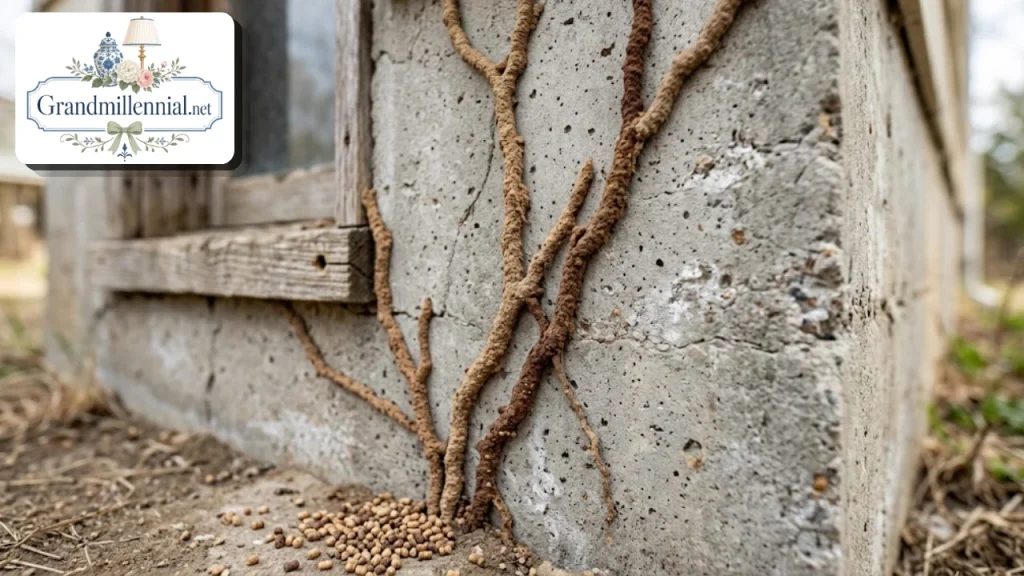
Subterranean termites typically do not leave visible droppings. Bob Vila explains that their frass is wet, a mix of saliva, dirt,t and debris, which they use to build mud tunnels.
So visible pellets point toward drywood or dampwood termites, while mud tubes point toward subterranean ones. The treatments for each can differ, which is why species identification matters.
The Florida publication says experts identify species from swarmers preserved in rubbing alcohol. If you find winged insects or loose wings, keep a few for the inspector.
Where you are most likely to find it
Pellets of termite poop get pushed out of tiny holes and then fall. They tend to collect on the surfaces below the opening.
The Florida publication says they collect on horizontal surfaces below the holes, often in mounds. A short drop forms neat piles, while a longer drop scatters them.
Terminix lists window and door sills and porches as common spots. It adds that if termites are inside walls or ceilings, the frass often falls onto floors and carpets and may go unnoticed.
Bob Vila adds wooden porches, floorboard gaps, carpet holes, wall corners, attics,cs and crawl spaces. These are all quiet places where small piles can sit for a long time.
The Florida publication also notes that drywood termites commonly infest upper areas and attics. Check there if you can do so safely.
Look near trim, window frames, baseboards, and exposed beams. A flashlight held at a low angle makes tiny piles easier to see.
Look-alikes worth ruling out
Plenty of household debris resembles frass at a glance. Terminix notes that carpenter ants and carpenter bees also produce frass, so seeing frass does not automatically mean termites.
The DIY Pest Control page offers a helpful comparison, condensed below. Treat it as a guide, not a lab result.
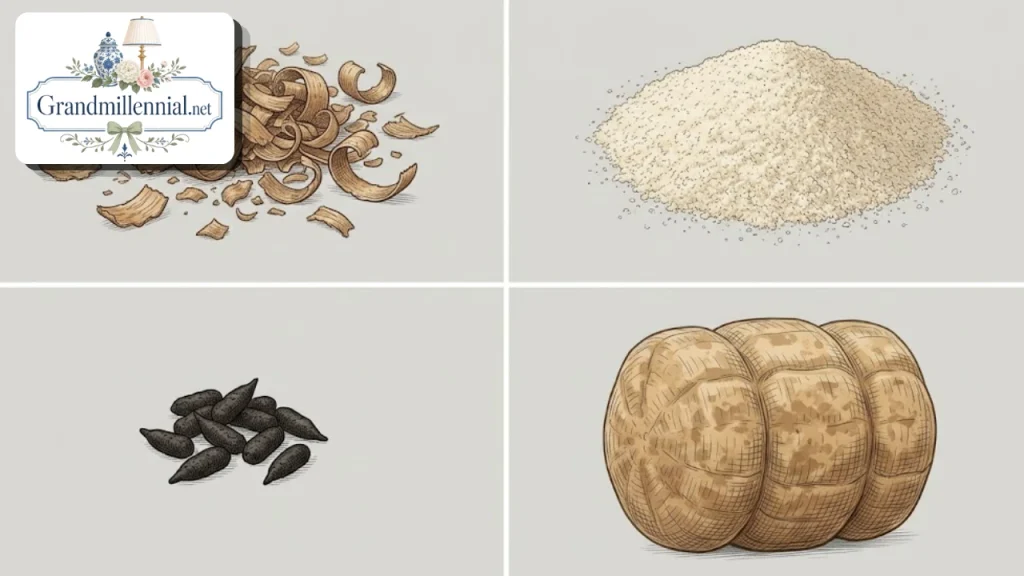
| Look-alike | What it looks like | Quick clue |
|---|---|---|
| Sawdust | Irregular shavings and fibers | Found around work areas, no uniform shape |
| Carpenter ant frass | Fibrous shavings mixed with insect parts | Often below galleries in damp wood |
| Powderpost beetle frass | Flour-like, pale cream powder | Near tiny round exit holes |
| Mouse droppings | 3 to 6 mm, tapered with pointed ends, black | Larger than pellets and pointed |
| Drywood termite frass | About 1 mm, six-sided, uniform | Piles below pinhole kick-out holes |
The same page says termite frass crumbles under a fingernail and does not smell of urine. It gives no source for this, so use it lightly.
If the debris is fibrous, mixed with insect parts, or much larger than a grain of sand, termites are less likely. A pest professional can sort the rest.
What you found, and what it might mean
Use this quick guide to match your clue to the likely next step. It is a starting point, not a diagnosis.
| What you found | What it may suggest | Sensible next step |
|---|---|---|
| Uniform six-sided pellets under a pinhole | Drywood or dampwood termites | Photograph, bag a sample, book an inspection |
| Mud tubes on a foundation or wall | Subterranean termites | Book an inspection, and avoid breaking the tubes |
| Fibrous shavings with insect parts | Carpenter ants or similar | Ask a pest professional to identify it |
| Flour-like powder near round exit holes | Powderpost beetles | Ask a pest professional to identify it |
| Black pointed pellets, 3 to 6 mm | Mice | Treat as a rodent issue |
| Winged insects or loose wings | Swarmers, possibly a colony nearby | Keep a few wings or insects for the inspector |
If you see termite poop together with wings, blistered paint, or hollow-sounding wood, treat the combination as more serious than any single sign. Several clues pointing the same way are what inspectors look for.
A simple at-home check
You can learn a lot in ten minutes without disturbing much. Think of this as gathering evidence for an inspector.
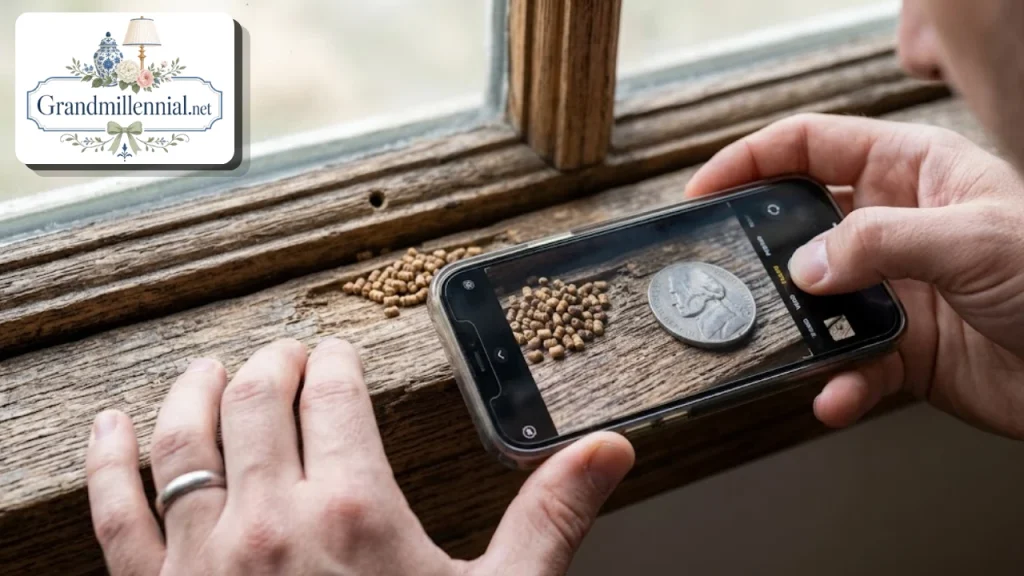
Photograph the pile. Place a coin beside it for scale, as DIY Pest Control suggests, before you touch anything.
Look closely. Use a magnifying glass or your phone’s zoom to check for six small sides and uniform size.
Look up. Find the source. Pinhole-sized kick-out holes, less than 2 mm across according to Terminix, often sit near the pile.
Tap the wood. The Florida publication says tapping with a screwdriver may produce a hollow or papery sound.
Search nearby. DIY Pest Control suggests checking within about 10 feet for kick-out holes, mud tubes,s and discarded wings.
Take a sample. Put a small amount in a sealed bag or container for the inspector.
Write down the date and the location of every pile. A simple log makes the inspection faster and the conversation clearer.
Other signs to look for
The pile is only one clue. Several other signs often show up together, and the more you find, the more reason to call a professional.
Discarded wings are an important one. Terminix says swarmers establish new colonies and are usually seen in summer and fall, and the Florida publication says wings near windowsills indicate an existing colony.
Blistered or warped surfaces can also be a sign. The Florida publication says surface blistering or warping suggests an advanced infestation, and blistered paint can indicate gallery excavation.
A hollow-sounding wall or beam is another hint. Terminix mentions this as well.
Mud tubes along a foundation or wall point to subterranean termites instead. They are a different problem and need a different plan.
The Florida publication warns that multiple colonies can occur in one structure. Inspect the whole building, not just the room with the pile.
Old or new? What droppings can and can’t tell you
Many people ask whether a pile of termite poop means the termites are still there. The honest answer is that it is hard to know.
Bob Vila says droppings do not wear away, which makes it hard to tell how old a pile is. It also says finding droppings without termites often means they have moved to another area, though it does not say that is always the case.
DIY Pest Control claims that fresh frass within a week indicates an active infestation. It offers no source, so treat that as an unproven rule of thumb.
A practical approach is to clean the spot, photograph it, and check again after a few days. New pellets in the same place suggest ongoing activity, though an inspector should confirm it.
The Florida publication does not say how to tell active infestations from old ones. A professional inspection is the reliable way to find out.
Pellets versus mud tubes: two different clues
People often search for droppings when the real clue is somewhere else. Subterranean termites, the other major group, leave mud instead.
Bob Vila explains that their wet frass is a mix of saliva, dirt,rt and debris, used to build mud tunnels. You may see those tunnels climbing a foundation wall or running along a beam.
Drywood termites live entirely inside the wood. They have no need to touch the soil, so their only outward sign may be a small pile of termite poop under a kick-out hole.
That difference explains why two neighbors can have very different problems. One finds mud tubes in the garage, and the other finds pellets on an upstairs sill.
If you find mud tubes, do not scrape them away. Photograph them and show them to the inspector.
Is it harmful to touch or breathe?
Evidence here is thin, so be careful. DIY Pest Control says the pellets are generally harmless on contact.
It adds that dust from disturbed pellets may irritate the airways, and sensitive people may react. It suggests gloves and a mask for large piles.
That page sells pest products, and the health claims are not independently sourced. Still, simple precautions cost little.
Wear gloves and a dust mask while handling large amounts, and wash your hands afterward. Keep children and pets away from the area while it is being checked.
If anyone in the home has asthma, allergies, or a lung condition, ask a doctor how to handle dust. This guide is not medical advice.
What to do before you clean
Your first instinct may be to sweep it all away. Pause for a moment, because the debris is useful evidence.
Terminix advises against sweeping or vacuuming suspected frass, since a termite professional may need to see it during an inspection. That is sensible advice in any case.
Photograph the pile and bag a small sample. Then call for an inspection before you clean the area thoroughly.
Do not treat the wood with random products. Terminix says drywood termites are hard to detect and assess, and it advises against do-it-yourself treatment.
Bob Vila says many homeowner insurance policies do not cover termite damage, so early action matters. Check your own policy and any warranty you have.
How to clean it up
Once an inspector has seen the pile, you can clean the area. A careful method keeps dust down.
DIY Pest Control recommends avoiding a standard vacuum filter and using a HEPA filter instead. If you vacuum, seal the debris in a plastic bag, then wipe the area with a damp cloth.
Wear gloves and a mask, and open a window if you can. Do not dry sweep, which sends fine particles into the air.
Wipe the surface, let it dry, and check the spot again over the following days. If new pellets appear, tell the inspector.
Remember that cleaning removes the pile, not the termites. The source still needs to be found and dealt with.
Getting an inspection
Bob Vila advises contacting a pest control company first. Inspectors typically examine the home, identify the species, and propose a plan.
This guide does not list or recommend specific companies, because the best choice depends on where you live. Use these steps to find a reliable one.
Check the license. Pest control is regulated in most places, so confirm the company and the technician are licensed with your state agency.
Ask for insurance and references. Call a couple of recent customers about the process and the results.
Get more than one opinion. Two or three inspections help you compare findings and plans.
Ask about the species. Make sure they can tell you which termite it is and why.
Ask for a written report. It should say what was found, where, and what they propose.
Be wary of pressure. Treat urgent, high-pressure offers carefully, particularly if you are told to sign immediately.
If the company that inspects is also the one selling the treatment, ask how they decide what you need. A second opinion can help.
What treatment can involve
Treatment depends on the termite type, the size of the problem,m and the structure. The Florida publication outlines the main approaches for drywood termites.
For small infestations, options include replacing the wood, injecting nonrepellent termiticides, and using dusts, sprays,ys or foams. The publication also lists heat, cold, electrocution, and microwaves.
For large infestations, it describes whole-structure fumigation or whole-structure heat. Fumigation uses sulfuryl fluoride and usually takes 6 to 18 hours.
Heat treatment raises the structure to about 140 to 150 degrees Fahrenheit, according to the publication, and about 120 degrees is sufficient to kill termites. It requires proper equipment.
Fumigation is a specialized process that, in the publication’s words, requires expert attention. These are not do-it-yourself jobs.
DIY Pest Control lists products for different termites, such as borate treatments and foams. It sells those products, so use its table only as a list of names to ask about.
For subterranean termites, the plan is different, often involving barriers or baits around the foundation. That is another reason to get the species identified.
Questions to ask the inspector
A good inspection is a conversation. These questions help you understand what the professional found, and they show how carefully the company works.
Which termite is it, and how did you identify it?
Where exactly did you find evidence, and can you show me?
Is this an active infestation or old damage, and how can you tell?
Are other parts of the building at risk?
What options exist for this species, and what are the trade-offs?
What does the quote include, and what would be extra?
What follow-up or warranty comes with the work?
Notice whether the answers are specific. When a company can explain the evidence behind a recommendation, the chance of unnecessary treatment drops.
Ask them to explain any unfamiliar terms, such as nonrepellent products or whole-structure treatment. A professional should be happy to do so.
What it costs
Prices vary a lot by region and by the size of the problem, and the sources give few firm numbers. Be wary of any article that quotes exact treatment totals.
Bob Vila says termite inspections cost 50 to 300 dollars, depending on the situation, location, and available specialists. It says treatment costs vary widely and gives no figures.
It also notes possible extra costs for structural repairs and re-infestation. Those can add up if damage is found.
Ask every company for a written, itemized quote. It should say what is included, how long the work takes, and what guarantee or follow-up is offered.
Compare scope as well as price. A cheaper quote that covers only part of the structure may not solve the problem.
Keep records, and check your paperwork
Records protect you later. Keep photos, the inspection report, quotes, receipts,s and any warranty in one folder.
Bob Vila notes that many homeowner policies do not cover termite damage. Read yours, and ask the insurer or your agent what applies.
If you are buying or selling a home, a termite inspection report may matter to the other side. Ask a local real estate professional what is customary where you live.
Seasonal timing is worth knowing, too. Terminix says swarmers are usually seen in summer and fall, so wings on a sill can appear around then.
Prevention
You cannot make a home termite-proof, but you can make it less inviting. The Florida publication offers several practical steps for drywood termites.
It recommends screening vents with 20-mesh screen, sealing cracks with caulk, and painting wood. It also mentions using pressure-treated wood and applying borates or silica gel.
For moisture, DIY Pest Control suggests fixing leaks, clearing clogged gutters,rs and drying wet crawl spaces. Damp wood attracts several wood-feeding pests.
Keep firewood and lumber away from the house. Store it off the ground and away from walls.
Inspect the home each year, especially attics, crawl spaces, and wood near the foundation. Early spotting limits repairs.
Once the repairs are done, the fun part begins. Our renovation tips and home decor ideas can help you refresh the space.
Common mistakes to avoid
A few habits make a termite scare worse. Watch for these.
- Sweeping or vacuuming the pile before it is photographed or inspected.
- Assuming any sawdust-like debris means termites, or that it never does.
- Trying a store-bought spray and calling it done.
- Ignoring moisture problems that attract pests.
- Waiting months because the pile “looks small”.
- Skipping a second opinion on a large treatment quote.
Final thoughts
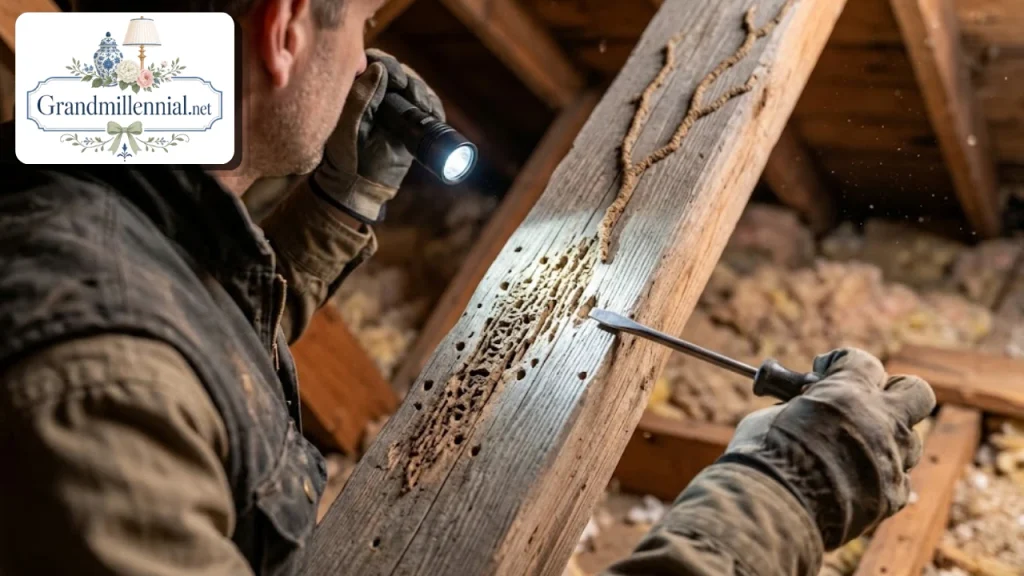
A small pile of gritty pellets is a clue, not a verdict. Look closely, photograph it, and gather what you can without disturbing it.
When you find what looks like termite poop, do not panic and do not rush into treatment. Get an inspection from a licensed professional who can name the species and explain the plan.
Then fix the moisture and the entry points. That is what keeps the problem from returning.
FAQs:
What does it look like?
Drywood termite droppings are tiny, hard, six-sided pellets about 1 mm long. They resemble coarse sawdust or coffee grounds and feel gritty between the fingers.
Does the color tell me anything?
Sources disagree. The University of Florida says color does not match the wood, while three consumer sites say it does. Rely on shape and size instead.
Do all termites leave droppings?
No. Drywood and dampwood termites leave pellets. Subterranean termites typically do not leave visible droppings and build mud tubes instead.
Is a pile of sawdust the same thing?
Not necessarily. Termites do not leave true sawdust, but carpenter ants and bees leave similar debris. Look for uniform six-sided pellets.
Should I vacuum it up?
Not before an inspection. Terminix advises leaving suspected frass for the inspector. Later, use a HEPA vacuum and seal the debris in a bag.
Is it dangerous to touch?
It is generally considered harmless on contact, but disturbed dust may irritate the airways. Wear gloves and a mask for large piles.
How much does an inspection cost?
Bob Vila reports 50 to 300 dollars, depending on the situation and location. Treatment costs vary widely and need a written quote.
Can I treat it myself?
Terminix advises against do-it-yourself treatment because drywood termites are hard to detect and assess. Fumigation and heat treatments need experts.