

Quick answer: Walter’s viburnum (Viburnum obovatum) is a native southeastern shrub or small tree with glossy dark green leaves, clusters of small white flowers, and fruit that ripens from red to black.
It grows in full sun to partial shade, handles many soils, and works well as a hedge, scree,n or specimen. Published sizes range from about 6 to 25 feet, so choose your cultivar with care.
Some plants earn a place in the garden by being showy. Others earn it by being useful, tidy and tough. Walter’s viburnum manages all three.
It fills a hedge, feeds bees in late winter, hosts a butterfly and gives birds a place to nest. It also forgives the kind of neglect that kills fussier shrubs.
The catch is that the sources describe it differently. One extension page says up to 20 feet, another says 8 to 25, and a third says 6 to 15. Those gaps matter when you plant a hedge six feet from a fence.
This guide pulls the sources together and explains where they disagree. The facts come from UF/IFAS Gardening Solutions, the NC State Extension Plant Toolbox, the UF/IFAS Bee Plants database, Valdosta State Universi,ty and a Florida newspaper garden column.
I have not tested every cultivar myself, so I flag anything that comes from a single source. Growing conditions vary, so check with your local extension office for advice that fits your yard.
What Walter’s viburnum is
The plant goes by Viburnum obovatum. The species name refers to its obovate leaves, which are broadest toward the tip.
It is native to the southeastern United States. UF/IFAS describes it as a native Florida plant, and Valdosta State lists the same southeastern range.
It is evergreen in warm climates and semi-evergreen in cooler ones. Valdosta State calls it an evergreen shrub to small tree.
The leaves are simple, oppos,ite and glossy dark green. NC State says they turn purple to lavender in fall, which adds a bit of color to an otherwise green plant.
Bark is grey to silver, and younger twigs carry a reddish fuzz, according to Valdosta State. That detail helps you identify it in winter.
Gardeners also call it small-leaf viburnum, a name that fits the compact foliage. Many nurseries just sell it as Walter’s viburnum.
How big does it get?
This is the question that matters most, and the sources give different answers. I would rather show you the range than pick one number.
| Source | Reported height | Reported width |
|---|---|---|
| UF/IFAS Gardening Solutions | Up to 20 feet | Not stated |
| NC State Extension | 8 to 25 feet | 6 to 10 feet |
| Valdosta State University | 6 to 15 feet | Not stated |
| Citrus County Chronicle column | Up to 30 feet in the wild | Not stated |
The spread comes from several things. Wild plants grow larger than garden plants, a pruned hedge stays shorter than an unpruned tree, and growing conditions change everything.
The Chronicle column also notes that the species grows slowly and lives about 50 years. That slow pace is good news if you want a hedge you can shape.
Water has a big effect. The column says unirrigated plants developed deep roots but stayed small, while irrigated, fertilized plants reached full size.
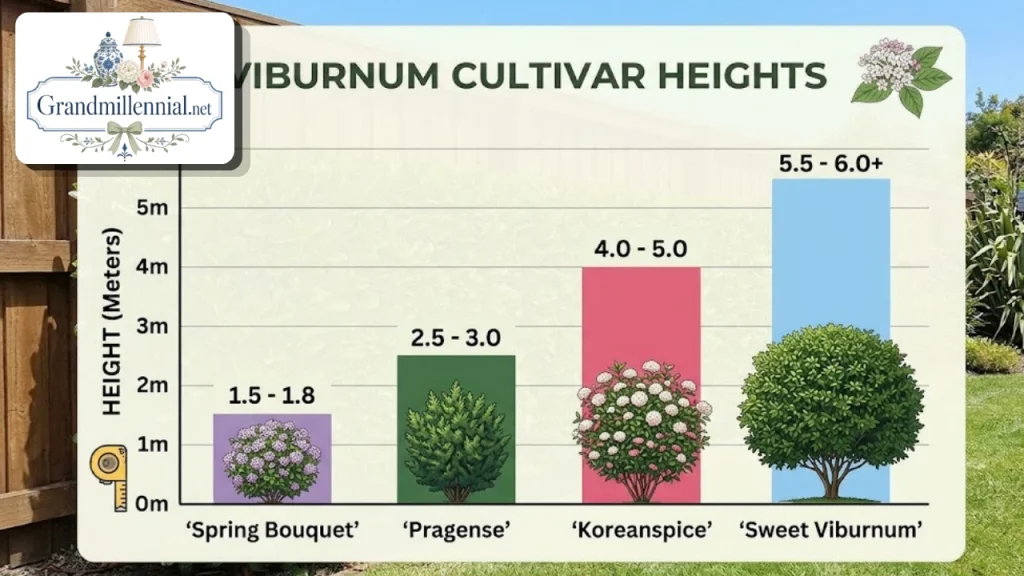
So plan on a large shrub or small tree if you leave it alone, and plan on a smaller, denser plant if you prune it. If space is tight, buy a compact cultivar instead of fighting a full-size plant.
Hardiness and where it grows
Zone information also varies. UF/IFAS says Walter’s viburnum is evergreen in USDA zones 7 through 10.
NC State lists zones 7a through 10b and says the native range sits in zones 8 and 9. Valdosta State and the Chronicle both give zones 6 through 9.
The overlap is zones 7 to 9. If you garden in zone 6, treat it as a trial plant, and put it in a sheltered spot.
In the colder end of the range, expect some leaf drop in hard winters. The plant may look scruffier in spring until new growth fills in.
If you garden near the coast, read the salt notes carefully. UF/IFAS says it is not salt tolerant, while NC State calls it slightly salt tolerant and lists salt resistance.
I would trust the more cautious statement. Keep it out of direct salt spray unless you have tested it in your own yard.
Light and soil
Walter’s viburnum grows in full sun to partial shade. NC State adds that it appreciates some afternoon shade.
In full, sun it flowers more heavily and stays denser. In ,shade it grows more open and flowers less.
The plant tolerates clay,, loam and sand, according to NC State, and it handles acid to neutral soil. Good drainage helps.
The Chronicle column says flowering is best in moist to wet, acidic soil rich in organic matter. It also advises amending dry sandy soil before planting.
That fits NC State’s suggestion of pond margins, bo,g edges and rain gardens as places the plant can grow. It is flexible about moisture, which makes it useful in awkward spots.
UF/IFAS calls it drought tolerant once established. The Chronicle column agrees that it survives dry conditions but stays small without water.
The practical reading is that it will live through drought and thrive with regular water. Give it a weekly soak in dry spells during the first years.
Flowers, fruit and fall color
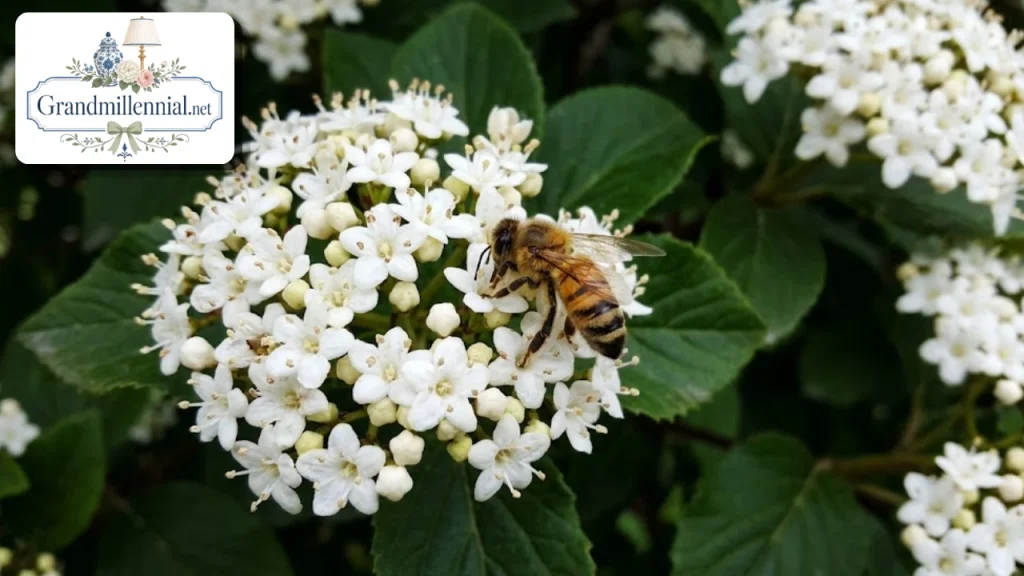
The flowers are the main show. They are smal,l, white and star-shaped, in dome-shaped clusters about 1.75 to 2.25 inches across, according to NC State.
Valdosta State describes them as creamy white,, fragrant and borne in cymes. The UF/IFAS Bee Plants database lists a long window, from December through April.
Most gardeners see peak bloom in early spring. Warm winters can bring flowers earlier.
Fruit follows in summer and fall. The berries are small drupes about a quarter inch across, ripening from red to shiny black.
Sources describe the fruit color differently. NC State says red to s;iny black, another page of NC State’s description says blue-black, and UF/IFAS does not give a color.
That mismatch is not a real contradiction. Fruit passes through stages, and it can look different on different plants or at different times.
Leaves turn purple to lavender in fall, according to NC State. The change is subtle compared with a maple, but it is a nice touch.
Some named cultivars flower twice. The Chronicle column says cultivars such as ‘Densa’ bloom in spring and fall.
Wildlife and pollinators
This is where the plant earns real garden value. Winter and spring blossoms matter to insects that wake up before most plants flower.
NC State calls it an early food source for bees. The UF/IFAS Bee Plants entry names honey bees as the bee it highlights and lists the long bloom window.
UF/IFAS Gardening Solutions says the flowers attract butterflies and the plant is a host for spring azure larvae (Celastrina ladon). That means caterpillars can feed on its leaves.
Birds use it too. UF/IFAS says fall fruit attracts birds and other wildlife, and that branches provide nesting sites for songbirds such as cardinals.
The Chronicle column adds cover for lizards, songbirds and insects. A dense shrub gives shelter that a bare fence cannot.
NC State lists the plant as friendly to birds, bees, bats and moths. I could not find details on the bat and moth entries, so I treat that as a general tag.
If you have pets, our guide to keeping your yard looking good with dogs covers ideas for planting around active animals. I would also check any plant against a pet-safety list before planting.
Walter’s viburnum as a hedge or screen
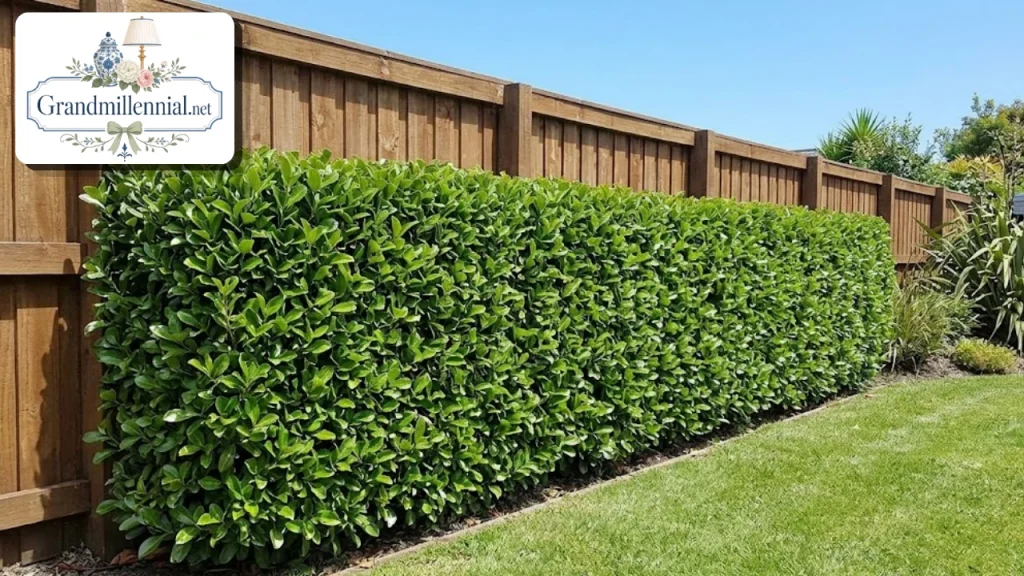
UF/IFAS calls compact forms a Florida-Friendly alternative to boxwood hedges. That recommendation is worth taking seriously, because boxwood has problems in many warm regions.
NC State lists hedges, screens and privacy plantings among its uses, along with foundation plantings and woodland sites. Valdosta State lists hedges and topiary.
The Chronicle column offers the best practical number. For a screen, it advises spacing plants 5 feet apart, and it reports that three ‘Densa’ plants at that spacing merged into a dense screen after eight years.
Eight years is a long time to wait, which fits the slow growth the column describes. If you need privacy faster, plant larger specimens or accept a thinner screen for a while.
A few rules help a hedge succeed:
- Choose one cultivar, so every plant grows at the same rate
- Space plants according to the mature width, not the pot size
- Water weekly in the first two years
- Mulch to hold moisture and cool the roots
- Prune lightly and often rather than hard and rarely
UF/IFAS also lists street-side plantings, mass plantings and spots under power lines as suitable uses. Compact cultivars are the better choice there.
Use the larger forms where you have room. A full-size plant makes a lovely small tree for a patio or corner.
Cultivars compared
Several named forms exist, and they differ mainly in size. The table lists what the sources report.
| Cultivar | Notes from the sources |
|---|---|
| ‘Densa’ | Dwarf form; can reach about 8 feet tall and 5 to 6 feet wide, and can be pruned to stay near 5 feet |
| ‘Mrs. Schiller’s Delight’ | Dwarf form; stays 3 to 5 feet tall without pruning, per the Chronicle |
| ‘Reifler’s Dwarf’ | 4 to 5 feet tall, per NC State |
| ‘Raulston Hardy’ | Dwarf with tight, hedge-friendly growth, per NC State |
| ‘Christmas Snow’ | Compact with small leaves, per NC State |
| ‘Whorled Class’ | Leaves in threes at each node, per NC State |
| ‘Withlacoochee’ | Compact form listed by UF/IFAS |
The Chronicle column notes that the dwarf forms often grow larger than their labels suggest if they get water and fertilizer. Treat the stated sizes as guides rather than limits.
Availability differs. UF/IFAS says compact cultivars are available through Florida native nurseries, so you may need to order outside Florida.
If you want a hedge, ‘Densa’ or ‘Raulston Hardy’ are logical starting points. For a low foundation shrub, ‘Mrs. Schiller’s Delight’ or ‘Reifler’s Dwarf’ fit better.
Planting step by step
Fall is a good planting season in mild climate, because roots grow while the air cools. Spring works too if you can water.
Choose a spot with full sun to partial shade and decent drainage.
Dig a hole as deep as the root ball and two to three times as wide.
Loosen circling roots on the root ball gently.
Set the plant so the top of the root ball sits level with the soil.
Backfill with the native soil, mixed with compost if the soil is very sandy.
Water deeply and add a 2- to 3-inch layer of mulch, keeping it off the trunk.
Steps two through six are standard planting practice, not specific to this species. Check with your local extension office for timing in your area.
Space single specimens according to the width you want. For hedges, follow the 5-foot spacing from the Chronicle column, or go a little closer for a faster screen.
If you are fitting the shrub into a larger refresh, our collection of home decor ideas that actually work has outdoor styling ideas to pair with it.
Watering and feeding
Water is the main lever you control. Established plants survive dry spells, but they stay small and open without help.
The Chronicle column recommends regular weekly irrigation. It specifically names April and May as dry months when growth stalled in one garden.
A deep weekly soak beats frequent light sprinkling. It pushes roots down, which makes the plant more resilient.
Feeding is optional for most gardens. The Chronicle column credits fertilizer with helping ‘Mrs. Schiller’s Delight’ reach mature size in full sun.
If you feed, use a slow-release fertilizer in spring and follow the label. Too much nitrogen can cause soft growth that attracts sap-feeding pests.
Mulch matters too. A few inches keeps roots cool, reduces weeds, and holds moisture.
Pruning and root suckers
Pruning keeps the plant tidy and controls size. The Chronicle column says ‘Densa’ can be pruned to stay near 5 feet.
UF/IFAS says it may need regular pruning to maintain a strong structure. It also advises removing root suckers each year to prevent thickets.
Suckers are shoots that rise from the roots. Left alone, they spread the plant outward and make a dense clump.
Cut suckers at the ground when they appear. That keeps a hedge in line and a tree-form plant clean.
For timing, prune right after flowering so you do not remove next year’s buds. Light shaping can happen any time during the growing season.
For a small tree form, choose a few strong trunks and remove the rest. Do it gradually over a few seasons.
Always use clean, sharp tools. Remove dead or crossing branches first, then shape.
Pests and diseases
Walter’s viburnum is fairly trouble-free, but it has some predictable pests. UF/IFAS lists viburnum aphids, scale insects, thrips, mites, whiteflies, bagworm,s and sooty mold.
NC State names purple mite as the main pest. A blast of water removes many insects, and horticultural oil treats scale, according to UF/IFAS.
For diseases, UF/IFAS lists leaf spot and downy and powdery mildew. It says removing infected leaves helps control leaf spot, and mildews are rarely fatal.
Gooairflowow and sun reduce most of these problems. Avoid overhead watering late in the day.
NC State lists deer and rabbit resistance, which is useful in many neighborhoods. No plant is fullydeer-prooff, so protect young plants anyway.
If a problem persists, take a sample to your county extension office. They can identify it and suggest treatments that are legal in your area.
Design ideas and companion plants
Walter’s viburnum pairs well with other native plants. Think of it as the backbone of a mixed border.
Plant it behind perennials that bloom later in the year. The glossy green leaves make a good backdrop for colorful flowers.
Combine it with native grasses for a relaxed look. The fine texture of the grass contrasts with the shrub’s dense leaves.
For pollinators, mix it with plants that flower at different times. The viburnum feeds insects early, and summer and fall bloomers keep them around.
In a formal garden, a clipped row works much like boxwood. Space plants evenly and keep the top slightly narrower than the base so light reaches the lower leaves.
As a foundation shrub, choose a dwarf cultivar. Keep it a foot or two off the wall for air movement.
Near a patio, a single full-size plant trained as a small tree gives shade and spring flowers. The fragrance is a bonus.
Is Walter’s viburnum right for your yard?
Run through a short checklist before you buy. It takes two minutes and saves a lot of regret.
First, check your zone. The overlap in the sources is zones 7 to 9, so you are on safe ground there, and zones 6 and 10 need a bit more care.
Second, check your space. A full-size plant can reach well over 10 feet, so give it room or choose a dwarf form.
Third, think about water. Walter’s viburnum survives dry spells but stays small, so it suits you best if you can water weekly in the early years.
Fourth, think about salt. If you live right on the coast, test the plant in a sheltered spot before you commit to a whole hedge.
Fifth, think about maintenance. You will need to remove root suckers each year and prune after flowering, but the work is light.
If you answered yes to most of those, the plant should do well. If you answered no to several, a different shrub may fit your yard better.
Remember the wildlife benefit as well. A shrub that blooms in winter and fruits in fall gives you something to watch across most of the year.
A few simple habits make the first season easier. Plant at the right depth, mulch well, water on a schedule, and mark your calendar for a post-bloom prune.
If you plan to add other native shrubs, group plants with similar water needs together. That makes irrigation simpler and keeps every plant healthier.
Finally, buy from a reputable nursery and check the tag. Cultivar names matter here, because ‘Densa’ and an unnamed seedling can end up very different sizes.
Common mistakes
The first is planting a full-size form where a dwarf belongs. Check the cultivar name and the mature size before you buy.
The second is ignoring water in the first years. The Chronicle column shows plants staying small without irrigation.
The third is planting in salt spray. UF/IFAS says it is not salt tolerant.
The fourth is skipping sucker removal. A hedge turns into a thicket if you let it.
The fifth is spacing too close for the plant’s mature width. Overcrowded shrubs get mildew and thin out at the base.
The sixth is expecting instant screening. The sources describe slow growth, so plan for patience or buy larger plants.
FAQs:
Is Walter’s viburnum evergreen?
Yes, in warm climates. UF/IFAS says it is evergreen in USDA zones 7 through 10. In colder parts of its rang,e it may drop some leaves in a hard winter.
How big does Walter’s viburnum get?
Sources vary. UF/IFAS says up to 20 feet, NC State says 8 to 25 feet tall and 6 to 10 feet wide, and Valdosta State says 6 to 15 feet. Dwarf cultivars stay much smaller.
Is Walter’s viburnum a good hedge?
Yes. UF/IFAS describes compact forms as a Florida-Friendly alternative to boxwood hedges. Space plants about 5 feet apart for a screen, according to a Florida garden column.
Does Walter’s viburnum like sun or shade?
It grows in full sun to partial shade. NC State says it appreciates some afternoon shade, and flowering is heaviest in sun.
Is Walter’s viburnum good for pollinators?
Yes. The UF/IFAS Bee Plants entry lists bloom from December through April and names honey bees. UF/IFAS Gardening Solutions says flowers attract butterflies and the plant hosts spring azure larvae.
Is Walter’s viburnum deer resistant?
NC State lists deer and rabbit resistance. No plant ideer-proofof, so protect young plants.
How do I prune Walter’s viburnum?
Prune after flowering, remove root suckers each year, and shape lightly. UF/IFAS says it may need regular pruning to keep a strong structure.
Is Walter’s viburnum salt tolerant?
Sources disagree. UF/IFAS says it is not salt tolerant, while NC State calls it slightly salt tolerant. Keep it away from direct salt spray to be safe.