

Cut one open for the first time, and you’ll probably stop and stare. Under a dusky skin is flesh the colour of blackberries, sometimes marbled with cream, sometimes violet right through.
Purple potatoes have moved from farmers’ markets and specialty shops into mainstream supermarkets, and for good reason. They’re delicious, they make any plate look special, and their colour comes from the same family of antioxidants found in blueberries.
This guide explains what they are, the main varieties, how they taste, what the research actually says about their nutrition, how to cook them so they stay vividly purple, and how to grow your own.
Quick answer: Purple potatoes are ordinary potatoes (Solanum tuberosum) with purple skin and often purple flesh, coloured by anthocyanin antioxidants. They taste earthy and slightly nutty, and many varieties are waxy. Small studies suggest they may have a gentler effect on blood sugar than white potatoes. Roast or steam them, and add a little acid to keep the colour bright.
What purple potatoes are
Purple potatoes are true potatoes, the same species as russets and Yukon Golds. University of Illinois Extension notes that purple and blue potatoes originate from South America, the potato’s ancestral home in the Andes. Many aren’t new at all; some have been grown for generations, while others are modern varieties bred for colour, flavour and yield.
Their colour comes from anthocyanins, natural pigments in the flavonoid family. Healthline notes these are the same type of antioxidant found in blueberries and blackberries.
Not every purple potato is purple all the way through. Illinois Extension groups them by flesh colour:
| Skin and flesh | Examples (Illinois Extension) |
|---|---|
| Purple skin, purple flesh | ‘Magic Molly’, ‘All Blue’, ‘Blue Tomcat’, ‘Purple Majesty’, ‘Purple Pelisse’, ‘Adirondack Blue’ |
| Purple skin, yellow flesh | ‘Brigus’, ‘Peter Wilcox’ |
| Purple skin, white flesh | ‘Michigan Purple’, ‘Purple Viking’ |
If you’re after the most dramatic colour (and the most anthocyanins), choose varieties with purple flesh.
Not the same as purple sweet potatoes
It’s easy to mix them up, but purple potatoes and purple sweet potatoes are different plants.
| Purple potatoes | Purple sweet potatoes | Ube (purple yam) | |
|---|---|---|---|
| Plant | Solanum tuberosum | Ipomoea batatas | Dioscorea alata |
| Family | Nightshade | Morning glory | Yam |
| Taste | Earthy, savoury | Sweet, often dense | Sweet, nutty, vanilla-like |
| Typical uses | Roasting, mash, salads, chips | Baking, roasting, mash | Desserts, especially in Filipino cooking |
Research on purple sweet potatoes, such as Japan’s ‘Ayamurasaki’, is often quoted alongside purple potatoes, but the plants and their nutrients differ. This guide is about true potatoes.
A short history: from the Andes to modern gardens
Potatoes were first domesticated in the Andes of South America thousands of years ago, and farmers there have long grown a huge diversity of shapes and colours, including purple, red, yellow and speckled types. Coloured potatoes were never a novelty in their homeland; they were simply part of everyday food.
In Europe, heirlooms such as the French Vitelotte, described by PotatoPro as an ancient Peruvian heirloom, kept dark-fleshed potatoes alive in specialist markets and chefs’ kitchens. In recent decades, breeding programmes at universities such as Colorado State and Cornell have developed newer purple potatoes with better yields, disease resistance and more consistent colour, including Purple Majesty and Adirondack Blue.
Today they’re grown commercially and by home gardeners across North America and Europe, and are increasingly used for colourful crisps, salads and restaurant dishes.
Popular purple potato varieties
| Variety | Look | Texture | Best for |
|---|---|---|---|
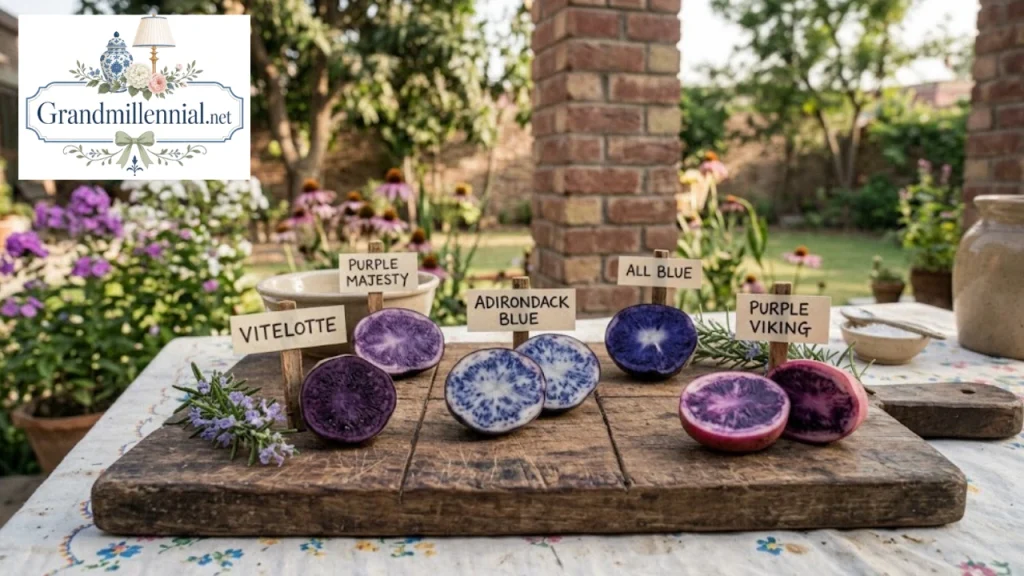
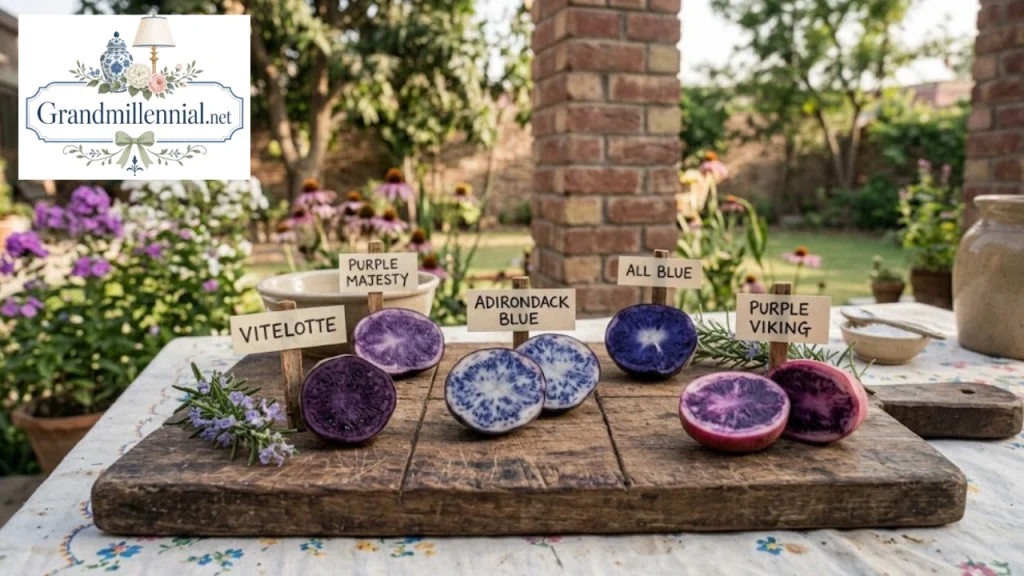
| Purple Majesty | Dark purple skin and flesh, oval | Waxy, firm, lower starch, nutty | Roasting, salads, steaming |
| All Blue | Blue-purple skin and flesh, often a lighter ring | Waxy, slightly moist | Roasting, mash, salads |
| Adirondack Blue | Dark purple skin and bright purple flesh | Firm, waxy | Steaming, salads, roasting |
| Vitelotte | Dark violet fingerling with marbled purple flesh | Dense, slightly floury | Mash, roasting, gratins |
| Purple Viking | Purple skin with pink splashes; white flesh | All-purpose | Mash, baking |
| Peter Wilcox | Purple skin, yellow flesh | All-purpose | Roasting, mash |
Variety notes come from PotatoPro, Cornell’s NY Seed Improvement Project and Illinois Extension. Cornell describes Adirondack Blue as having dark purple skin and purple flesh that is high in antioxidants, and Purple Majesty as a cross between All Blue and a white potato. Canada’s plant breeders’ rights records note Purple Majesty was developed at Colorado State University’s San Luis Valley Research Centre from a 1994 cross.
PotatoPro describes Vitelotte as an ancient Peruvian heirloom, and Adirondack Blue as a Cornell-bred potato with firm, “geode-like” flesh best for steaming or salads.
What do purple potatoes taste like?
Most purple potatoes taste like a slightly earthier, nuttier version of a waxy potato. PotatoPro describes Purple Majesty as having a nutty flavour and firm texture.
Texture varies by variety. Many purple-fleshed types are waxy, so they hold their shape well in salads and roasting pans. Some, such as Vitelotte, are denser and make a rich, slightly floury mash. Gardeners’ anecdotes vary too: some find Purple Majesty a little dry, while All Blue tends to be moister.
They pair especially well with olive oil, butter, garlic, rosemary, thyme, lemon, chives, mustard and soft cheeses.
Purple potatoes around the world
In Peru, colourful potatoes appear in dishes such as causa, a layered, chilled potato terrine seasoned with lime and chilli, where purple potatoes make striking stripes. In France, Vitelotte is a classic in purées and gratins. Elsewhere, chefs use purple potatoes for gnocchi, soups and vibrant crisps.
Because they’re true potatoes, you can use them in almost any potato recipe. The main adjustments are choosing the right variety for the texture you want and taking a little care to protect the colour.
Nutrition: how purple potatoes compare
In calories, carbohydrates, potassium and vitamin C, purple potatoes are broadly similar to other potatoes. Leaving the skin on adds fibre.
What sets them apart is their anthocyanin content. The Little Potato Company, a grower, cites research suggesting purple-pigmented potatoes have antioxidant power similar to spinach. That’s an encouraging comparison, but it’s worth remembering that antioxidant capacity in a lab doesn’t automatically translate into health benefits in people.
| Feature | Purple potatoes | White potatoes |
|---|---|---|
| Anthocyanins | Present, often high in purple-fleshed types | Minimal |
| Calories and carbohydrates | Similar | Similar |
| Potassium and vitamin C | Good source, like other potatoes | Good source |
| Glycemic index (small study) | About 77 | About 93 |
The glycemic index figures come from a small 2014 study cited by Healthline, which also reported a GI of about 81 for yellow potatoes. GI varies with variety, cooking method,d and what else is eaten with the potato.
What the research actually says
The science on purple potatoes is genuinely interesting, but most studies are small, short,rt and sometimes use extracts rather than whole potatoes.
Blood sugar and insulin. A 2016 study from the University of Turku compared meals of purple-fleshed and yellow-fleshed potatoes in healthy men. The researchers reported a smaller insulin response after the purple potato meal. A follow-up 2019 trial in 17 healthy men found that adding a purple potato extract rich in anthocyanins to yellow potatoes reduced the post-meal blood sugar response.
Blood pressure. Healthline describes an older four-week study in people with high blood pressure in which eating six to eight microwaved purple potatoes twice daily reduced systolic and diastolic blood pressure by 3.5 and 4.3 percent. It was small and short, so it’s a promising signal rather than proof.
Lab and animal research. Laboratory and animal studies have explored anthocyanins’ effects on cancer cells and inflammation. These are early-stage and can’t be applied directly to people.
The sensible conclusion: swapping some white potatoes for purple ones is an easy way to add colourful plant compounds to your diet, alongside plenty of other vegetables and fruit. They’re still potatoes, so portion size and cooking method (roasted rather than deep-fried) matter.
How to keep purple potatoes purple
Anthocyanins are sensitive to pH. In acidic conditions, they stay reddish-purple and bright; in alkaline conditions,s they can shift towards blue, green, or grey. Long cooking in lots of water can also leach some pigment out.
A few simple habits keep the colour vivid:
- Roast or steam rather than boil where possible, to keep pigment in the potato.
- If boiling, start in cold water with a splash of vinegar or lemon juice and avoid overcooking.
- Don’t add baking soda to the cooking water.
- Dress salads with an acidic vinaigrette while the potatoes are warm.
- Leave the skins on when you can.
- Serve promptly; colour can dull as cooked potatoes sit.
If your potatoes turned blue-grey, they’re still perfectly safe to eat. It’s just chemistry.
How to cook purple potatoes
Roasting. The best all-round method. Cut into chunks or halves, toss with olive oil, salt, pepper and herbs, and roast at about 200°C (400°F) until crisp outside and tender inside, usually 25 to 40 minutes depending on size.
Steaming. Keeps colour and texture well. Steam small potatoes whole or larger ones in chunks until a knife slides in easily.
Mashing. Use denser varieties such as Vitelotte or All Blue. Warm the milk or cream, add butter, and mash gently; a little lemon zest or vinegar brightens the colour.
Smashing. Boil or steam small potatoes until tender, flatten them on a tray, drizzle with oil and roast until crisp-edged.
Salads. Waxy purple varieties hold their shape. Dress them while warm with a mustardy vinaigrette.
Chips and crisps. Thinly sliced purple potatoes make striking homemade crisps; bake or fry until just crisp.
Three simple purple potato recipes
Rosemary-roasted purple potatoes
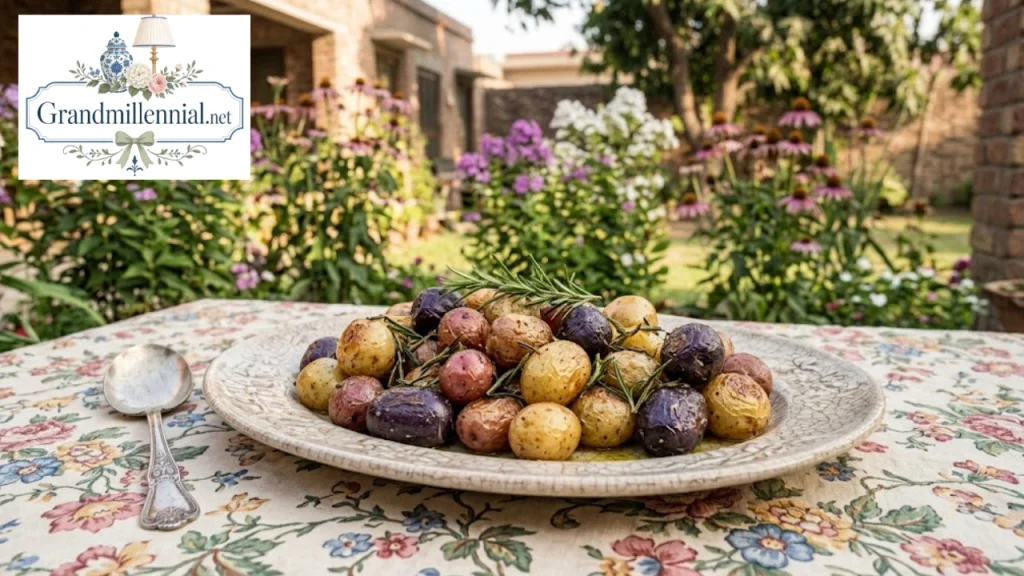
Halve about 700 g (1½ lb) small purple potatoes. Toss with 2 tablespoons olive oil, a teaspoon of flaky salt, black pepper, two crushed garlic cloves, and a few sprigs of rosemary. Roast cut-side down at 200°C (400°F) for 30 to 35 minutes, until golden at the edges. Finish with a squeeze of lemon.
Violet mashed potatoes
Steam about 900 g (2 lb) peeled purple potatoes until tender. Mash with 4 tablespoons butter, about 120 ml (½ cup) warm milk or cream, a teaspoon of lemon juice, and salt to taste. Fold in chopped chives. The lemon keeps the colour bright without tasting sour.
Purple potato and green bean salad
Steam 700 g small purple potatoes and a handful of green beans. While warm, toss with a dressing of 3 tablespoons olive oil, 1 tablespoon red wine vinegar, 1 teaspoon Dijon mustard and a little honey. Add chopped parsley, capers,s and sliced spring onions. Serve warm or at room temperature.
Common cooking mistakes
A few easy mistakes can spoil the look or texture of purple potatoes:
Overboiling. Long boiling leaches pigment and can make waxy varieties waterlogged. Steam or roast instead, or boil gently and briefly.
Using baking soda or very hard water. Alkaline conditions can turn the flesh blue-green or grey.
Choosing the wrong variety for mash. Very waxy types can turn gluey when mashed hard; use denser varieties and mash gently.
Crowding the roasting pan. Potatoes steam rather than crisp; spread them out in a single layer.
Peeling unnecessarily. The skin is attractive, adds fibre and helps protect the colour.
Cutting too far ahead. Cut potatoes can discolour; cut close to cooking time or keep them briefly in cold water with a little lemon juice.
Buying and storing
Look for firm potatoes without soft spots, sprouts or green patches. Specialty and farmers’ markets often have the widest range of varieties; supermarkets increasingly stock mixed bags of purple, red and yellow baby potatoes.
Store them in a cool, dark, well-ventilated place, not in the fridge. Cold temperatures can turn potato starch into sugar, which affects flavour and browning. Light encourages greening; cut away any green parts or sprouts before cooking, as these contain naturally occurring solanine.
Leftovers and freezing
Cooked purple potatoes keep in a covered container in the fridge for a few days. Roasted leftovers reheat well in a hot oven or skillet, and cold steamed potatoes are perfect for next-day salads, hash or frittatas.
Raw potatoes don’t freeze well because their texture becomes watery. If you want to freeze them, freeze cooked mash in portions or par-boil and roast chunks first. Expect the colour to be a little duller after freezing and reheating; a splash of lemon juice or vinegar in the dish can help restore some brightness.
Growing purple potatoes at home
Growing your own purple potatoes is just like growing any other potato, and digging up violet tubers is especially satisfying.
Choose seed potatoes
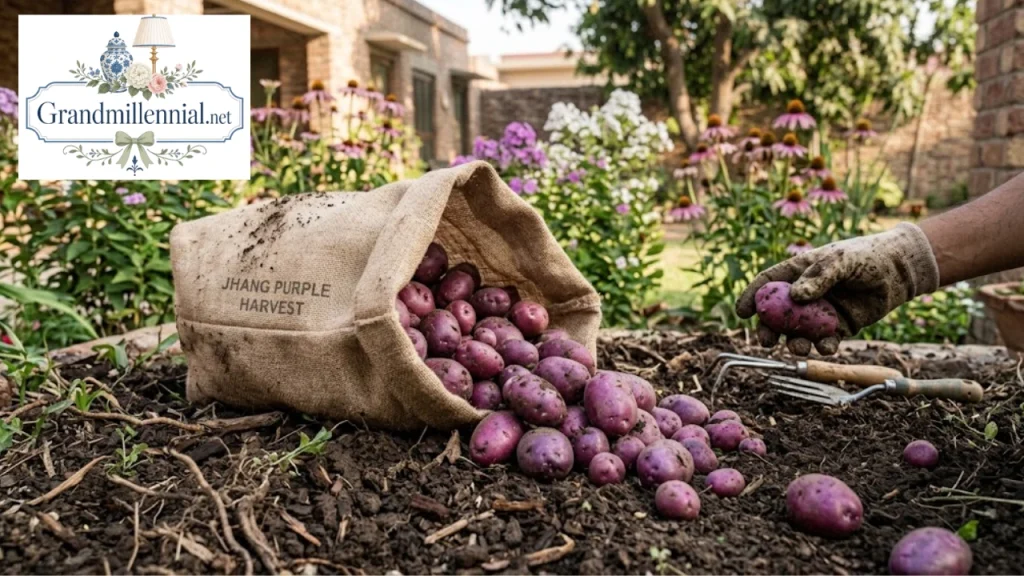
Buy certified seed potatoes from a garden centre or specialist supplier rather than planting supermarket potatoes, which may carry disease or be treated to prevent sprouting. Varieties such as Adirondack Blue, All Blue and Purple Majesty are widely available.
Prepare and plant
Plant in early spring once the soil can be worked and the risk of hard frost has passed. Many gardeners “chit” (pre-sprout) seed potatoes in a cool, bright place for a few weeks first. Large seed potatoes can be cut into pieces, each with at least one or two eyes; Illinois Extension notes fingerling seed potatoes don’t need cutting.
Illinois Extension suggests spacing standard potatoes about 12 inches apart and smaller types 8 to 12 inches apart.
Hill as they grow
As shoots grow, pull soil or compost up around the stems (hilling) to protect developing tubers from light, which turns them green.
Grow in containers
No garden? Illinois Extension describes a simple container method: start with 3 to 4 inches of growing mix, place seed pieces on top, cover with about 2 inches of mix, then keep adding soil as the plants grow. Grow bags and large tubs work well.
Watch for pests
Illinois Extension notes that potatoes aren’t especially needy, though Colorado potato beetles can cause damage. Check leaves regularly and hand-pick beetles and their larvae.
Harvest
Dig “new” potatoes carefully once plants flower. For storage potatoes, wait until the foliage yellows and dies back, then leave the tubers in the ground for a couple of weeks to toughen their skins before lifting on a dry day.
Colour and climate
PotatoPro notes that All Blue’s flesh is usually blue throughout in cooler soils but can wash out a little in warmer soils, so colour may vary with your climate and season.
Serving and styling purple potatoes
Purple potatoes are made for the table. Serve a mix of purple, red,ed and gold potatoes roasted together on a large platter for a jewel-toned side dish. Spoon violet mash into a white or blue-and-white bowl for contrast, or arrange purple potato salad on a vintage platter with fresh herbs.
They’re a natural fit for a relaxed, grandmillennial table: mismatched china, a linen cloth and a jug of garden flowers. These coastal kitchen ideas and modern kitchen backsplash ideas show how a fresh, light kitchen sets off colourful food, and these home decor ideas that actually work offer more ways to make everyday meals feel special.
Pairing ideas for every season
Spring: toss steamed purple potatoes with peas, mint, lemon and a little butter, or serve alongside asparagus and poached eggs.
Summer: make a warm potato salad with green beans and a herby vinaigrette for barbecues and picnics, or add roasted chunks to grain bowls with feta and tomatoes.
Autumn: roast them with squash, red onion and sage, or mash them and serve with sausages and a rich onion gravy.
Winter: bake them into a gratin with cream and thyme, or serve violet mash with braised beef or mushrooms.
For children and picky eaters, the colour itself is often the selling point. Bright purple wedges or crisps feel like a treat, and a mixed tray of purple, red and gold potatoes is a fun way to encourage everyone to try something new.
FAQs:
Are purple potatoes healthier than regular potatoes?
They contain anthocyanin antioxidants that white potatoes lack, and small studies suggest a gentler effect on blood sugar. Otherwise, their nutrition is similar to other potatoes.
What do purple potatoes taste like?
Earthy and slightly nutty, often with a firm, waxy texture.
Do purple potatoes stay purple when cooked?
Yes, especially when roasted or steamed. A splash of acid helps; alkaline conditions can turn them blue-grey.
Are purple potatoes the same as purple sweet potatoes?
No. Purple potatoes are Solanum tuberosum; purple sweet potatoes are Ipomoea batatas, a different plant.
What’s the best purple potato variety?
It depends on the dish. Purple Majesty and Adirondack Blue are great for roasting and salads; Vitelotte and All Blue make good mash.
Can you eat purple potato skins?
Yes, if washed well. The skins add fibre and some anthocyanins.
Can I grow purple potatoes in containers?
Yes. Use a large grow bag or tub, start with a few inches of mix, and keep adding soil as the plants grow.
Why did my purple potatoes turn grey?
Anthocyanins change colour with pH and prolonged boiling. They’re safe to eat; next time, steam or roast them, or add a little vinegar or lemon juice.