

Rub a leaf between your fingers and the scent arrives at once: sweet, faintly liquorice, a little peppery, with something green and grassy underneath. It’s the smell of Béarnaise sauce, of a classic French roast chicken, of a sharp vinaigrette on a summer salad.
That’s tarragon, one of the great herbs of French cooking and one of the most misunderstood plants in the herb garden. Many gardeners have grown a big, healthy plant from seed only to discover it tastes of almost nothing. Many cooks have reached for a jar of the dried herb and wondered what all the fuss was about.
This guide sorts it out. It explains the different kinds, what the herb tastes like and how to use it fresh or dried, a few classic recipes, the best substitutes, the safety question around estragole, and how to grow the right plant so you have fresh leaves for years.
Quick answer: Tarragon is a perennial herb (Artemisia dracunculus) with a sweet, anise-like flavour, essential to Béarnaise sauce and French fines herbes. For cooking, choose French tarragon. It rarely produces viable seed, so buy a plant or grow it from cuttings or division; seed-grown “tarragon” is usually the much milder Russian type.
What tarragon is
Tarragon belongs to the genus Artemisia in the daisy family (Asteraceae), the same genus as wormwood and sagebrush. It’s a slender, bushy perennial with narrow, glossy, lance-shaped leaves on woody-based stems.
Culinary tarragon is a form of Artemisia dracunculus, sometimes listed as var. sativa or ‘Sativa’. The species name, dracunculus, means “little dragon”, and the French name estragon comes from the same root. Fine Gardening notes that French tarragon probably originated in western Asia, and it became a cornerstone of French cuisine.
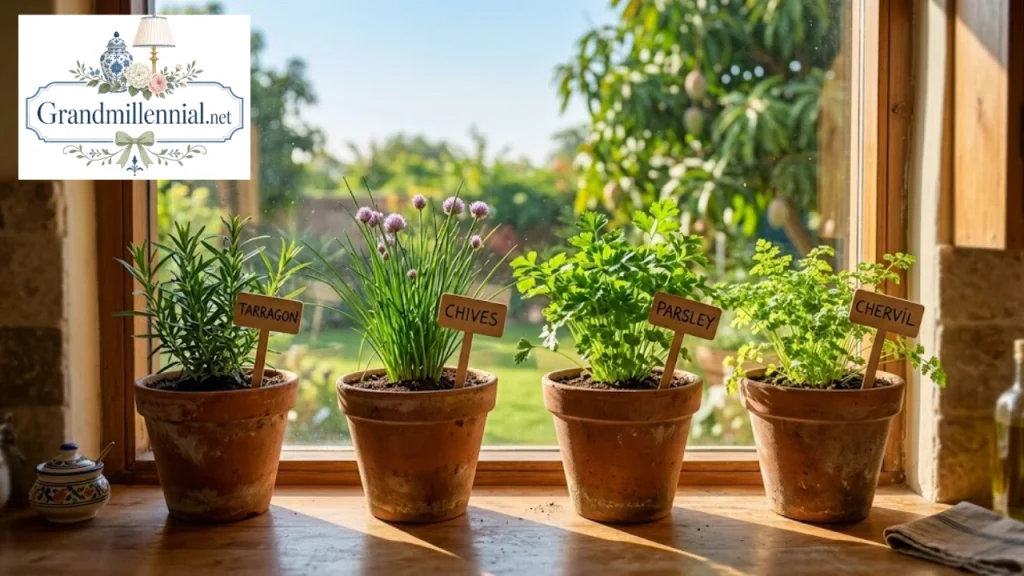
Wikipedia describes it as one of the four fines herbes of French cooking, alongside parsley, chives and chervil, and as the main flavouring in Béarnaise sauce. It’s also used across the Caucasus and Eastern Europe, where it even flavours a bright green carbonated drink.
Tarragon beyond France
French cooking made the herb famous, but tarragon is loved well beyond France. In Iran, fresh sprigs often appear in sabzi khordan, the platter of raw herbs served alongside meals. In Georgia, it flavours chakapuli, a springtime stew of lamb or veal with white wine and green herbs, and the bright green tarragon soda sold across the Caucasus and Russia.
In Slovenia, a sweet rolled cake called pehtranova potica is filled with tarragon and walnuts or curd cheese. These traditions show how flexible the herb is: sweet, savoury, fresh or cooked, it adds a distinctive green sweetness.
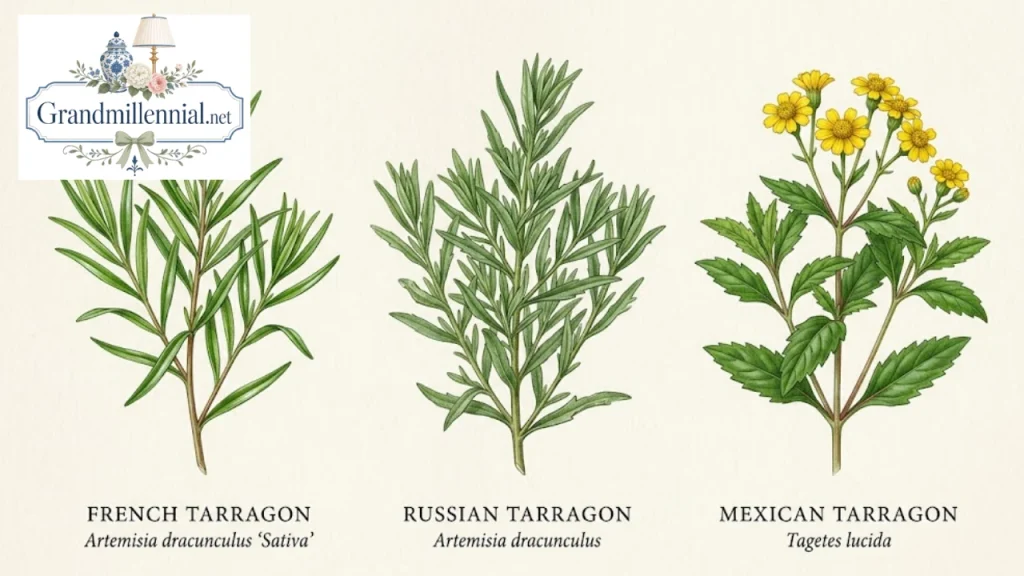
French, Russian and Mexican tarragon
This is the most important thing to know before buying either a plant or a packet of seeds.
| Type | Botanical name | Flavour | How it’s grown | Best for |
|---|---|---|---|---|
| French tarragon | Artemisia dracunculus ‘Sativa’ (var. sativa) | Strong, sweet, anise-like | From cuttings or division; rarely produces viable seed | Cooking |
| Russian tarragon | Artemisia dracunculus (often sold as A. dracunculoides) | Mild, sometimes bitter | Easily from seed; vigorous and hardy | Ornamental use; little culinary value |
| Mexican tarragon | Tagetes lucida | Anise-like, robust | From seed; a marigold relative | Substitute in hot climates |
The Royal Horticultural Society explains that both French and Russian tarragon are forms of Artemisia dracunculus, but that French tarragon forms a smaller, more delicate plant with far better flavour, while Russian tarragon is larger, tougher and generally regarded as inferior in the kitchen. RHS notes that French tarragon is generally not available as seed.
Utah State University Extension puts it plainly: French tarragon doesn’t produce viable seed, and growing from seed typically results in the less flavourful Russian type.
Fine Gardening calls Russian tarragon an “imposter” with no culinary merit, and suggests asking to taste a leaf before buying, since plants are sometimes mislabelled. A simple test: crush a leaf. True French tarragon releases a strong, sweet anise scent; Russian tarragon smells faint and grassy.
Mexican tarragon is a different plant altogether. Fine Gardening notes it can stand in for French tarragon in places without the winter chill French tarragon needs.
What does tarragon taste like?
French tarragon tastes sweet and aromatic, with a clear anise or liquorice note, a mild peppery warmth,h and a fresh, green finish. It’s distinctive but not harsh; it lifts delicate foods without overwhelming them.
Wikipedia attributes the anise-like character largely to estragole, an aromatic compound also found in basil and fennel. Because these flavour oils are volatile, they fade when the leaves are dried, which is why fresh and dried tarragon taste so different.
If you don’t usually like liquorice, don’t write it off. In a creamy sauce or vinaigrette, the anise softens into something rounder and more herbal.
Fresh vs. dried tarragon
Fresh is best for most uses, especially sauces, dressings and finishing dishes. Dried works in slow-cooked dishes, rubs and stews, where its flavour has time to infuse.
| Fresh tarragon | Dried equivalent (approx.) | Notes |
|---|---|---|
| 1 tablespoon chopped | About 1 teaspoon | A common 3:1 ratio |
| 2 tablespoons chopped | About 2 teaspoons | Taste and adjust |
| A few whole sprigs | About ½ to 1 teaspoon | In braises and stocks |
Dried tarragon can taste flat or slightly bitter if overused, so start with less and add more. Freezing preserves more of the fresh flavour than drying; see the storage section below.
Add fresh tarragon towards the end of cooking, since long heat dulls its aroma. Dried tarragon can go in earlier.
How to cook with tarragon
Wikipedia notes that tarragon is particularly suited to chicken, fish and egg dishes, and that matches its use in kitchens everywhere.
Chicken: roast chicken, tarragon chicken in a creamy mustard sauce, chicken salad.
Fish and shellfish: salmon, trout, white fish, scallops and prawns, often with butter and lemon.
Eggs: omelettes, scrambled eggs, devilled eggs and quiches.
Vegetables: carrots, asparagus, green beans, mushrooms, tomatoes and potatoes.
Dressings and sauces: vinaigrettes, mayonnaise, tartare sauce, compound butter.
Fines herbes: equal parts finely chopped parsley, chives, chervil and tarragon, stirred into omelettes, sauces and soups just before serving.
Wikipedia even notes that young spring stems can be cooked like asparagus.
Tarragon pairs especially well with lemon, shallots, mustard, cream, butter, white wine and mild vinegars.
Three classic ways to use it
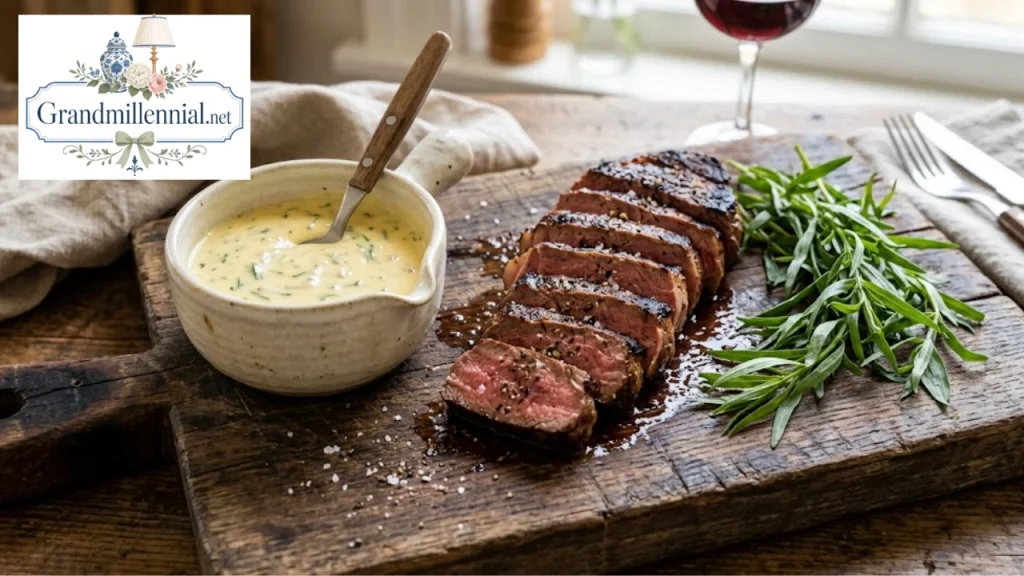
Béarnaise-style sauce
In a small pan, simmer about 4 tablespoons of white wine vinegar, 4 tablespoons of dry white wine, a finely chopped shallot, a few crushed peppercorns and the stems from a bunch of tarragon until reduced to about 2 tablespoons. Strain and cool slightly.
In a heatproof bowl over barely simmering water, whisk two egg yolks with the reduction until pale and thick. Slowly whisk in about 125 g (½ cup) of warm melted butter, a little at a time, until glossy. Season, then stir in a tablespoon of chopped tarragon leaves (and a little chervil if you have it). Serve with steak, fi,sh or eggs.
Tarragon vinegar
Wash and thoroughly dry a few sprigs of fresh tarragon, place them in a clean glass bottle or jar, and cover with white wine vinegar. Seal and leave in a cool, dark place for two to three weeks, then strain and rebottle. Use it in vinaigrettes and as the base for Béarnaise. For safety, use clean, dry herbs and store the finished vinegar in the fridge.
Creamy tarragon chicken
Brown seasoned chicken thighs or breasts in butter, then set aside. Soften a sliced shallot in the pan, add a splash of white wine and reduce, then stir in cream and a spoonful of Dijon mustard. Return the chicken to the pan and simmer until cooked through. Finish with a generous handful of chopped tarragon and a squeeze of lemon.
Bonus: tarragon butter
Compound butter is the easiest way to keep fresh tarragon ready for quick dinners. Mash 115 g (½ cup) of softened butter with two tablespoons of finely chopped leaves, a little grated lemon zest, a small crushed garlic clove,ove and a pinch of salt. Roll it into a log in baking paper and chill or freeze.
Slice off rounds to melt over grilled fish, steak, corn on the cob, steamed vegetables or new potatoes. It also makes a lovely spread for a chicken sandwich. Frozen, it keeps well for a couple of months, so it’s a good way to use a summer glut.
If you enjoy cooking with fresh herbs, a calm, well-organised kitchen makes it a pleasure; these coastal kitchen ideas offer bright, practical inspiration.
Tarragon substitutes
No substitute matches tarragon exactly, but some come close in particular dishes.
| Dish | Best substitute | Notes |
|---|---|---|
| Béarnaise sauce | Chervil, plus a tiny pinch of fennel seed; or tarragon vinegar | Keep quantities small to avoid overpowering the sauce |
| Fines herbes | Extra parsley, chives and chervil | Omit tarragon rather than force a swap |
| Chicken | Fresh dill, or marjoram with thyme | Dill works roughly 1:1 |
| Fish and seafood | Fennel fronds, dill or parsley | Fennel gives a similar anise note |
| Dressings | Basil or chervil | Basil also contains estragole |
| Strong anise note | Anise seed, very sparingly | About ⅛ teaspoon replaces 1 teaspoon dried tarragon |
Culinary sites such as Greedy Gourmet suggest a 1:1 swap with fresh dill and only a tiny amount of anise seed, since it’s much stronger. Taste as you go.
Is tarragon safe?
Yes, in normal culinary amounts. The question arises because estragole, the compound behind tarragon’s flavour, has caused tumours in rodent studies at high doses.
Wikipedia notes that a European Union investigation concluded the danger of estragole is minimal, and cites an estimate that an 80 kg adult would need to eat roughly 130 grams of fresh tarragon leaves every day to reach a dose associated with a small increase in tumour risk in rats. That’s far beyond what anyone uses in cooking.
Basil and fennel also contain estragole. As with most herbs, enjoying tarragon as a seasoning is fine; concentrated supplements or essential oils are a different matter. If you’re pregnant, breastfeeding, or taking medication, ask a healthcare professional before using herbal supplements.
How to grow tarragon
Growing your own tarragon is the best way to have plenty of fresh leaves, and it’s easy once you start with the right plant.
Buy the right plant
Because French tarragon rarely sets viable seed, start with a plant from a nursery or a division or cutting from a friend. Check the label for Artemisia dracunculus ‘Sativa’ or var. sativa, and crush a leaf to confirm the sweet anise scent.
Climate
Harvest to Table lists tarragon for zones 4 to 8. Fine Gardening notes French tarragon needs a winter chill; in hot, humid climates without one, Mexican tarragon is the better choice.
Site and soil
Choose a sunny or lightly shaded spot with well-drained soil. Utah State University Extension stresses good drainage and low fertiliser needs. Wet, heavy soil, especially in winter, is the most common cause of losses.
Planting
Harvest to Table suggests planting out a week or two after the last spring frost. RHS recommends spacing French tarragon about 20 cm (8 inches) apart and more vigorous Russian tarragon at least 30 cm (12 inches) apart. RHS notes French tarragon typically grows 50 to 75 cm (20 to 30 inches) tall and around 30 cm (12 inches) wide.
Care
Once established, tarragon needs little attention. Water during dry spells, but let the soil dry slightly between waterings; it’s sensitive to overwatering. Gardener’s Path notes that in healthy soil it typically doesn’t need feeding. Pinch out flower buds to keep the plant leafy, and trim it back lightly through summer to encourage fresh shoots.
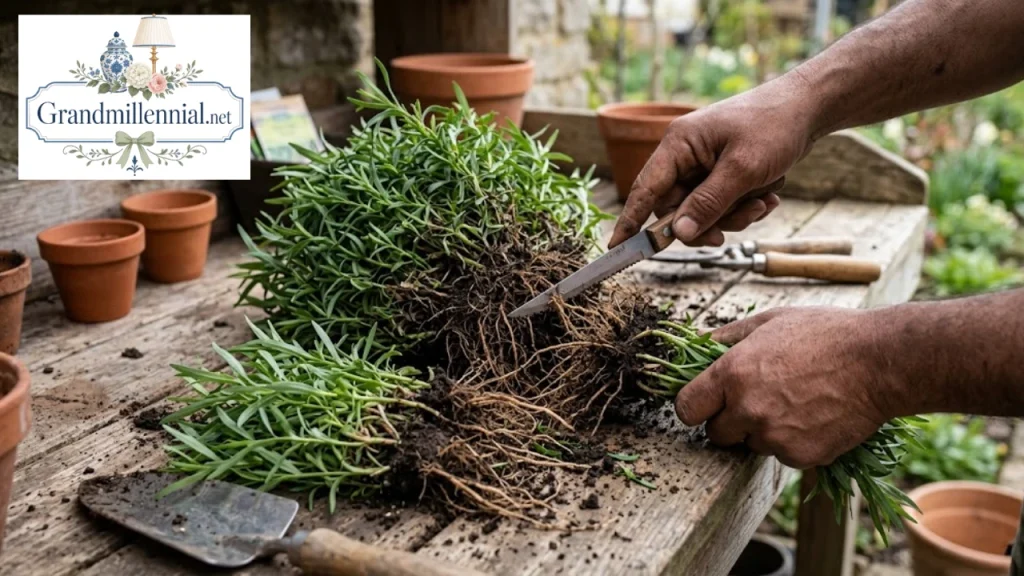
Propagating tarragon: division and cuttings
Since seed isn’t an option for French tarragon, you’ll need to propagate it vegetatively.
Division is usually the easiest method, according to RHS. Gardener’s Path suggests dividing in late winter or very early spring, once new shoots are a few inches tall. Lift the clump, tease or cut it into rooted sections, and replant. Harvest to Table recommends dividing every three to four years to keep plants vigorous, and Fine Gardening notes regular division helps plants keep their flavour over the years.
Cuttings work too. RHS recommends softwood cuttings from new growth in summer; Harvest to Table suggests rooting 6- to 8-inch stem cuttings in moist sand. Keep cuttings warm, bright,t and evenly moist until roots form, then pot them up.
Gardener’s Path notes French tarragon is one of the first herbs to break dormancy, sending up shoots in late winter or early spring, which is a good reminder to check on dormant plants before you assume they’ve died.
Growing tarragon in containers and indoors
Containers suit tarragon well, especially in areas with wet winters or very cold weather.
Harvest to Table notes French tarragon can be grown in a container at least 6 to 12 inches wide and deep, though a larger pot gives roots more room and dries out less quickly. Use a free-draining potting mix with added grit, and make sure the pot has drainage holes.
In regions with cold winters, permaculture growers suggest growing it in pots so it can be moved to a sheltered spot. An unheated garage, porch, or cold frame often works well, as the plant needs a period of winter dormancy.
On a sunny kitchen windowsill, tarragon can provide leaves for a while, but it tends to get leggy indoors over the long term. Treat indoor plants as a supplement to an outdoor pot rather than a permanent home.
Harvesting and storing
Start harvesting once the plant is well established, snipping stems from the top and cutting no more than about a third of the plant at a time. Leaves have the best flavour before the plant flowers.
Fresh sprigs keep for several days in the fridge, wrapped loosely in a damp paper towel, or standing in a glass of water like a bouquet.
For longer storage, freeze chopped leaves in ice-cube trays with a little water or olive oil, or freeze whole sprigs in a bag. Freezing preserves more of the fresh flavour than drying. You can also dry sprigs in a warm, airy place out of direct sun, though the flavour will be milder, and tarragon vinegar is a classic way to capture the taste for months.
Buying fresh tarragon
If you don’t grow your own, look for bright, perky sprigs with no black or slimy leaves. Supermarkets usually sell small packs in the fresh herb section, while farmers’ markets often have larger, fresher bunches in late spring and summer.
At garden centres, check plant labels carefully. A pot labelled simply “tarragon” may be the Russian type; look for “French tarragon” or Artemisia dracunculus ‘Sativa’, and crush a leaf to check the scent before you buy.
Winter care and troubleshooting
| Problem | Likely cause | What to do |
|---|---|---|
| Plant dies over winter | Waterlogged, cold soil; root rot | Improve drainage, grow in a raised bed or pot, protect from winter wet |
| No flavour | Russian tarragon grown from seed | Replace with French tarragon from a cutting or nursery plant |
| Leggy, sparse growth | Too much shade or too rich soil | Move to more sun; avoid heavy feeding; trim regularly |
| Flavour fading after several years | Old, crowded clump | Divide every three to four years |
| Yellowing leaves | Overwatering or poor drainage | Water less; check soil before watering |
| Dead-looking plant in late winter | Normal dormancy | Wait; new shoots often appear early in spring |
RHS notes French tarragon is more delicate than Russian and may need winter protection. A layer of dry mulch over the crown in cold areas, or moving pots to a sheltered spot, helps plants survive.
Tarragon in the home herb garden
In a cottage-style potager or kitchen garden, plant tarragon with its fines herbes companions: parsley, chives and chervil. A small square bed or a group of terracotta pots near the kitchen door makes picking a handful for supper easy.
Its upright, feathery habit softens the edges of raised beds and works well alongside low thymes and taller rosemary. Because French tarragon rarely flowers, it’s grown for foliage rather than display, so place it where you’ll brush past and catch the scent.
Indoors, a pot of fresh herbs on the windowsill is one of the simplest ways to bring the garden into the kitchen; these home decor ideas that actually work include easy ways to style herbs and greenery. And if you’re updating the kitchen itself, a light, easy-clean splashback such as one of these modern kitchen backsplash ideas keeps herb-chopping mess easy to wipe away.
FAQs:
What does tarragon taste like?
Sweet and aromatic with a clear anise or liquorice note, a slight peppery warmth, and a fresh green finish.
Can you grow French tarragon from seed?
No. French tarragon rarely produces viable seed. Seed sold as tarragon usually grows the milder Russian type. Start from a plant cutting or division.
How much dried tarragon equals fresh?
About 1 teaspoon dried for every tablespoon of chopped fresh tarragon.
What is the best substitute for tarragon?
It depends on the dish: chervil for Béarnaise, dill for chicken, fennel fronds for fish. Use anise seed only sparingly.
Is tarragon safe to eat?
Yes, in normal culinary amounts. Concerns about estragole relate to very high doses well beyond normal cooking use.
Why did my tarragon die over winter?
Usually wet, cold soil causing root rot. Improve drainage, grow it in a pot or raised bed, and protect it from winter wet.
Does tarragon come back every year?
Yes. It’s a perennial that dies back in winter and regrows in spring.
Can I grow tarragon indoors?
For a while, on a sunny windowsill, but it does best outdoors with a winter rest.