

Most people remember one bad year. The brisket looked beautiful in the pot, then sliced into tight, stringy ribbons, and the cabbage had turned the colour of a rainy afternoon.
Good corned beef and cabbage isn’t difficult; it just runs on patience and timing. This recipe explains both, so the beef comes out tender enough to cut with a fork, and the cabbage stays bright and sweet. Rinse a 3- to 4-lb corned beef brisket, cover it with water and the spice packet, and simmer gently, never boiling, for about 50 minutes per pound, until fork-tender. Rest the beef, then cook the potatoes and carrots in the broth for 15 to 20 minutes, and add cabbage wedges for the last 10 to 15 minutes. To achieve melt-in-your-mouth corned beef with tender cabbage, cook low and slow rather than boiling rapidly, as high heat causes the tough muscle fibers in brisket to seize up and turn rubbery. By gently simmering the beef in a seasoned broth for several hours, the collagen gradually breaks down into gelatin, resulting in moist, succulent slices that yield effortlessly under a knife without shredding into dry, stringy fibers. Adding the cabbage wedges near the end of the cooking process allows them to absorb all the rich, spiced flavors of the broth while maintaining a perfectly tender-crisp texture.
A little history before dinner
In Ireland, the dish most families knew was bacon and cabbage. A USDA food safety publication notes that corned beef and cabbage was originally an Easter Sunday meal in rural Ireland, and it became a St. Patrick’s Day fixture in America.
As SheKnows explains, Irish immigrants in the United States often swapped in corned beef for the pork in bacon and cabbage. Brisket was affordable, it cured well, and the tradition stuck.
The word “corned” has nothing to do with corn. According to the USDA, it comes from the coarse, kernel-sized grains of salt once used to cure beef before refrigeration. Today, the beef is brined instead, but the name stayed.
Buying the right brisket
Most supermarkets sell corned beef brisket in two cuts, usually in a vacuum pack with a small spice packet.
| Cut | What it’s like | Best for |
|---|---|---|
| Flat cut | Leaner, even thickness, neat slices | A tidy platter and sandwiches |
| Point cut | Fattier and more marbled, very tender, irregular shape | Shredding, hash, anyone who loves richer meat |
Plan on about half a pound of uncooked brisket per person. Corned beef shrinks noticeably as it cooks, and leftovers are half the point.
Check the date on the pack. If you need to freeze an uncooked brisket, the USDA advises removing it from the brine packaging first and using it within about a month for best quality.
Ingredients
This ingredient list makes classic stovetop corned beef and cabbage for six to eight people.
- 3 to 4 lb of corned beef brisket (flat cut), with its spice packet
- 1 yellow onion, quartered
- 4 garlic cloves, lightly crushed
- 2 bay leaves and 1 tsp black peppercorns
- 12 oz beer or stout (optional; use water if you prefer)
- 1½ lb small red or gold potatoes, halved
- 4 carrots, peeled and cut into 2-inch pieces
- 1 small head of green cabbage, cut into 6 to 8 wedges with the core left on
- 2 tbsp butter and chopped parsley, to finish
- Whole-grain mustard or horseradish, to serve
How to make corned beef and cabbage
The method is simple, but each step has a reason. Follow the timings, and the result of your corned beef and cabbage depends far more on heat control than on any special ingredient.
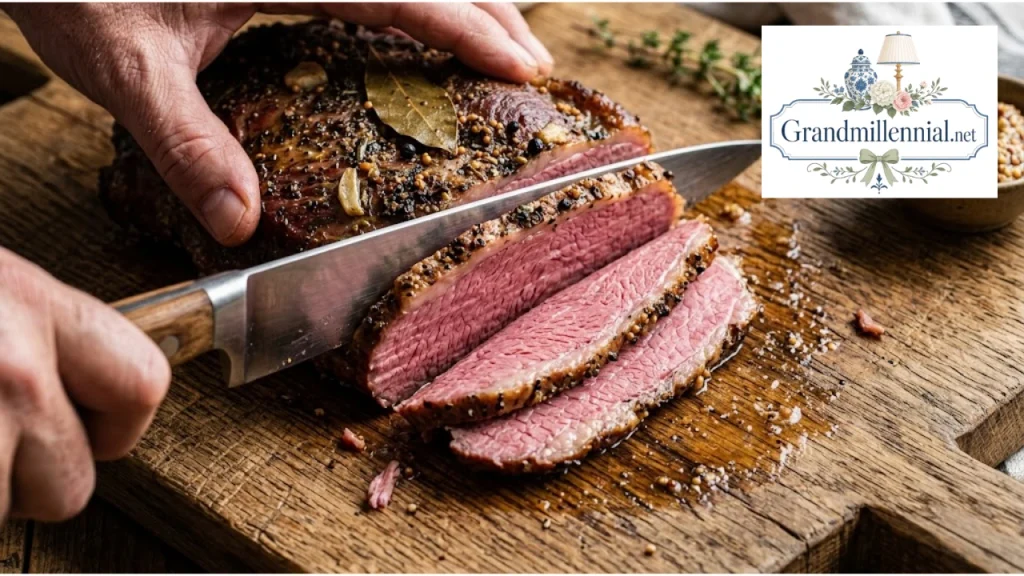
The secret to perfectly tender corned beef lies in proper knife technique and timing as much as the slow-cooking process. Once the brisket has reached peak tenderness, allowing it to rest for a few minutes before slicing across the grain shortens the meat fibers, ensuring each bite melts in your mouth instead of pulling apart into long, tough strings. Simmering the cabbage, potatoes, and carrots directly in the seasoned cooking liquid during the final minutes infuses the vegetables with deep, savory flavor while preserving their vibrant color and hearty texture.
Rinse the brisket
Remove the beef from its package and rinse it well under cold water. This washes off surface brine and keeps the finished dish from tasting too salty.
Cover and bring to a simmer
Put the brisket in a large pot or Dutch oven, fat side up. Add the onion, garlic, bay leaves, peppercorns, and spice packet, then the beer and enough cold water to cover the meat by about an inch.
Bring it just to a boil, skim off any foam, then lower the heat until only small bubbles break the surface. Cover with the lid slightly ajar.
Simmer gently until fork-tender
Plan on roughly 50 minutes per pound, so about 3 hours for a 3½ lb brisket. Check it after 2½ hours and add water if the beef starts to peek above the liquid.
It’s ready when a fork or skewer slides into the thickest part with almost no resistance. A thermometer will read well past the 145°F safety minimum by then; many cooks find brisket turns tender somewhere around 195°F to 205°F.
Rest the beef
Place the brisket onto a board, cover loosely with foil, and let it rest for 15 to 20 minutes. Resting lets the juices settle, which makes slicing cleaner. Keep the cooking liquid at a simmer.
Cook the vegetables in stages
Add the potatoes and carrots to the simmering broth and cook for 15 to 20 minutes. Then nestle in the cabbage wedges and cook for another 10 to 15 minutes, just until the cores are tender when pierced.
Lift everything out with a slotted spoon and toss the vegetables with butter, parsley, and a little black pepper.
Slice against the grain
Look closely at the brisket: you’ll see long muscle fibers running in one direction. Slice across them, about ¼ inch thick, so each piece stays short-fibred and tender.
Arrange the slices on a warm platter with the vegetables around them, and spoon over a little hot broth to keep everything moist. For maximum flavor and a non-stringy finish, start by rinsing the corned beef to remove excess surface salt before placing it in the pot. Submerging the meat completely in liquid along with aromatics like garlic, bay leaves, and the spice packet creates an evenly heated environment where heat distributes gently. Keeping the pot at a barely-there simmer prevents the meat from toughening up, while slicing against the grain just before serving yields silky, restaurant-quality cuts that pair beautifully with tender wedges of cabbage and buttered potatoes.
Vegetable timing at a glance
The biggest difference between a good and a sad plate of corned beef and cabbage is when the vegetables go in. Whether you choose a slow cooker or a heavy Dutch oven, maintaining a steady, low temperature is the absolute golden rule for avoiding tough, stringy corned beef. Slow-simmering allows the rich spices like mustard seed, coriander, and allspice to deeply penetrate the meat while it softens to perfection. Adding cabbage wedges in the final stretch lets them soak up the savory, spiced broth without turning mushy, resulting in a classic, comforting dish where every element is rich, flavorful, and incredibly tender.
| Vegetable | When to add | Cook time in simmering broth |
|---|---|---|
| Small potatoes (halved) | After the beef comes out | 15–20 minutes |
| Carrots (2-inch pieces) | With the potatoes | 15–20 minutes |
| Cabbage wedges (core on) | When potatoes are nearly tender | 10–15 minutes |
| Parsnips or turnips (optional) | With the potatoes | 15–20 minutes |
Cooking vegetables after the beef comes out also gives you room in the pot, so nothing gets crowded or overcooked.
Slow cooker and Instant Pot versions
Slow cooker. Put potatoes, carrots, and onion in the bottom, the rinsed brisket on top, then the spices and enough liquid to come about halfway up the meat. Cook on low for 8 to 10 hours, adding the cabbage wedges for the last 1 to 2 hours.
Instant Pot or pressure cooker. Pressure-cook the brisket with the spices and about 4 cups of liquid on high for around 90 minutes for a 3 to 4 lb piece, then let the pressure release naturally for 15 minutes.
Remove and rest the beef. Add the vegetables to the liquid and pressure-cook them on high for 3 to 4 minutes with a quick release. Check your cooker’s manual, since times vary between models.
Why is my corned beef tough?
The usual culprit is boiling. A rolling boil tightens the meat’s fibres and squeezes out moisture, leaving it dry and stringy even after hours in the pot.
The second cause is stopping too soon. At 145°F, the beef is safe, but brisket is full of collagen that only melts into tenderness with long, gentle cooking. If it’s still firm, put it back and give it another 30 minutes.
The third is slicing with the grain. Even a perfectly cooked brisket feels chewy if each slice is made of long fibres.
If the beef tastes too salty, the brisket probably wasn’t rinsed, or the cooking liquid reduced too much. Serve it with plain, unsalted potatoes, and next time rinse well and keep the liquid topped up with fresh water.
Is pink corned beef safe?
Yes, as long as it reached a safe temperature. The USDA Food Safety and Inspection Service explains that corned beef may stay pink after cooking because nitrite is used in the curing process.
USDA’s guidance is to cook corned beef to at least 145°F, measured with a food thermometer, and let it rest for at least three minutes. Following this recipe, your beef will be well past that point long before it’s tender.
Setting the St. Patrick’s Day table
This is a dish made for sharing, and it looks generous on a big platter. Serve corned beef and cabbage family-style, with the brisket fanned out in the middle and vegetables tumbling around the edges.
Put out small bowls of whole-grain mustard, horseradish cream and soft butter. A warm loaf of Irish soda bread and a pitcher of the cooking broth complete the spread.
For the table, a white or green-checked cloth, mismatched vintage plates and a jar of spring flowers suit the occasion without veering into costume. These home decor ideas that actually work offer more ways to make a table feel collected rather than themed.
If you’re cooking for a crowd, a calm, well-organized kitchen helps. These coastal kitchen ideas and modern backsplash options show how a few changes make a busy cooking day feel easier.
If the meal spills into the evening, these cozy living room ideas give guests space to linger after dinner.

Leftovers
Refrigerate leftovers within two hours of cooking. Cooked corned beef keeps for three to four days in the fridge, or up to about three months in the freezer if wrapped well, according to USDA guidance. Reheat it to 165°F.
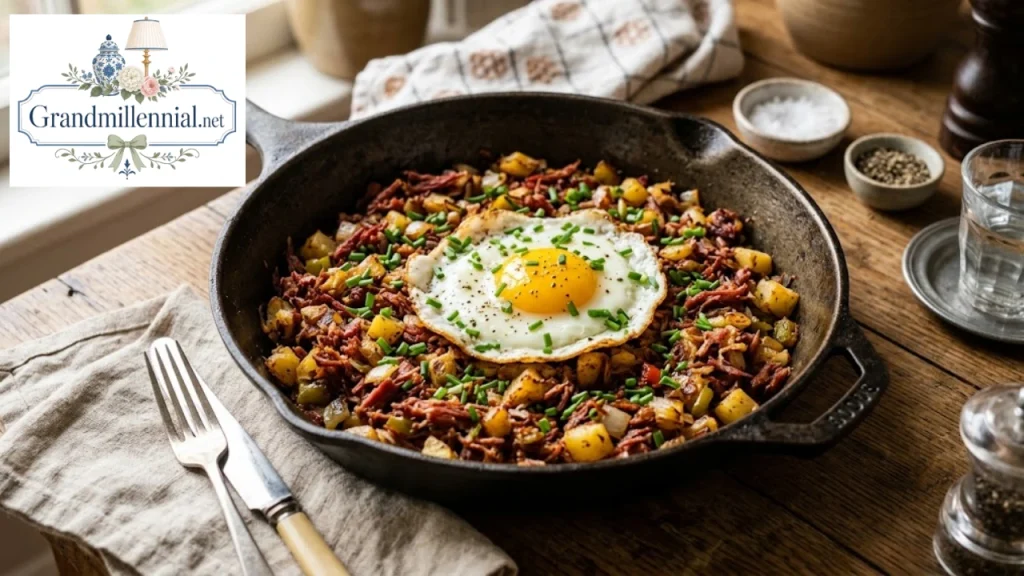
Cold corned beef slices thinner, so it’s ideal for Reuben sandwiches on rye with Swiss cheese and sauerkraut. Or dice it with leftover potatoes and onion, and crisp it in a skillet for corned beef hash topped with a fried egg.
FAQs:
Do you rinse corned beef before cooking?
Yes. Rinsing removes surface brine and helps keep the finished dish from being too salty.
How long do you cook corned beef per pound?
On the stovetop, plan on about 50 minutes per pound at a gentle simmer, then check for fork-tenderness.
When do you add cabbage to corned beef?
Last. Add wedges for the final 10 to 15 minutes, after the potatoes and carrots are almost tender.
Is corned beef and cabbage actually Irish?
It’s best known as an Irish-American dish. In Ireland, bacon and cabbage was more common, though USDA notes corned beef and cabbage was once an Easter meal in rural Ireland.
Why is my corned beef still pink?
Nitrite used in curing keeps the meat pink. It’s safe once it reaches 145°F and rests for three minutes, per USDA.
Should corned beef be boiled or simmered?
Simmered. A hard boil makes the meat tough and stringy.
Flat cut or point cut: which is better?
Flat cut gives neat slices; point cut is richer and more tender but harder to slice evenly